33 Britons missing in Nepal as flash flood rips through Himalayan villages near Tibet border
By Harry Dennis • Published: 26 Aug 2026 • 17:35 • 2 minutes read
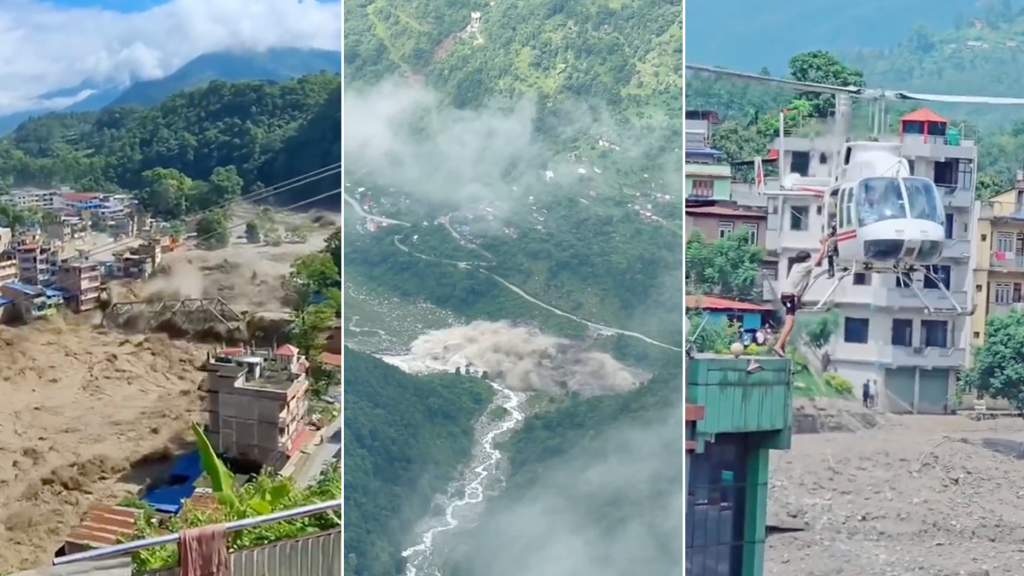
More than 90 people have died and hundreds remain missing, including 33 Britons, after Wednesday's flash flood in Nepal. Credit: Nepal Police / X
Thirty-three British nationals have been announced among more than 380 people missing in Nepal after Wednesday’s flash flood, with the confirmed death toll now past 90. They are one of dozens of nationalities swept up in the disaster with American, Nepalese and hundreds of Indian tourists still unaccounted for.
Britons a small fraction of a fast-growing toll
Nepal’s tourism board said that 33 UK nationals were among the missing so far, alongside 47 Americans and more than 130 Indians, as the confirmed death toll from the country’s worst flash flood in years has risen past 90. Of the more than 380 people still listed as missing, 291 are foreign tourists, with dozens more nationalities yet to be confirmed by officials.
CCTV footage of the immigration office located on the Chinese side of the Rasuwagadhi border crossing.#Nepal #NepalFlooding #Nepal #Floods #Rasuwa #flasfloods #NepalFloods #BhoteKoshiRiver #RasuwaDistrict #hydropowerprojects pic.twitter.com/sqbLK9Xkhb
— sustainme.in® (@sustainme_in) August 26, 2026
Trekking group of 12 caught in valley, 13-year-old British girl also missing
Twelve of the missing Britons had been trekking with Alpine Eco Trek, a Himalayan hiking company, as part of a group of 20 that also included four South African and four Nepalese nationals, when the flood struck. UK regional newspapers reported that a 13-year-old girl was among the British nationals feared missing, though her identity and hometown have not been made public. The Foreign, Commonwealth and Development Office (FCDO) had made no public statement addressing the scale of British nationals involved by Wednesday evening.
Flood struck Rasuwa valley without warning
The flash flood tore through the Bhote Koshi river valley in Nepal’s Rasuwa district at around 9am local time on Wednesday August 26, sending a wall of water and debris down from the Tibet border. The villages of Timure and Syabrubesi bore the worst of the damage before the flood swept downstream through Nuwakot, Dhading, Chitwan and Gorkha.
एकअर्कालाई सहयोग गरौं।
अफवाहमा विश्वास नगरौं।#नेपालप्रहरी #ToServeandProtect #nepalpolice #RasuwaFlood pic.twitter.com/aA68NX4Rzq— Nepal Police (@NepalPoliceHQ) August 26, 2026
Prime Minister Balendra Shah convened an emergency meeting as the toll rose, saying rescue efforts were being coordinated with the Nepal Army, medical teams, scouts and the Red Cross. District administrator Narendra Pariyar had earlier warned of heavy casualties, while President Ramachandra Paudel said he was extremely saddened by the loss of life.
What caused the disaster
Officials now believe an ice and rock avalanche from a glacier blocked the Lhende Khola river before releasing a sudden surge of water downstream into the Bhote Koshi, rather than rainfall or an earthquake alone. Nepal’s foreign minister, Shishir Khanal, had earlier pointed to a landslide triggered by a magnitude 4.4 earthquake that struck the region that morning, but that theory has since been overtaken by the glacier explanation.
The disaster has also hit Tibet hard. Chinese state media reported at least three deaths and 265 people missing in Gyirong county, on the other side of the border, prompting President Xi Jinping to order search and rescue teams into the area.
Rescuers still can’t reach the worst-hit villages
Rescue helicopters have so far been unable to land in the worst-affected areas of Nepal because of debris and dangerously high water levels. The flood destroyed a 42km stretch of the Betrawati-Rasuwagadhi road and knocked out roughly 430 megawatts of hydropower and solar capacity, cutting communications and power to the region.
With entire villages and river crossings washed away on both sides of the border, families of the 33 missing Britons face a wait that officials admit could last days before the true scale of the disaster becomes clear.
Follow Euro Weekly News on Google News
Get breaking news from Spain, travel updates, and expat stories directly on your Google News feed.
Follow on Google NewsSign up for personalised news
Subscribe to our Euro Weekly News alerts to get the latest stories into your inbox!
By signing up, you will create a Euro Weekly News account if you don't already have one. Review our Privacy Policy for more information about our privacy practices.



Harry Dennis
Born in the UK and raised on the Cádiz coast, Harry brings his background in design, music, and photography to his writing for Euro Weekly News, sharing stories that celebrate culture and lifestyle across Spain and beyond.
Comments