Could drones cut the wait for blood test results in Spain?
By Harry Dennis • Published: 27 Aug 2026 • 11:09 • 3 minutes read
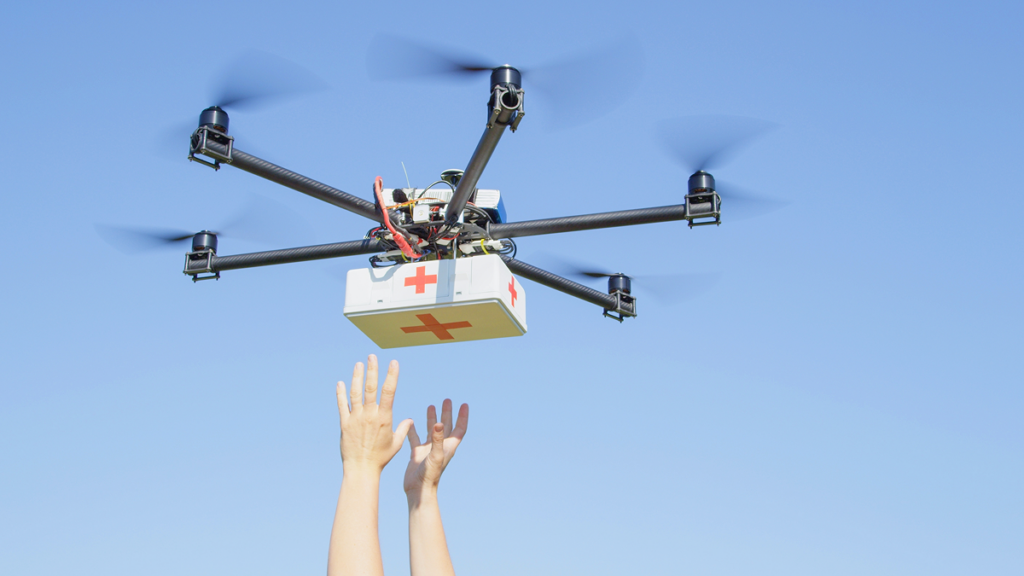
Medical delivery drones are being tested to speed up transport across Spain's health system. Credit: Flystock / Shutterstock.
Anyone having blood taken at a small health centre may not realise that the sample still needs to travel by road to a hospital laboratory. Spain is now testing whether that journey could instead be made through the air, particularly from rural clinics where roads, distance and traffic slow everything down.
Spain’s first permit for drones to fly over towns and villages
Spain’s aviation safety agency, AESA, granted the country’s first SAIL III authorisation on Tuesday June 30, its highest level yet for drone operations. It allows flights beyond the pilot’s direct line of sight over populated areas, something not previously permitted at this scale.
The permit was given to CATUAV, a Catalan operator running as BCN Drone Center, for its Eiger 3 aircraft. The Eiger 3 has a wingspan of 2.7 metres, it can carry up to three kilograms of material and keeps temperature-sensitive material refrigerated during flight. AESA has been clear, however, that the authorisation is not a blanket approval for medical deliveries everywhere: it applies specifically to non-dangerous goods and to areas with a population density of no more than 8,000 people per square kilometre.
The permission followed months of trials in Terres de l’Ebre, inland from Tarragona, where the drone carried pathology material, including biopsies, cytologies and molecular tests, between the health centre in Móra d’Ebre and Hospital Verge de la Cinta in Tortosa. Pharmacy supplies were also flown along the same route.
More than 300 blood and urine samples carried in early trials
Similar pilots elsewhere in Cataluña show the scale of time that can be saved. On a route linking the Vall d’en Bas health centre with Hospital d’Olot, in Cataluña’s Northern Metropolitan Health Region, drones completed the delivery in around six minutes compared with almost 30 minutes by road, according to BCN Drone Center. The company said the change cut transport time on that route by 60 to 74 per cent, a huge advantage and life-saving amount when transporting samples and tests that are time sensitive.
More than 300 blood and urine samples have been carried in these pilots so far, and CO2 emissions on the Olot route fell by more than 90 per cent compared with driving the same journey. RigiTech, the Swiss manufacturer of the Eiger 3, whose founders include two Catalans, said its “longstanding dream of contributing to the Spanish health system has now become a reality.”
Still only facility to facility, not to anyone’s front door
Despite the scale of the savings, these drones are not being designed to drop blood-test kits or prescriptions on a patient’s balcony just yet. Every route reported so far runs between a health centre, a laboratory or a hospital, carrying samples and supplies that would otherwise travel by van or courier. The development matters a great deal especially for rural and isolated communities, where a health centre can sit a long drive from the nearest hospital laboratory and where roads, traffic or difficult terrain add significantly to the time a sample or a medicine spends in transit.
Spain has been testing other uses for medical drones too, including a wider 16 million euro strategy in Madrid and trials to fly transplant organs between Málaga airport and Costa del Sol hospitals.
The hurdles still standing between trial and everyday use
Cataluña’s health service, the ICS (Institut Català de la Salut), is adapting infrastructure at health centres to create safe landing areas, work that has to happen before any wider network can run routinely. Weather, reliable refrigeration and keeping track of biological samples in transit remain practical hurdles, and each new route still needs its own operational approval even under the SAIL III framework.
It is worth being cautious, too, about how much faster patients themselves will notice results. Drones can shorten the physical journey a sample makes, but laboratory workloads and medical reviews will still shape how quickly a result reaches a doctor and eventually the patient, so a faster flight will not immediately mean a faster diagnosis.
Follow Euro Weekly News on Google News
Get breaking news from Spain, travel updates, and expat stories directly on your Google News feed.
Follow on Google NewsSign up for personalised news
Subscribe to our Euro Weekly News alerts to get the latest stories into your inbox!
By signing up, you will create a Euro Weekly News account if you don't already have one. Review our Privacy Policy for more information about our privacy practices.





Harry Dennis
Born in the UK and raised on the Cádiz coast, Harry brings his background in design, music, and photography to his writing for Euro Weekly News, sharing stories that celebrate culture and lifestyle across Spain and beyond.
Comments