Protest erupts as Madrid forest firefighters warn of staff shortages and old equipment
By Molly Grace • Updated: 28 Aug 2026 • 22:44 • 3 minutes read
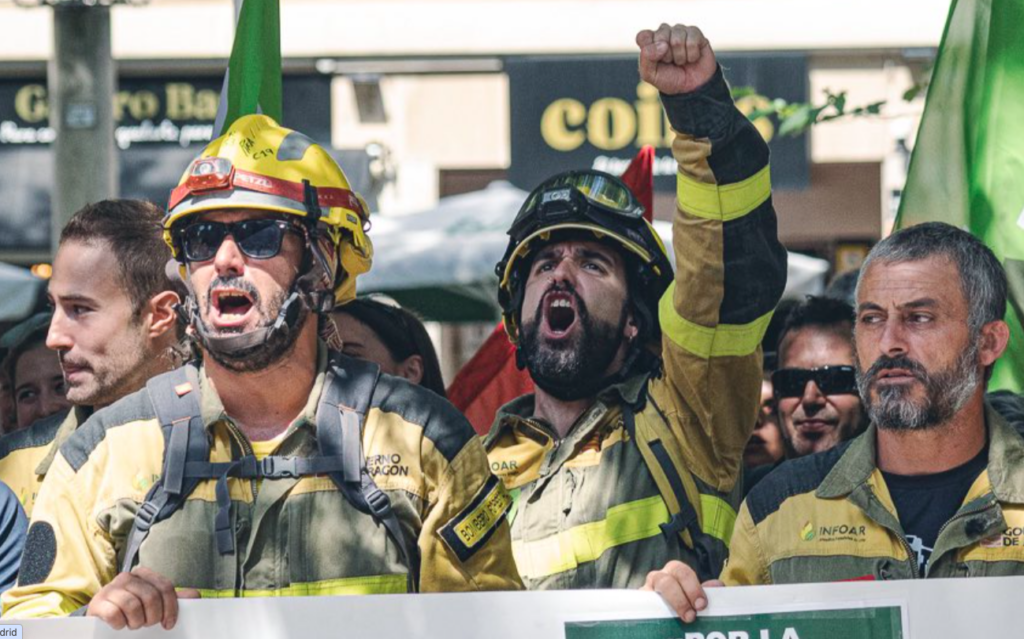
They say some masks have been out of date for several years. Photo credit: @BBFFMadrid on X
Madrid is relying on its forest firefighters to protect homes, communities and thousands of hectares of woodland, yet only 60 of the 124 budgeted positions are currently filled, according to the workers’ representatives. The firefighters say they are being asked to face increasingly serious wildfire emergencies while working without proper professional recognition, year-round contracts and equipment they consider fit for the job.
Around 100 public forest firefighters from the Community of Madrid gathered outside the regional government headquarters in Puerta del Sol on Friday, August 28, demanding an end to a labour dispute that has now lasted more than three years. The mobilisation comes after the devastating Sierra Oeste wildfire, which affected more than 27,000 hectares and became one of the most serious fires recorded in the region in recent decades. For the firefighters, the scale of that emergency has highlighted the consequences of having a service they say is operating without enough permanent personnel.
Only 60 of 124 positions filled
The workers’ strike committee says there are currently 124 budgeted forest firefighter positions, but just 60 are occupied. That leaves 64 posts vacant during a period when wildfire risk remains high across Madrid. According to committee representative Alfonso Ferrer González, the shortage has fallen by around 40 per cent compared with the intended staffing level. He claims the administration is not making use of available recruitment channels or candidates who previously participated in selection processes.
The firefighters say the shortage can force Madrid to seek external reinforcements when major fires occur, despite there being trained forest firefighters who could potentially join the regional service. Their demand is not simply for more people during the summer. They want year-round contracts, arguing that forest firefighters are needed throughout the year to carry out prevention and maintenance work before vegetation becomes fuel for the next wildfire.
More than 800 days without negotiations
The firefighters say the Community of Madrid has gone more than 816 days without meeting with them to negotiate. Their indefinite strike has now exceeded 1,200 days, although it was temporarily suspended while crews dealt with the Sierra Oeste emergency. Following the end of that period, the strike and wider mobilisation resumed.
The workers gathered directly outside the Real Casa de Correos, the headquarters of the regional government, carrying firefighting tools and striking the pavement with them as they demanded what they described as genuine negotiations. They also attempted to deliver a letter to regional president Isabel Díaz Ayuso calling for the dispute to be addressed.
At the centre of their demands is recognition of their actual profession, the committee says some forest firefighters are employed under categories such as drivers or building maintenance workers, rather than being officially recognised as forest firefighters. They argue that this affects their access to payments linked to dangerous work and the recognition of occupational illnesses.
Firefighters claim protective equipment is outdated
The workers are also raising concerns over their protective equipment, the strike committee claims that some personal protective equipment is expired or extremely old, including respiratory protection and firefighting clothing. They say some masks have been out of date for several years, while certain intervention suits are more than a decade old. The committee has requested documentation showing that the equipment remains suitable for use.
These claims have particular significance for crews working directly inside wildfires, where heat, smoke and rapidly changing conditions can turn equipment failure into a serious safety risk. The firefighters are therefore demanding not only better employment conditions but effective compliance with workplace safety requirements.
€132 supplement rejected
The Community of Madrid has proposed a €132 gross monthly supplement for 2027, covering factors including toxicity, dangerous working conditions, physical exertion and occupational health risks. The firefighters’ representatives have rejected the proposal as insufficient.
The regional government, meanwhile, has defended its position and called for “responsibility, loyalty and commitment”, pointing to the fact that wildfire prevention and firefighting are essential services during the high-risk campaign. It has also drawn attention to the improvements it says have been offered to the workforce, comparing them with conditions for the state-run BRIF wildfire brigades, the two sides therefore remain far apart.
The dispute comes after Madrid’s worst fire season
The timing of the protest is difficult to ignore. The Sierra Oeste fire affected more than 27,000 hectares across 17 municipalities before being brought under control, leaving large areas of woodland and countryside damage and making it Spain’s largest ever wildfire. For Madrid’s forest firefighters, the emergency demonstrated why prevention, staffing and permanent crews matter before the flames appear.
Their argument is that keeping firefighters employed throughout the year would allow them to spend the winter preparing forests, clearing vegetation and carrying out maintenance rather than relying on a system focused heavily on the summer campaign. The Community of Madrid has not accepted those demands, leaving the firefighters’ indefinite strike and labour dispute ongoing. For the crews who enter burning forests when the public is being evacuated, their demand is straightforward: they want enough firefighters, proper recognition, safe equipment and year-round employment before the next major fire tests the service again.
Follow Euro Weekly News on Google News
Get breaking news from Spain, travel updates, and expat stories directly on your Google News feed.
Follow on Google NewsSign up for personalised news
Subscribe to our Euro Weekly News alerts to get the latest stories into your inbox!
By signing up, you will create a Euro Weekly News account if you don't already have one. Review our Privacy Policy for more information about our privacy practices.




Molly Grace
Molly is a British journalist and author who has lived in Spain for over 25 years. With a background in animal welfare, equestrian science, and veterinary nursing, she brings curiosity, humour, and a sharp investigative eye to her work. At Euro Weekly News, Molly explores the intersections of nature, culture, and community - drawing on her deep local knowledge and passion for stories that reflect life in Spain from the ground up.
Comments