200 expelled in Ceuta as jihadist links emerge and sexual assaults reach 23
By Molly Grace • Published: 31 Aug 2026 • 16:57 • 4 minutes read
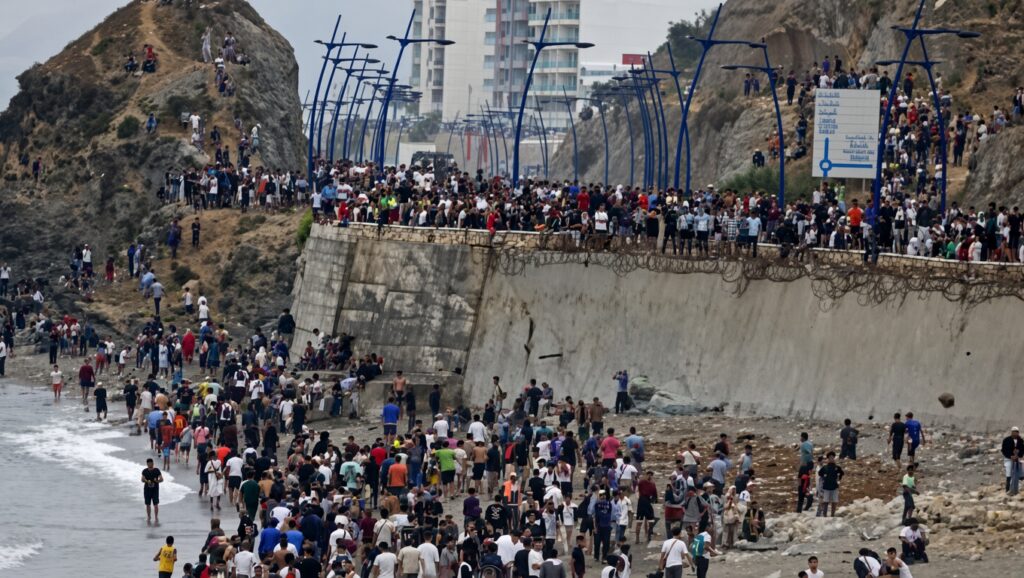
The confrontation adds to a growing sense of instability in parts of the city. Photo credit: @TrueNorthEvans on X
Residents in Ceuta are still facing weeks of unrest, disruption and uncertainty after the mass arrival of migrants. Now more than 200 migrants who entered Ceuta during the mass arrival at the end of July have now been expelled from Spain after being detained for criminal offences, including three who had previous records for crimes linked to jihadism.
The figure has more than doubled in just three days, after Interior Minister Fernando Grande-Marlaska said on August 28 that more than 100 migrants had already been expelled. The latest figure was announced today, Monday August 31, by Ángel Víctor Torres, the minister responsible for coordinating the Government’s response to the crisis.
Expulsions have doubled since Friday
Interior Minister Fernando Grande-Marlaska told Parliament that more than 100 migrants who had entered Ceuta during the mass arrival had already been expelled after being detained by security forces. Just three days later, Torres has confirmed that the number had passed 200 since Friday.
The announcement comes while the city continues to cope with the consequences of the mass crossing. Thousands of migrants are still in Ceuta, with hundreds concentrated around the Loma Colmenar area after the temporary accommodation facility reached capacity. The situation has left people sleeping outdoors and has contributed to growing tension around the facility, where migrants have been waiting for places to become available.
Three cases raise particular security concerns
The disclosure about the three people with jihadism-related records adds another security dimension to a crisis that has already placed considerable pressure on local authorities. The individuals had previous records connected to jihadist offences before being among those expelled following the July entry, according to Interior Ministry sources.
Spanish security services have been examining those who entered during the mass crossing to establish whether people previously known to authorities were among the thousands who crossed into Ceuta. Earlier this month, reports emerged that police and Guardia Civil officers had identified people with previous links to jihadism among those who entered the city. Those reports concerned individuals who had previously been detained, convicted and expelled from Spain.
Sexual assaults rise to 23
The number of reported sexual assaults in Ceuta has also risen sharply as authorities continue dealing with the aftermath of the mass arrival. The Fiscalía General del Estado has now recorded 23 sexual assaults since the entrance of the migrants, up from 16 reported just four days earlier. Five of the cases involved rape, while nine of the victims were aged between 14 and 17.
The increase was confirmed after Spain’s Attorney General Teresa Peramato visited Ceuta last Thursday, when she said prosecutors had already seen an increase in several categories of crime, including sexual offences, property crimes and attacks or resistance against officers. At that point, 16 sexual assaults involving 17 victims had been recorded.
Irene Montero sparks backlash by demanding Brussels intervene
The latest figures have also fuelled a fierce political row on social media, after Far left Podemos MEP Irene Montero called for urgent European intervention over what she described as racist attacks against migrants in Ceuta. Montero and fellow Podemos MEP Isa Serra wrote to European Commission President Ursula von der Leyen demanding action, accusing the Spanish Government of failing to protect migrants and provide adequate reception during the crisis. They also called for Brussels to investigate Morocco’s role in the mass arrival.
Their intervention has attracted criticism online, particularly as authorities have simultaneously confirmed the sexual assaults involving migrants, The political row comes against explosion of online hostility surrounding the crisis. Spain’s Observatory on Racism and Xenophobia detected 9,590 hate messages in just two days, with people from North Africa accounting for 68 per cent of the targeted content.
The city is still dealing with the aftermath
For residents, the expulsions are taking place alongside a continuing struggle to restore normal life. The temporary migrant accommodation centre at Loma Colmenar has been unable to accept everyone seeking a place, leaving an estimated 4,000 to 4,500 people around the surrounding area, according to reports from Ceuta. Some have been sleeping outdoors while waiting to enter the facility.
The pressure is also being felt as schools prepare to reopen. Children in Ceuta are due back in classrooms on September 8, and the Education Ministry has announced additional security around schools and along school routes. Security personnel will be present close to schools and institutes during teaching hours as part of measures intended to allow the new academic year to begin normally. Torres has said the return to school will take place with “absolute normality”.
What happens next?
Authorities are still processing cases involving people who entered during the mass arrival, while security forces continue dealing with criminal incidents and identifying individuals whose circumstances may require further action. The Government has not said how many additional people could ultimately face expulsion. What is now clear is that the response has moved beyond dealing solely with the immediate humanitarian consequences of the crossing.
More than 200 people have already been removed after being detained for criminal offences, and three of those expulsions involved people with previous records related to jihadism. For Ceuta, where thousands of people remain and accommodation facilities continue to face pressure, the coming weeks will determine how quickly the city can move from managing the aftermath to restoring normal daily life.
Follow Euro Weekly News on Google News
Get breaking news from Spain, travel updates, and expat stories directly on your Google News feed.
Follow on Google NewsSign up for personalised news
Subscribe to our Euro Weekly News alerts to get the latest stories into your inbox!
By signing up, you will create a Euro Weekly News account if you don't already have one. Review our Privacy Policy for more information about our privacy practices.




Molly Grace
Molly is a British journalist and author who has lived in Spain for over 25 years. With a background in animal welfare, equestrian science, and veterinary nursing, she brings curiosity, humour, and a sharp investigative eye to her work. At Euro Weekly News, Molly explores the intersections of nature, culture, and community - drawing on her deep local knowledge and passion for stories that reflect life in Spain from the ground up.
Comments