Could plastic from your washing machine be spread on fields growing Spain’s food?
By Harry Dennis • Published: 01 Sep 2026 • 17:36 • 4 minutes read
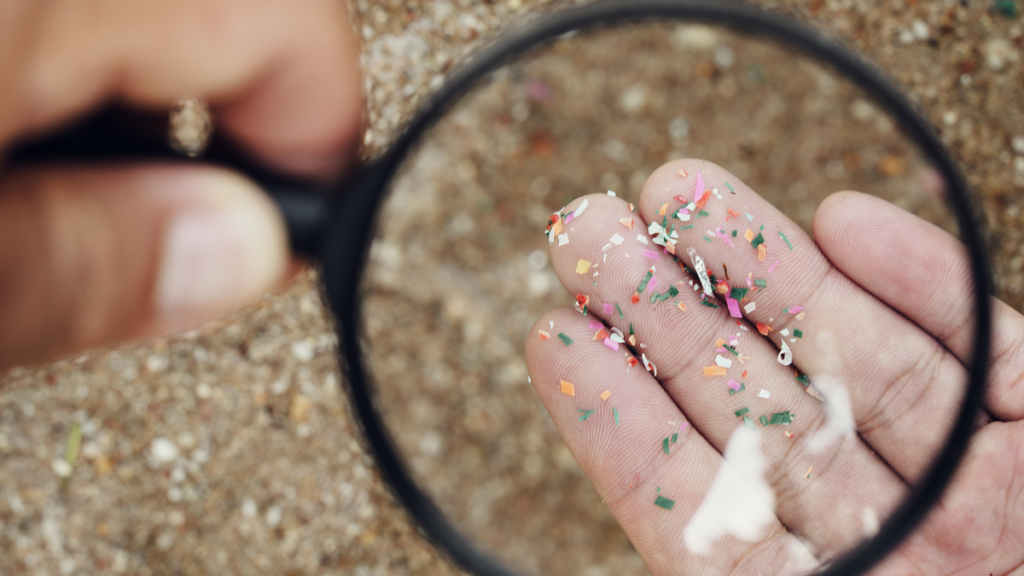
Look closer, and the plastic is impossible to miss. Credit: Sansoen Saengsakaorat / Shutterstock
Every wash cycle sheds thousands of tiny plastic fibres into the drain, and treatment plants trap most before they reach the sea. But that captured plastic does not completely disappear. It is concentrated in sewage sludge, and Spain spreads more than 733,000 tonnes of it across farmland every year.
Spain used 733,448 tonnes of treated sludge on its fields last year
Spain’s Ministry for Ecological Transition (MITECO) recorded 915,453.85 tonnes of dry sewage sludge produced across the country in 2025. Of that total, 733,448.19 tonnes, just over 80 per cent, went straight onto agricultural land. The practice is legal and long-standing, tracked through Spain’s National Sludge Registry. Farmers value the sludge for the organic matter, nitrogen and phosphorus it returns to the soil, at a fraction of the cost of chemical fertiliser.
How a wash cycle’s plastic ends up concentrated in the sludge
The European Environment Agency (EEA) says ordinary washing machines do not retain the microscopic plastic fibres shed by synthetic clothing. They are discharged straight into the wastewater, and treatment plants then catch a large share, though not all, before it can reach rivers or the sea. Spain’s Environment Ministry puts that capture rate at somewhere between 90 and 99 per cent. But the ministry itself acknowledges that the trapped fibres do not vanish, they concentrate in the sludge left behind, and most of that sludge is destined for farmland.
The same pattern is now drawing attention well beyond Spain. A UK parliamentary group on microplastics warned this week that existing measures tackle only a small share of the fibres and particles entering British soil, and called for a coordinated national monitoring system to close the gap. Spain’s own figures suggest the same blind spot exists here, just with far more sludge going onto the land each year.
Spanish soil already shows the plastic building up
A study of four wastewater treatment plants and 16 agricultural fields in eastern Spain, published in the journal Environmental Pollution in 2020, found sludge-treated soil carried far higher concentrations of microplastics than untreated land nearby. Each application added roughly 280 light-density and 430 heavy-density plastic particles per kilogram of soil.
Separate research in the vegetable-growing belt of south-east Spain, where plastic mulch rather than sludge is the main source, found plastic debris in every single soil sample tested. Spain’s most productive farmland, it seems, is picking up plastic pollution from more than one direction at once.
Sheep grazing on farm waste show how far the plastic travels
An earlier study in Murcia went a step further and looked at what happens once that plastic is in the soil. Researchers found low-density microplastics in 100 per cent of the agricultural soil samples they tested and in 92 per cent of samples of sheep faeces from animals grazing on crop residue in the same fields.
Average concentrations came to around 2,000 particles per kilogram of soil and 1,000 particles per kilogram of dry faeces. The findings did not point to sludge as the source in that case, but they showed plastic already in Spanish farmland does not simply sit there. It gets ingested, and it moves through the farming system.
Spain tests its sludge for metals, but not for plastic
Spain’s annual sludge monitoring records concentrations of heavy metals, including cadmium, chromium, copper, mercury, nickel, lead and zinc, along with nitrogen, phosphorus and pathogens. Microplastics do not appear on that list, and the country’s rules on agricultural sludge remain built around older concerns: contamination, treatment and traceability, not plastic.
Spain is not unusual in that gap either. The EEA says the EU’s Sewage Sludge Directive, now nearly 40 years old, was written before microplastics were a recognised issue and still does not mention them. Without systematic monitoring, the agency says, it is not currently possible to calculate the health burden that fertiliser contaminants, including microplastics, may be causing across Europe.
Researchers at Spain’s National Research Council in Córdoba reviewed more than 8,000 scientific papers before settling on 16 studies and 30 experiments that specifically tested how plastic changes soil itself. They found consistent evidence that microplastics and larger plastic fragments reduce soil’s ability to retain water, increase compaction and disrupt the porosity that lets water and air move through it. In a country where drought already limits how much land can produce, that combination matters more than most.
What a Murcia tomato trial found, and what it did not
One study of sludge from three treatment plants in Murcia found an average of around 30,940 microplastic particles per kilogram of dry sludge. When that sludge was used to grow tomatoes in a trial, the plants produced more vegetation but less fruit, and later than expected. The researchers were careful not to blame the plastic alone, as other substances in the sludge, or interactions between them, could also explain the effect, and they called for further study. The tomatoes themselves were not found to contain plastic, and the European Food Safety Authority (EFSA) has yet to complete its own assessment of microplastics in food, expected by the end of 2027.
Nobody is yet saying Spanish vegetables are unsafe to eat, and none of the research gathered so far proves that they are. But with the sludge going back onto the fields every year and nobody counting the plastic in it, Spain is asking its farmland to absorb a risk it has not yet fully measured.
Follow Euro Weekly News on Google News
Get breaking news from Spain, travel updates, and expat stories directly on your Google News feed.
Follow on Google NewsSign up for personalised news
Subscribe to our Euro Weekly News alerts to get the latest stories into your inbox!
By signing up, you will create a Euro Weekly News account if you don't already have one. Review our Privacy Policy for more information about our privacy practices.




Harry Dennis
Born in the UK and raised on the Cádiz coast, Harry brings his background in design, music, and photography to his writing for Euro Weekly News, sharing stories that celebrate culture and lifestyle across Spain and beyond.
Comments