Living fishtory: new marine sculptures tell Garrucha’s history
By Elli Freeman • Published: 02 Sep 2026 • 16:05 • 2 minutes read
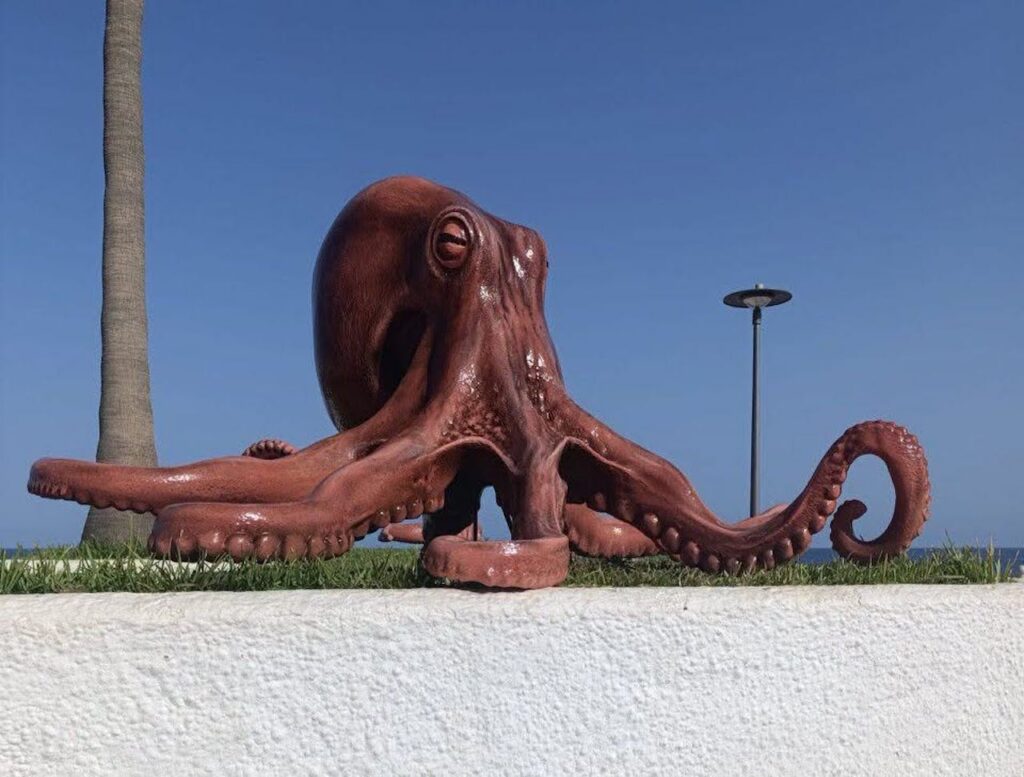
Giant octopus sculpture installed in Garrucha. Credit: Ayuntamiento de Garrucha
Travel to Pendle and see where witches were once tried and sentenced. Travel to Haworth and follow in the footsteps of the three literary greats who called the village home. Over the years, these places have become more than simply towns, they’ve become living monuments to history, drawing thousands of tourists every year.
Garrucha is hoping to create a similar experience for visitors, only swapping broomsticks and handwritten manuscripts for shellfish. The Garrucha Town Hall recently announced plans to turn the town into an open-air museum, celebrating the town’s own storied history of its fishing traditions.
Garrucha’s new open-air museum
Residents will soon notice four large marine sculptures popping up around town. The first, a large octopus, has already found a home along the sea front. The head of a red prawn, a fishing rod with a fish head, and a recreation of the seabed will follow.
The sculptures are designed to become more than eye-catching additions to the streets of Garrucha. Together, they will tell the story of a town whose identity has long been closely connected to the Mediterranean, fishing and the seafood that has become an important part of its local culture.
The red prawn is particularly significant, representing one of the best-known products associated with Garrucha and its gastronomy. The other installations will also reflect different aspects of the town’s relationship with the sea and the traditional lives of its fishing community.
A walking route through Garrucha
Each statue will form part of a larger route, which visitors and locals wanting to learn more about their home can walk from one existing landmark to the next, including the Fisherman monument and “I love Garrucha” sign. This will create an easy-to-follow route through town, making sure tourists don’t miss out on anything Garrucha has to offer.
Rather than keeping the town’s history inside traditional museum spaces, the project aims to bring it into the streets. This means that a simple walk around Garrucha could become a way to discover the area’s fishing heritage, local culture and connection with the sea.
Plans for up to 12 marine sculptures
The initial project includes four large sculptures, but the plans could eventually go much further. A second phase is being considered that could bring the total number of installations to twelve, with sculptures placed across different streets and areas of Garrucha.
If completed, the expanded route would give visitors even more reasons to explore the town beyond its seafront. The project is intended to appeal to both tourists and residents. For visitors, it offers a new way to discover Garrucha and its fishing heritage. For locals, it provides a permanent reminder of the traditions and industries that have helped define the town.
A new tourist attraction in Garrucha
The open-air museum project is ultimately an attempt to give Garrucha a distinctive tourist attraction based on something that already forms an important part of its identity. With the first octopus sculpture already in place, many are already starting to learn more about Garrucha than they have before.
As more sculptures are added, Garrucha could develop a tourism experience that makes its fishing heritage impossible to miss. The result could be a town where the history of the sea is not confined to a museum, but becomes part of the streets, landmarks and everyday experience of exploring Garrucha.
Follow Euro Weekly News on Google News
Get breaking news from Spain, travel updates, and expat stories directly on your Google News feed.
Follow on Google NewsSign up for personalised news
Subscribe to our Euro Weekly News alerts to get the latest stories into your inbox!
By signing up, you will create a Euro Weekly News account if you don't already have one. Review our Privacy Policy for more information about our privacy practices.

Elli Freeman
Originally from the UK, Elli has lived in Spain for more than half of her life. She holds a B.A in English Literature and Creative Writing. Before joining the Euro Weekly News team, Elli was an avid traveller, with a keen interest in exploring new cultures.
Comments