Yellow band hornet or yellow socks? How to tell Andalucia’s two hornet invaders apart
By Adam Woodward • Published: 05 Sep 2026 • 15:36 • 2 minutes read
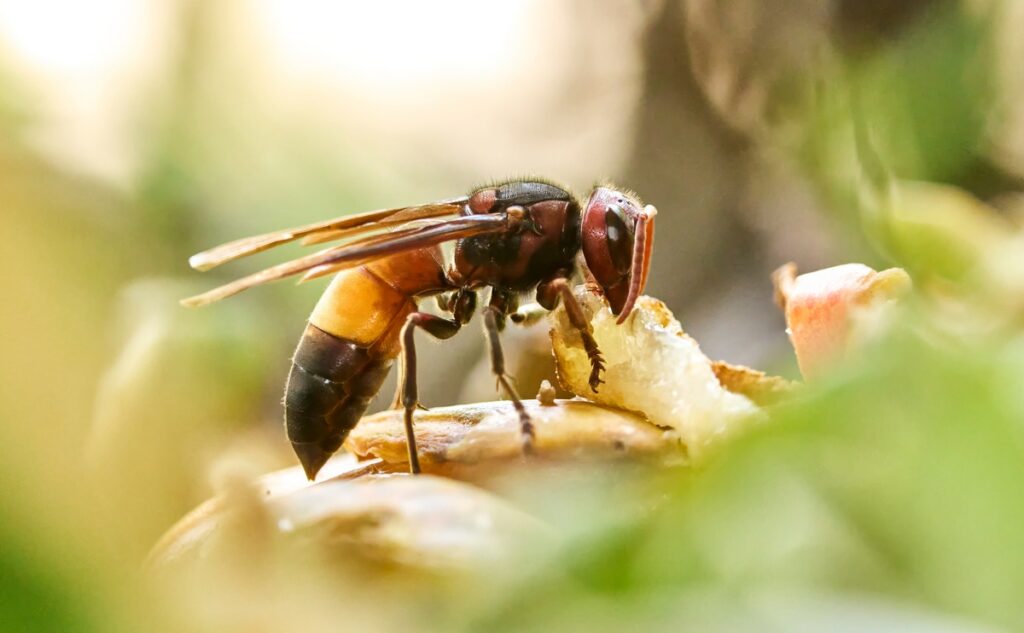
Asian hornet, or oriental hornet? And is it dangerous? Credit: Ajay U Paul - Shutterstock
Garden tables on the Costa del Sol keep filling up with the same question: is that big buzzing thing the “Asian killer wasp”, or something else? Two invasive hornets now have become a common sight in Andalucia, and their names trip people up. One is already common from Cadiz to Malaga. The other is rarer in the south but far better known from Galicia. Cadiz biologist Daniel Gomez says the mix-up is understandable: “Asia is in the east, after all.” They are not the same animal.
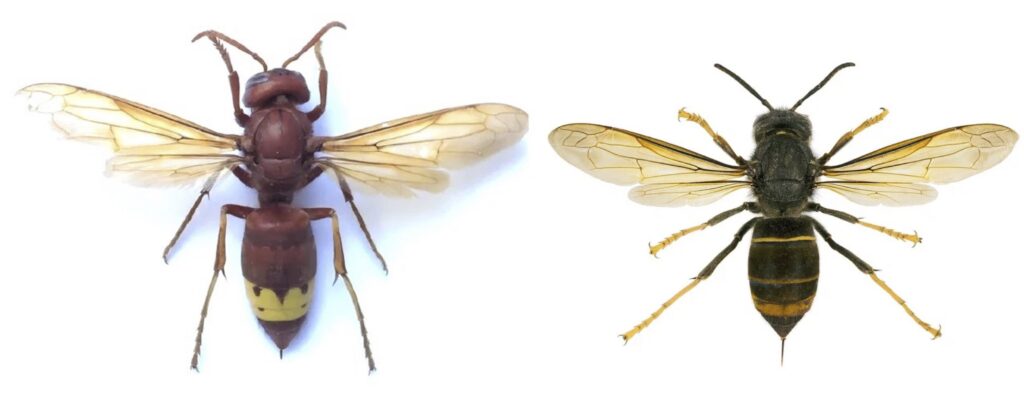
Credit: mieldemalaga / Didier Descouens CC Wiki
Junta-backed counts put Oriental hornet sightings up about 30 per cent between 2023 and 2024, with Malaga, Cadiz and Seville among the worst-hit provinces. Vespa orientalis reached Algeciras in 2018 after an earlier Valencia record and now uses walls, roofs, compost and pavement cavities as readily as the countryside. Vespa velutina, the Asian or yellow-legged hornet, first showed up in Spain in 2010 in Navarra and the Basque Country. Confirmed southern nests include Alhaurin de la Torre in October 2025, plus Los Barrios and a recent alert in El Puerto de Santa Maria.
How to tell them apart at a glance
Oriental hornets look coppery or reddish-brown, with two bold yellow bands towards the end of the abdomen and a yellow face. Adults are about 25 to 35 mm. Asian hornets look almost black and velvety, with one orange or yellow band on the abdomen, an orange face and dark legs that end in bright yellow tips – the “yellow socks”. They are often a touch smaller, though queens can pass 30 mm.
Their hunting style differs too. Gomez says velutina can hang around hive entrances and, in some settings, take bees for up to two-thirds of its prey. Oriental hornets are messier opportunists: scraps and carrion in streets, plus bees they sometimes kill and leave.
Readers who have followed earlier Costa del Sol reports on Oriental hornets returning to Malaga Province will recognise the reddish insect as the everyday problem. Velutina remains the bigger specialist threat to apiaries further north; see EWN’s Asian wasp allergy briefing. Spain lists non-European Vespa species as invasive via the MITECO exotic-species catalogue.
Which sting should you fear?
Neither insect is Spain’s giant “murder hornet”. Gomez is blunt: for someone without a venom allergy, a single sting is very painful, not unusually lethal. Trouble comes from anaphylaxis or a mass attack if a colony is disturbed. Claims that velutina is always more aggressive at sudden movement, he adds, lack solid evidence.
Where they nest changes the odds of a nasty meeting. Velutina often hangs large secondary nests high in trees, eaves and façades, and therefore is easier to bash during pruning or works. Oriental colonies sit in soil, holes and buildings, so walkers and gardeners can trigger a sudden defence action. If you see a nest, ring pest control or the town hall. Do not poke it.
That huge black “bee” on the pergola?
Plenty of expats write in about a third insect that is not a hornet at all. Violet carpenter bees (Xylocopa violacea) are native, glossy black with purple-blue wing sheen, and they drill dead wood and bamboo. Males cannot sting; females almost never do unless grabbed. They pollinate and belong in a Spanish garden and are much more friend than foe. Leave untreated timber if you can; they are noisy, harmless neighbours, not invaders.
Follow Euro Weekly News on Google News
Get breaking news from Spain, travel updates, and expat stories directly on your Google News feed.
Follow on Google NewsSign up for personalised news
Subscribe to our Euro Weekly News alerts to get the latest stories into your inbox!
By signing up, you will create a Euro Weekly News account if you don't already have one. Review our Privacy Policy for more information about our privacy practices.





Adam Woodward
Adam is a writer who has lived in Spain for over 25 years. With a background in English teaching and a passion for music, food, and the arts, he brings a rich personal perspective to his work at Euro Weekly News. As a father of three with deep roots in Spanish life, Adam writes engaging stories that explore culture, lifestyle, and the everyday experiences that shape communities across Spain.
Comments