Could building your own home in Spain save 13%? The costs and catches buyers need to know
By Harry Dennis • Updated: 09 Sep 2026 • 11:42 • 3 minutes read
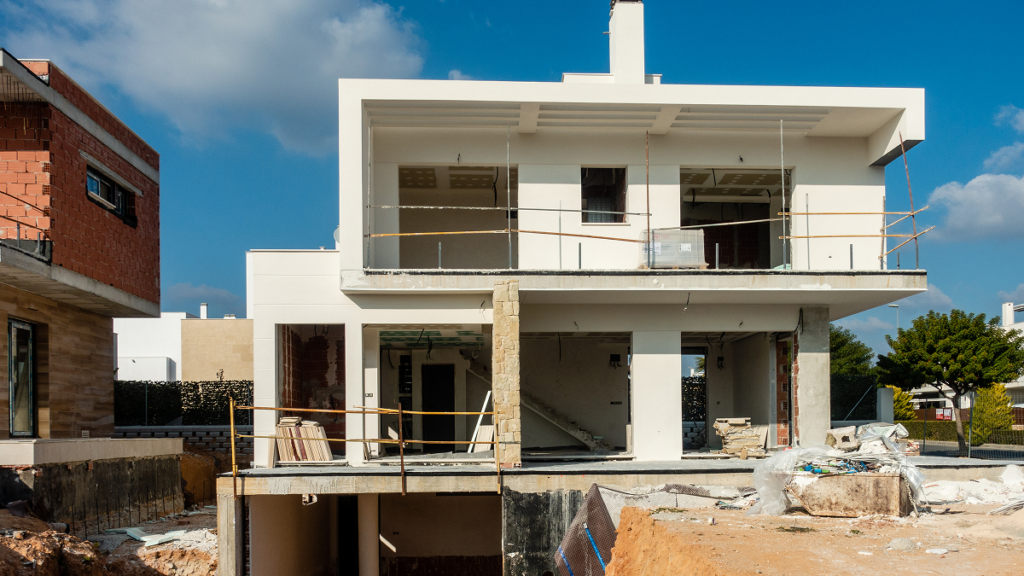
Self-build projects promise savings, but the real costs often start long before the roof goes on. Credit: Stu49 / Shutterstock
Skipping the developer in Spain can, in theory, save buyers around 13 per cent. One couple found that saving arrived only after they had already spent €90,000, and construction hadn’t even begun.
New figures published this month put a number on how common the self-build dream has become: 42 per cent of Spaniards have considered building their own home rather than buying one ready-made, according to a report by RTVE. However, only 8.5 per cent see it as a realistic possibility once the practical hurdles are weighed up.
The report also flagged a shift specific to the Costa del Sol that will be familiar to many EWN readers. In Málaga’s self-build market, wealthier foreign buyers with cash to spend are increasingly taking the place of typical middle-class Spanish families, as rising land and construction costs push ordinary local buyers out of the process altogether.
Commissioning a home is not the same as building it
Under Spanish law, someone who takes this route becomes what is known as an ‘autopromotor’, or ‘self-developer’, which despite it’s name doesn’t mean laying bricks personally. It means taking over the role a property developer would otherwise play and hiring the architect, the technical surveyor and the builders, applying for every permit, and managing the whole project from the ground up.
The often-quoted 13 per cent saving comes from cutting out that developer’s profit margin, according to architects interviewed by RTVE for its report. It is a theoretical figure drawn from individual cases rather than a nationwide calculation, and it only holds if the autopromotor manages every stage competently, without the delays or mistakes that quickly become expensive.
One couple’s €90,000 bill before a single brick was laid
Olivia Cano and her partner Jorge, who are planning to build in the Madrid region, said they had already spent around €90,000 on the plot, taxes, architect’s fees and other initial costs before any construction had started. They expect the finished home to cost roughly €400,000 once it is built.
On the Costa del Sol, architect Juan Goñi of Klic Arquitectos told RTVE that a home he could once have built in Alhaurín de la Torre for around €300,000 would now need a budget closer to €400,000 or more. Goñi’s own estimate, covering the whole process from land to completion, put the increase at 60 to 70 per cent in the area since 2020.
That figure comes from one architect’s client base rather than official construction-price data, and should be read as an illustration of the trend rather than a fixed nationwide rate.
The land has to be legally buildable before anything else
Before any money changes hands, anyone weighing up a self-build needs to confirm the plot is legally classed as suelo urbano or suelo urbanizable (buildable or developable land) with the local town hall, rather than protected rural land where construction is banned outright. Buying a plot first and checking its legal status afterwards is one of the most common, and most costly, mistakes buyers make.
Upfront costs typically include the plot itself, transfer taxes, an architect’s project fees, a technical surveyor’s report and the municipal building licence. Most of these have to be paid, or at least secured, before a bank will even consider approving a self-build mortgage.
Self-build mortgages release money only as the work is certified
Unlike a standard mortgage, a hipoteca de autopromoción, or self-build mortgage, does not hand over the full loan on day one. Spanish banks including BBVA and Santander release the money in stages as an architect formally certifies that each phase of construction has actually been completed, rather than paying out the whole sum upfront.
To qualify, lenders commonly require the applicant to already own the registered plot outright, hold an architectural project approved by the regional college of architects, have secured the municipal building licence, and provide a detailed, itemised construction budget. BBVA said borrowers typically need to fund at least 30 to 40 per cent of the total cost themselves before financing covers the rest, usually up to 80 per cent of the property’s eventual value.
Delays, labour shortages and rising material costs can erase the saving
Managing tradespeople directly, rather than leaving it to a developer, is where the promised saving is most at risk. A shortage of construction workers, rising material prices and slow municipal licensing can all extend a project by months, adding costs that eat into any discount gained from cutting out the middleman.
Taking on the autopromotor role tends to work out only for buyers with enough free time to supervise a building site regularly, and enough technical understanding to catch problems before they become expensive ones. For anyone without both, the theoretical 13 per cent saving can vanish long before the roof goes on.
Follow Euro Weekly News on Google News
Get breaking news from Spain, travel updates, and expat stories directly on your Google News feed.
Follow on Google NewsSign up for personalised news
Subscribe to our Euro Weekly News alerts to get the latest stories into your inbox!
By signing up, you will create a Euro Weekly News account if you don't already have one. Review our Privacy Policy for more information about our privacy practices.





Harry Dennis
Born in the UK and raised on the Cádiz coast, Harry brings his background in design, music, and photography to his writing for Euro Weekly News, sharing stories that celebrate culture and lifestyle across Spain and beyond.
Comments