Three-year-old girl at risk of losing leg among patients downgraded in hospital waiting-list scandal
By Harry Dennis • Updated: 15 Sep 2026 • 13:30 • 2 minutes read
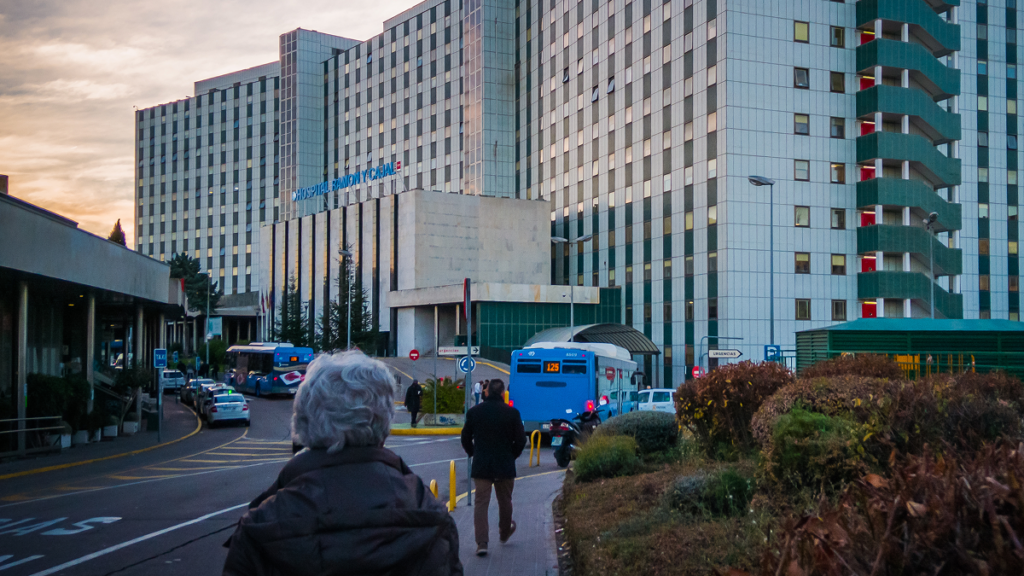
Hospital Universitario Ramón y Cajal, where the disputed waiting-list changes reportedly took place. Credit: JoeLogan / Shutterstock
A three-year-old girl was reportedly at risk of losing a leg, yet her surgery priority was quietly downgraded without her doctor’s knowledge or her parents being told. She was one of 57 patients allegedly reclassified at a Madrid hospital accused of manipulating its waiting list.
A three-year-old at risk of losing a leg, and no one told her parents
New documents obtained by El País reveal that a Madrid hospital quietly downgraded a three-year-old girl’s surgical priority without telling either her doctor or her parents. Her surgeon had marked her case urgent, believing that delaying her operation risked permanent damage to her leg.
That urgency was then removed from the hospital’s system in a change that has only now come to light. It was reversed after the girl’s own surgeon noticed it by chance, but neither he nor her family were ever told it had happened in the first place.
57 patients moved off the urgent list in just over two weeks
The girl was not an isolated case either. The same documents show that, between February 28 and March 14, 2025, 57 orthopaedic patients at the Hospital Universitario Ramón y Cajal, one of Madrid’s largest public hospitals, had their surgical priority changed from preferente, which targets surgery within 90 days, to normal, which allows up to 180 days.
None of the 17 surgeons who had originally set those priorities were consulted before the changes were made, and no patient was re-examined. The reclassifications were carried out directly in the hospital’s computer system.
Internal messages reportedly tied to waiting-time targets
Internal correspondence cited in the investigation is said to link the decision to efficiency targets set by Madrid’s Consejería de Sanidad (the regional health ministry), with staff reportedly told to avoid classifying cases as preferente.
The surgeon who discovered the changes, Dr Luis Alberto Martos, reported them to hospital management and has since been the subject of a separate internal disciplinary complaint, though no official link between the two events has been established.
The Madrid opposition has seized on the case. PSOE’s regional leader, Óscar López, said hospital management needed to explain why waiting lists were being “cosmetically altered” at patients’ expense, comparing it to last year’s leaked recordings in which a hospital boss at Ribera Salud-run Torrejón was accused of ordering longer queues to protect profits.
The hospital’s denial
The hospital insists nothing improper happened. Management said clinical priority is set exclusively by treating doctors within each department, and that hospital management does not directly alter individual patients’ waiting-list records.
What patients waiting for surgery in Madrid can check
Anyone waiting for non-urgent surgery in the Madrid region can check their own file through the Tarjeta Sanitaria Virtual, the region’s health app. It shows the procedure booked, the priority assigned, the pre-operative appointment date and the average wait for patients already treated in that department. A separate section allows delays or apparent anomalies to be reported directly.
The allegations raise fresh questions about how accurately Spain’s published waiting-list figures reflect what patients actually experience. Euro Weekly News recently revealed how people can effectively disappear from official hospital queues when follow-up appointments go unallocated or bookings are cancelled without being rebooked. However, the Ramón y Cajal case points to an issue that, until now, was hidden from the public eye: patients may remain registered, but hospital management could put them under a lower priority than the one their own doctor assigned, just to fulfil their own targets.
For patients elsewhere in Spain, the case is a reminder that a place on a waiting list is not necessarily fixed once it is given, and that double checking it should always be a priority.
Follow Euro Weekly News on Google News
Get breaking news from Spain, travel updates, and expat stories directly on your Google News feed.
Follow on Google NewsSign up for personalised news
Subscribe to our Euro Weekly News alerts to get the latest stories into your inbox!
By signing up, you will create a Euro Weekly News account if you don't already have one. Review our Privacy Policy for more information about our privacy practices.




Harry Dennis
Born in the UK and raised on the Cádiz coast, Harry brings his background in design, music, and photography to his writing for Euro Weekly News, sharing stories that celebrate culture and lifestyle across Spain and beyond.
Comments