19-year-old dies after car plunges into drainage ditch as questions grow over roadside safety in Spain
By Adam Woodward • Published: 19 Sep 2026 • 12:54 • 2 minutes read
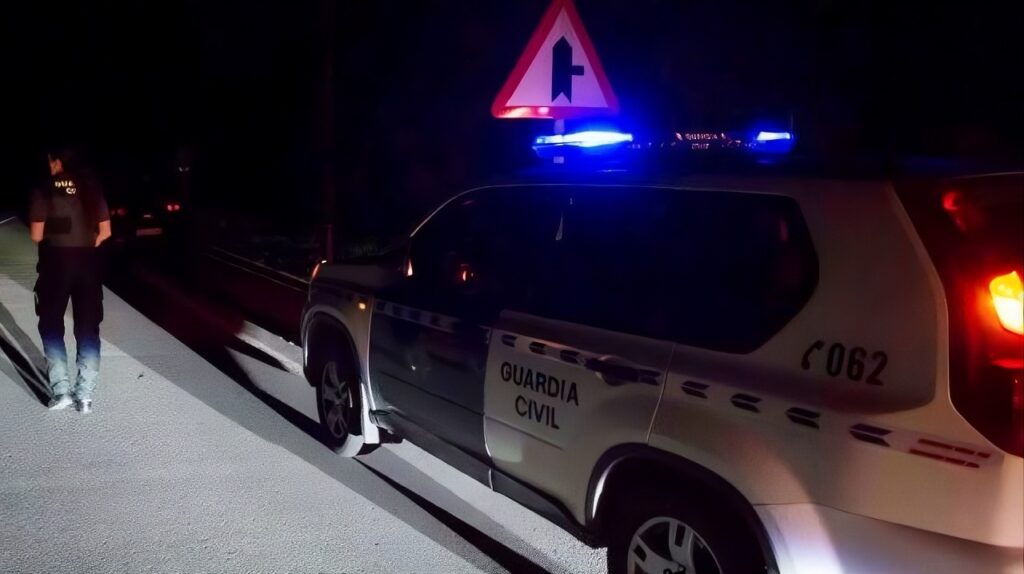
Night accident ends life of 19-year-old resident. Credit: GC X
A 19-year-old man has died after the car he was driving in left the road and plunged down a drop in Alhaurin el Grande, Malaga province.
The fatal crash happened at around 11pm on Friday, September 18, on Calle Rio Guadalmedina, on the road between Alhaurin el Grande and Villafranco, according to Emergencias 112 Andalucia. Several witnesses instantly called emergency services after seeing that a car had left the road and fallen down a drainage ditch, with a person inside requiring medical assistance.
Firefighters, Guardia Civil, local police and emergency medical teams were sent to the scene. However, medical staff could only confirm the death of the 19-year-old. No further details have been released about why the vehicle left the road, and there is currently no suggestion that the roadside layout was responsible for the crash.
The tragedy does, however, draw attention to a familiar road-safety issue for motorists travelling on rural roads across Spain: what happens when a vehicle accidentally leaves the carriageway?
Spanish roads and the danger beyond the tarmac
Deep drainage ditches, steep slopes and sudden drops are common sights beside some rural roads, sometimes with little space between the edge of the road and the hazard. Near to the site of the accident, on the A-404 between Alhaurin el Grande and Coin, recent resurfacing and works have left newly built drainage ditches at the side of the road, in some spots, deeper that one metre.
Government recognised problem
Spanish road-safety guidance recognises that these features can make a crash more serious. The Directorate-General for Traffic (DGT) says around 500 people are killed every year in run-off-road crashes, with 482 deaths recorded in 2025. More than half of serious or fatal incidents occur on conventional single-carriageway roads.
The DGT also says the severity of a run-off-road crash is influenced by the characteristics of the roadside, including slopes, obstacles and whether a safety barrier is present. That does not mean every ditch or drop needs a guardrail.
When does a Spanish road need a barrier?
Spain’s national guidance takes a risk-based approach rather than simply requiring barriers beside every ditch. The Ministry of Transport’s Order Circular 35/2014 sets out criteria for vehicle restraint systems on the state road network. It requires roadside hazards to be assessed and says that dangerous obstacles or changes in level should, where possible, be removed, moved or redesigned before a barrier is installed.
The DGT specifically recommends redesigning roadside ditches and verges so that a vehicle leaving the road has a better chance of regaining control rather than encountering a sudden change in level. Its guidance reports a 6 per cent reduction in crashes associated with this type of treatment.
For drivers and residents in the campo, the question is therefore not simply whether a rural road has a guardrail. It is whether the roadside gives a driver who makes a mistake a realistic chance of recovering before a relatively minor departure from the carriageway becomes a much more serious accident.
The circumstances surrounding Friday night’s tragic crash in Alhaurin el Grande are still under investigation.
Follow Euro Weekly News on Google News
Get breaking news from Spain, travel updates, and expat stories directly on your Google News feed.
Follow on Google NewsSign up for personalised news
Subscribe to our Euro Weekly News alerts to get the latest stories into your inbox!
By signing up, you will create a Euro Weekly News account if you don't already have one. Review our Privacy Policy for more information about our privacy practices.



Adam Woodward
Adam is a writer who has lived in Spain for over 25 years. With a background in English teaching and a passion for music, food, and the arts, he brings a rich personal perspective to his work at Euro Weekly News. As a father of three with deep roots in Spanish life, Adam writes engaging stories that explore culture, lifestyle, and the everyday experiences that shape communities across Spain.
Comments