Breaking point for Spanish farmers as soaring diesel costs threaten to bring roads to a standstill
By Molly Grace • Published: 19 Sep 2026 • 22:55 • 5 minutes read
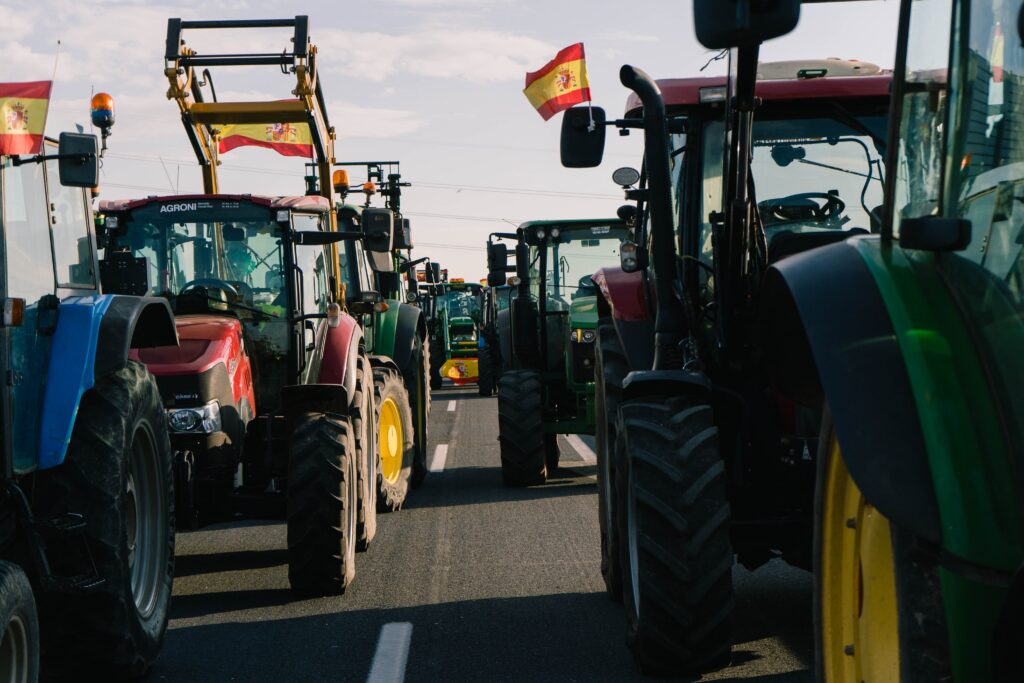
''We’re already struggling to pay for the fuel'' Photo credit: Pedro Pascual/Shutterstock
Farmers have finally reached breaking point, as diesel has become so expensive the people producing the food on Spain’s shelves say they can no longer absorb the extra cost, and with a fuel subsidy due to disappear at the end of September, the tractors are preparing to hit the roads.
For anyone living in Spain, this is not simply another farmers’ dispute happening somewhere in the countryside. If the protests turn into major road blockades, getting around could become more difficult. If fuel costs keep climbing, the food bill could rise again. And if farming becomes too expensive to make a living from, there is a much bigger question about who will produce the food we all expect to find in the shops.
Farmers say diesel costs have become impossible
Spain’s three main agricultural organisations, ASAJA (Spanish Association of Young Farmers), COAG (Coordinator of Farmers’ and Livestock Farmers’ Organisations) and UPA (Union of Small Farmers and Livestock Farmers), have announced nationwide mobilisations over the price of agricultural diesel. The dates and locations have not yet been confirmed, but the organisations say the price of agricultural diesel has risen by 48 per cent in a year, reaching €1.649 per litre on September 7.
The timing could hardly be worse for farmers. September and October are not exactly quiet months on Spanish farms, with harvesting, grape picking, cereal sowing, maize work and the olive harvest all requiring machinery and fuel. ASAJA estimates that autumn agricultural work across 22 million hectares could cost farmers at least €200 million more in diesel than last year.
What happens when farmers take to the roads?
Nobody yet knows exactly what the coming protests will look like because the organisations have not announced their routes. But anyone who remembers Spain’s previous tractor protests will know why motorists should pay attention. Large agricultural demonstrations can involve convoys of tractors moving slowly along roads, concentrations around cities and blockades affecting major routes. That can mean delays for commuters, people travelling to airports and holidaymakers trying to cross affected areas. It does not mean Spain is about to grind to a halt. Nor does it mean every motorway will be blocked.
But if sizeable tractor protests take place on important transport routes, there could be local disruption and longer journey times, particularly in agricultural regions. There is a good reason to take the possibility seriously. In January this year, road restrictions that held up almost 2,000 lorries in northern Spain were enough to disrupt supermarket deliveries, with around 150 shops in Galicia, Asturias, Cantabria and León reporting supply problems, particularly involving fresh food. More than 90 per cent of goods consumed in Spain are transported by road, according to transport-sector representatives cited at the time.
Why should shoppers care about diesel?
Because diesel does not just power tractors, it is used to plough fields, sow crops, harvest them and transport produce. Fuel is also part of the cost of moving food between farms, warehouses, processors, markets and supermarkets. That means a prolonged rise in energy costs can work its way through the food chain. Farmers may initially absorb some of the increase themselves, particularly when they have little power to negotiate the price they receive for their crops. But if production becomes too expensive, some of those costs can eventually be passed along the chain.
And there is another problem: farmers cannot simply decide to charge whatever they like. Eurostat reported this month that agricultural input prices across the EU rose 4.7 per cent year-on-year in the second quarter of 2026. Energy and lubricants were up 22 per cent and fertilisers 13.4 per cent, while average agricultural output prices actually fell 5.8 per cent. In other words, farmers can be paying more to produce food while receiving less for what they sell, and that is a pretty unpleasant business model.
Could food become even more expensive?
Without a doubt yes, It could. Particularly if high fuel prices persist, and Spain’s latest inflation figures already show how closely transport costs are hitting household finances. The annual inflation rate reached 4.3 per cent in August, with transport prices rising 9.5 per cent, largely because of fuel. Food and non-alcoholic beverages were also up 2.3 per cent year-on-year. That does not mean a 48 per cent rise in agricultural diesel will translate into a 48 per cent rise in food prices. Fuel is only one part of the cost of producing and transporting food.
But if diesel, fertiliser and other inputs remain expensive at the same time, the pressure builds at several stages of the supply chain. The European Commission tracks this transmission from what farmers receive, through processors and retailers, to what consumers eventually pay. For shoppers, that could mean more expensive fruit, vegetables, cereals, meat and other products over time, particularly where production or transport is particularly fuel-intensive.
A farmer talks the truth
For farmers on the ground, the rising costs are already being felt. Carlos, a farmer in Cádiz, told the EWN: “Things are getting serious. We’re already struggling to pay for the fuel, which means working our fields is more expensive. Feeding our animals and caring for our crops is more expensive, which means we need to sell them for more.
“It’s not just going to affect farmers. Food will become more expensive, and people are already struggling with the rising costs. If the government doesn’t step in, I don’t see things getting better. And, to be honest, I think we’re in this situation because of this government.”
Why farmers need to be able to keep farming
Whatever you think about tractor protests, there is a fairly straightforward reason for consumers to care about farmers being able to cover their costs, Spain needs farmers to keep producing food. If running a farm becomes financially impossible, the consequences do not stop at the farm gate. Production can fall, more food may need to be sourced from elsewhere and the country becomes more exposed to price and supply problems beyond its control.
That does not mean every demand made by an agricultural organisation has to be accepted. It does mean the underlying problem deserves attention. The government has already been warned that the sector is reaching its limit. Agriculture Minister Luis Planas is due to meet ASAJA, COAG and UPA on September 22, while Economy Minister Carlos Cuerpo is meeting representatives of the food industry, agricultural commodities trade and fertiliser manufacturers.
What happens after September 30?
The immediate issue is the €0.20-per-litre agricultural diesel support, which expires on September 30. The government has extended the measure until that date, but farmers say there is still no clear replacement on the table. For people filling their own cars, paying the supermarket bill and trying to get around Spain, what happens next matters.
If the tractors stay parked, farmers say they cannot afford to keep working, if they take to the roads, drivers may face disruption. And if fuel prices continue climbing without relief anywhere along the food chain, it will not be farmers alone who end up paying the price so now more than ever we need to support our local farmers.
Follow Euro Weekly News on Google News
Get breaking news from Spain, travel updates, and expat stories directly on your Google News feed.
Follow on Google NewsSign up for personalised news
Subscribe to our Euro Weekly News alerts to get the latest stories into your inbox!
By signing up, you will create a Euro Weekly News account if you don't already have one. Review our Privacy Policy for more information about our privacy practices.


Molly Grace
Molly is a British journalist and author who has lived in Spain for over 25 years. With a background in animal welfare, equestrian science, and veterinary nursing, she brings curiosity, humour, and a sharp investigative eye to her work. At Euro Weekly News, Molly explores the intersections of nature, culture, and community - drawing on her deep local knowledge and passion for stories that reflect life in Spain from the ground up.
Comments