Spain’s street cats: Scientists say colonies should go as 180 million wild animals killed a year
By Adam Woodward • Published: 19 Sep 2026 • 19:13 • 3 minutes read
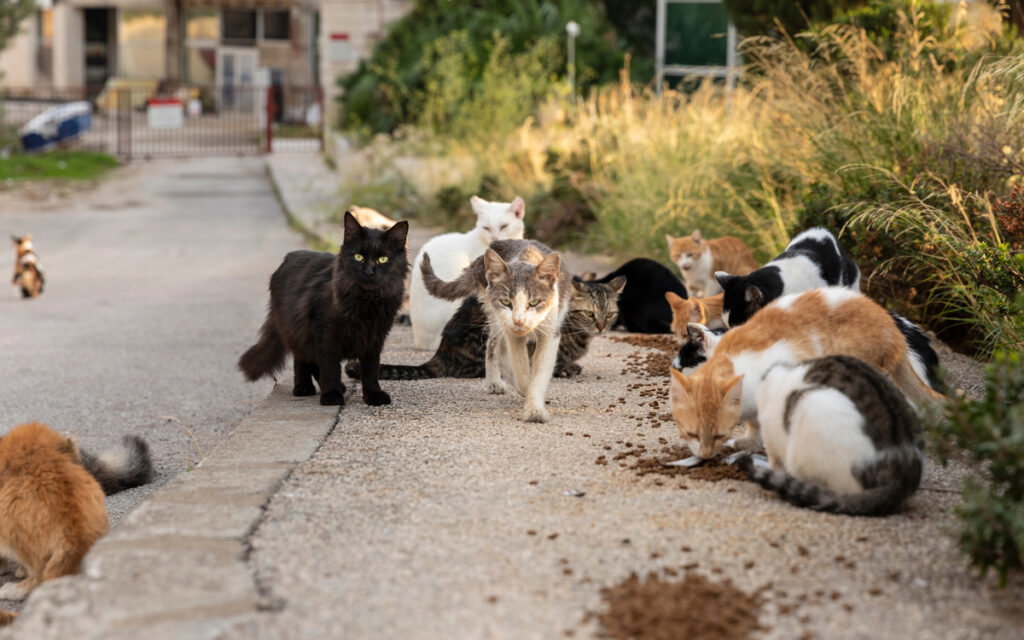
Food left for feral cats. Credit: Lea Rae - Shutterstock
Opinions on street-cat colonies divide neighbours, friends, councils and rescue groups. People these days care more about animal welfare than they used to. Researchers who study invasions still say packs of domestic cats outdoors are a poor bargain for wildlife, for people and for the cats.
Miguel Clavero, a CSIC scientist at Donana and an expert on invasive species, is blunt. Those colonies should not exist.
He names three dangers.
-
Wildlife suffers.
-
Public health takes a knock.
-
Colony cats live rough, catch more disease and die younger, often in a nasty way, than house cats.
A parasite, a sandpit and a nursery
Toxoplasmosis tops his health scare list. Most people only hear about it in pregnancy, whereas a healthy adult usually copes, while unborn babies and people with weak immunity do not. Clavero says that is not the whole story. About 32 per cent of people in Spain already carry Toxoplasma in the brain. Studies link that to a higher chance of schizophrenia. Nobody has fully mapped how that works. But, then, doctors once knew smoking and lung cancer were linked before they knew the exact pathway, he says.
Young kittens shed the parasite in droppings. Kids’ sandpits, undercooked meat and fruit or veg washed badly after contact with dirty soil can pass it on. Fernando Ojeda, a botany professor at the University of Cadiz, remembers a nursery in Puerto Real. Cats used the sandpit for leaving their little messages, so staff closed that patch to children instead of moving the cats. “They spread disease,” he says. “Until it hits people and makes the news, nothing changes.”
Cats hunt in town as well as in the campo
Ojeda says wild country pays the biggest price in lost species. Clavero hates the city-versus-countryside definition, because a city is an ecosystem too. Colony cats on blocks still take birds. Hunting is instinct, and prey can include chameleons, lizards, geckos, other reptiles and birds such as Kentish plover and green woodpecker.
Hunting is not the moral crime, Clavero says. Cats are built for it. Trouble starts when people feed colonies and keep hunter numbers high. Owned cats go out to kill about one vertebrate every three days, roughly 100 a year, from published studies. Spain’s Ministry of Social Rights puts colony cats at 1.8 million.
José Lubian, an ornithologist with SEO/BirdLife, Cadiz natural-history groups and Agaden, also blames a kind of animal activism. Feeding street cats, he says, makes more cats. Cats, he adds, help drive more extinctions worldwide than most people realise, because they hunt so well.
Neutering and return will not finish the job
Spain’s animal welfare law invented the “community cat”, a cat that lives off people. Official control is capture, sterilise and return (CER). Clavero’s camp is fine with neutering where it helps. They reject it as the only answer, because not every cat is caught. People dump more cats on the same groups, and then numbers bounce back.
Clavero says the law made things harder by betting on one method that cannot cope at this scale. He wants cats in enclosed sites with proper care, neutering where it fits, adoption campaigns, and a quicker, organised push to get cats off streets for health and wildlife.
Alejandro Ojeda backs controlled shelters. He compares it with dogs in pounds: try homes first, then euthanasia if none appear. Anyone who wants to delay that, he says, should pay for supervised keeping. Loose dogs and cats, he argues, have already helped wipe out many species across the planet.
Anyone who has watched colony rows in Nerja, Rincon de la Victoria, Torrevieja or Palma knows the same fight: councils pay for CER, volunteers fill feeding stations, and some neighbours want the cats gone altogether. This Cadiz science line is harsher. It treats the colony itself as the problem, not only a thin town-hall budget.
Follow Euro Weekly News on Google News
Get breaking news from Spain, travel updates, and expat stories directly on your Google News feed.
Follow on Google NewsSign up for personalised news
Subscribe to our Euro Weekly News alerts to get the latest stories into your inbox!
By signing up, you will create a Euro Weekly News account if you don't already have one. Review our Privacy Policy for more information about our privacy practices.




Adam Woodward
Adam is a writer who has lived in Spain for over 25 years. With a background in English teaching and a passion for music, food, and the arts, he brings a rich personal perspective to his work at Euro Weekly News. As a father of three with deep roots in Spanish life, Adam writes engaging stories that explore culture, lifestyle, and the everyday experiences that shape communities across Spain.
Comments