The Spanish city where Britain built a neighbourhood, started football and introduced golf
By Molly Grace • Published: 19 Sep 2026 • 23:53 • 4 minutes read
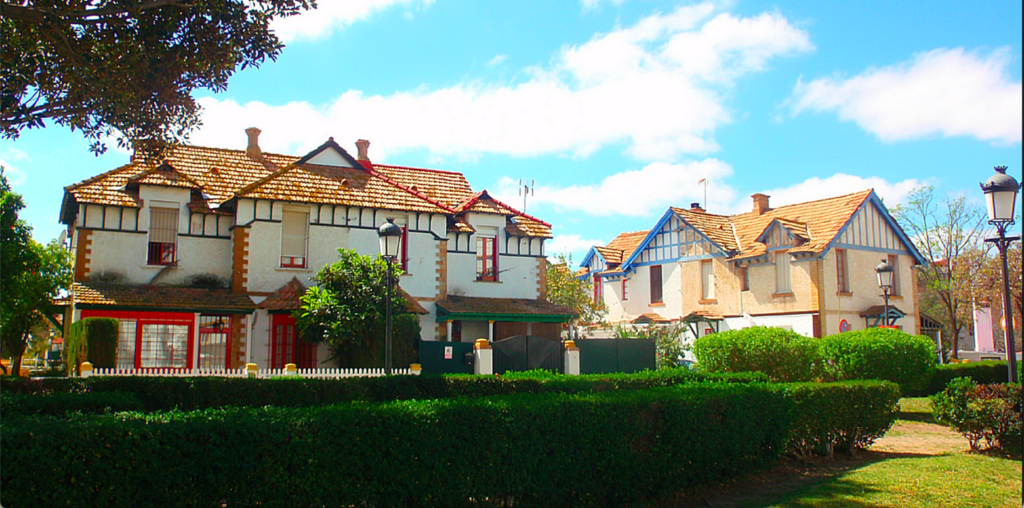
Walk through the Barrio Reina Victoria and the British influence is difficult to miss. Photo credit: Jose A CC 2.0/Wikipedia
Would you believe me if I told you there is a little British neighbourhood hidden away in Huelva? Known as the Barrio Reina Victoria, the Barrio Obrero and, rather fittingly, the Barrio Inglés, it isn’t an expat community living in Spain. The entire neighbourhood was built in British styles, with pitched roofs, chimneys, timber details, gardens and the sort of architecture you would expect to find in Britain rather than southern Spain.
But the really fascinating part is that Huelva became home to what has been described as Spain’s first unofficial British colony. Long before British retirees began settling along the Spanish coast, the Rio Tinto mines attracted a British community that established its own homes, clubs, sports and way of life in this corner of Andalucía. The Barrio Reina Victoria was one of the most visible results of that extraordinary period, a British-built neighbourhood that has survived for more than a century.
When Britain arrived in Huelva
The story starts in 1873, when the Rio Tinto mines were sold to foreign investors and the British-owned Rio Tinto Company Limited took control of the operation. The mines were enormously important to the local economy, and British engineers, managers and workers began arriving in the province, many bringing their families with them. The community became remarkably self-contained. The British established housing, social clubs and recreational facilities, while bringing familiar customs and pastimes from home. Huelva was developing a British presence unlike anything most people would associate with Spain today.
As the population connected to the mining company grew, so did the demand for suitable housing. In 1916, the Rio Tinto Company commissioned architects Gonzalo Aguado and José Pérez Carasa to design a new residential neighbourhood in Huelva. The development followed the principles of the British garden-city movement, with houses surrounded by gardens and plenty of open space. The first plans contained 71 buildings and 213 homes, with the first phase completed by 1919. More houses were added during the 1920s, creating the neighbourhood that remains today.
A British neighbourhood under the Andalucían sun
Walk through the Barrio Reina Victoria and the British influence is difficult to miss. The houses feature pitched roofs, chimneys, exposed brick, timber framing, gables and dormer windows, while gardens and open spaces form an important part of the neighbourhood’s layout. Some of the later homes designed by British architect R.H. Morgan in the 1920s made the connection even more obvious, incorporating Old English architectural features and decorative timber work.
Yet this isn’t simply an English village transported wholesale to Spain. Local Andalusian influences were incorporated into the designs, producing an unusual combination of British architecture and southern Spanish surroundings. The result is particularly striking under the Huelva sunshine. Traditional British-looking houses sit behind gardens and colourful façades, creating a neighbourhood that feels familiar and completely foreign at the same time. The Barrio Reina Victoria was declared a Cultural Heritage Site and protected as a Historic Site in 2002, ensuring that this unusual piece of Huelva’s history is preserved.
The British brought football to Huelva
Believe it or not the mining community didn’t just come to mine, they also left an extraordinary sporting legacy. The Real Club Recreativo de Huelva was founded on 18 December 1889, emerging from the British community and its sporting activities. The club is officially recognised as the oldest football club in Spain. Its first recorded football match followed just days later, on 29 December 1889, when the then called ‘Huelva Recreation Club’ played against sailors from ships in the city’s port.
Huelva continued to make football history. On 13 August 1892, the Velodrome was inaugurated, becoming the first purpose-built football ground in Spain. So while football is now inseparable from Spanish culture, one of the country’s earliest chapters in the sport was written by British residents in Huelva more than 130 years ago.
And they brought golf too
Football wasn’t the only British sport to take root, golf arrived with the British mining community too. The North Lode Golf Club was established at Minas de Rio tinto in 1914, making it one of Spain’s earliest golf clubs.
Then, in 1916, the Club de Golf de Huelva was founded on land provided by the Rio Tinto Company. Huelva consequently became one of the country’s early centres for the sport, decades before golf courses became such a familiar sight to visitors and expats across Spain. The British miners had brought the sports they enjoyed at home and established them in their new surroundings.
The British legacy is still here
The Rio Tinto Company and the British mining era are no longer the force they once were, but their fingerprints remain all over Huelva. They can be found in the old mining and railway infrastructure, in the history of Recreativo, in the city’s early golf clubs and, perhaps most charmingly, in the streets of the Barrio Reina Victoria.
For British expats living in Spain, it is a reminder that the British connection with Andalucía didn’t begin with package holidays, cheap flights or retirement communities on the coast. It stretches back to the 19th century, when British workers arrived in Huelva in search of opportunity in one of the world’s most important mining regions. More than 150 years later, the neighbourhood they helped create still stands, with its British-style houses sitting beneath the Andalusian sun. You don’t need to cross the Channel to find ‘little Britain’, It’s hiding in Huelva.
Follow Euro Weekly News on Google News
Get breaking news from Spain, travel updates, and expat stories directly on your Google News feed.
Follow on Google NewsSign up for personalised news
Subscribe to our Euro Weekly News alerts to get the latest stories into your inbox!
By signing up, you will create a Euro Weekly News account if you don't already have one. Review our Privacy Policy for more information about our privacy practices.

Molly Grace
Molly is a British journalist and author who has lived in Spain for over 25 years. With a background in animal welfare, equestrian science, and veterinary nursing, she brings curiosity, humour, and a sharp investigative eye to her work. At Euro Weekly News, Molly explores the intersections of nature, culture, and community - drawing on her deep local knowledge and passion for stories that reflect life in Spain from the ground up.
Comments