Spain’s new weapon against drink spiking: an ice cube that traps the drug as evidence
By Harry Dennis • Published: 19 Sep 2026 • 16:45 • 3 minutes read
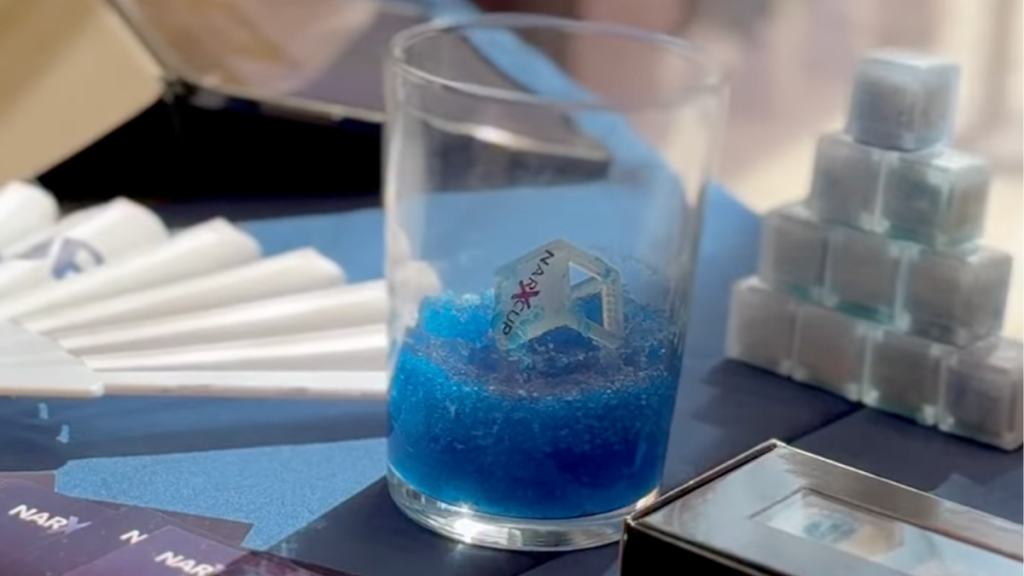
NarXcup's ice cube turns bright blue and solid the moment it reacts to a spiked drink. Credit: Ayuntamiento de Pozuelo / RRSS
A drink turning bright blue and rock solid could soon save someone’s night. A Madrid startup has built an ice cube that reacts the moment a drug is slipped into a glass, indicating immediately if a drink has been spiked, and leaving the liquid undrinkable.
How the cube turns a spiked drink to jelly in seconds
The device, called NarXcup, looks like an ordinary ice cube when in a drink. Hidden inside it is a reactive layer its creators describe as an intelligent membrane, engineered to respond the moment it meets certain drugs.
If it detects a substance, three things happen almost simultaneously. The drink turns intensely blue, takes on a strong bitter taste, and solidifies into a solid block within seconds, warning the drinker before they take another sip.
The cube currently detects scopolamine, better known as burundanga, historically the drug most associated with drink spiking and robbery cases in Spain. A version planned for 2027 aims to detect a wider range of substances, including fentanyl.
Why one family’s experience led to its invention
NarXcup was founded in Madrid in 2025, though research into the technology began back in 2022. The team behind it brings together pharmacists, biomedical scientists, doctors and engineers. According to the company, one of its co-founders was driven to build the device after a close relative was a victim of what is known in Spain as sumisión química, or chemical submission: being drugged, usually without their knowledge, to make them vulnerable to robbery or sexual assault. Marketing director David Costa has said the ambition was to build something passive, protecting a drinker without requiring them to test their own glass.
That passive design also has a forensic upside. Because the gel traps the drug inside it, the cube preserves a sample as evidence, which matters because these substances typically metabolise and disappear from the body within hours, one of the reasons chemical submission cases have historically been so hard to prove.
Already tested in nightlife pilots across Madrid and Castilla-La Mancha
NarXcup completed a pilot phase over summer 2026, testing the cubes in real nightlife settings in Pozuelo de Alarcón and Alcorcón, both in the Madrid region, as well as El Casar and Alovera in Castilla-La Mancha.
The company is now working towards a wider retail launch, with pharmacies across Spain earmarked to start stocking the cubes from 2027.
What it will cost when it reaches Spanish pharmacies
NarXcup expects to sell packs of three cubes for around €8 to €10 once they reach pharmacy shelves. Each cube is designed to be reused repeatedly, either until it reacts to a drug or until a six-month expiry date passes.
The company also has two further products in development: a smart cup with the detection technology built into a false bottom, aimed at festivals and events, and a version with a Bluetooth microchip that would send an alert directly to the drinker’s phone.
How Britain’s own drink-spiking numbers compare
The worry behind NarXcup will be familiar to British residents and visitors in Spain. EWN has previously reported on bar owners arrested over drink spiking, and on the wider spiking problem facing nightlife venues.
Figures from Drinkaware’s most recent Spiking Monitor found that 2.2 per cent of UK adults, around 1.2 million people, reported being a victim of drink spiking in the previous 12 months, with 11 per cent saying it had happened to them at some point in their life. Police in England and Wales recorded 2,131 drink-spiking reports in just five months between May and September 2022, and Drinkaware’s data suggests only around half of incidents are ever reported, with many victims saying they did not see the point. Bars, not clubs, were the most common location, accounting for 41 per cent of cases.
NarXcup remains more than a year from Spanish pharmacy shelves, and its pilots so far have been confined to a handful of towns around Madrid. But for anyone who has ever left a drink unattended on a night out, it could offer two things that have long been missing: an early warning, and a way to make whoever did it answer for it.
Follow Euro Weekly News on Google News
Get breaking news from Spain, travel updates, and expat stories directly on your Google News feed.
Follow on Google NewsSign up for personalised news
Subscribe to our Euro Weekly News alerts to get the latest stories into your inbox!
By signing up, you will create a Euro Weekly News account if you don't already have one. Review our Privacy Policy for more information about our privacy practices.



Harry Dennis
Born in the UK and raised on the Cádiz coast, Harry brings his background in design, music, and photography to his writing for Euro Weekly News, sharing stories that celebrate culture and lifestyle across Spain and beyond.
Comments