Before you reach for tuna in Spain: the tinned fish that may be the healthier choice
By Harry Dennis • Published: 21 Sep 2026 • 13:08 • 3 minutes read
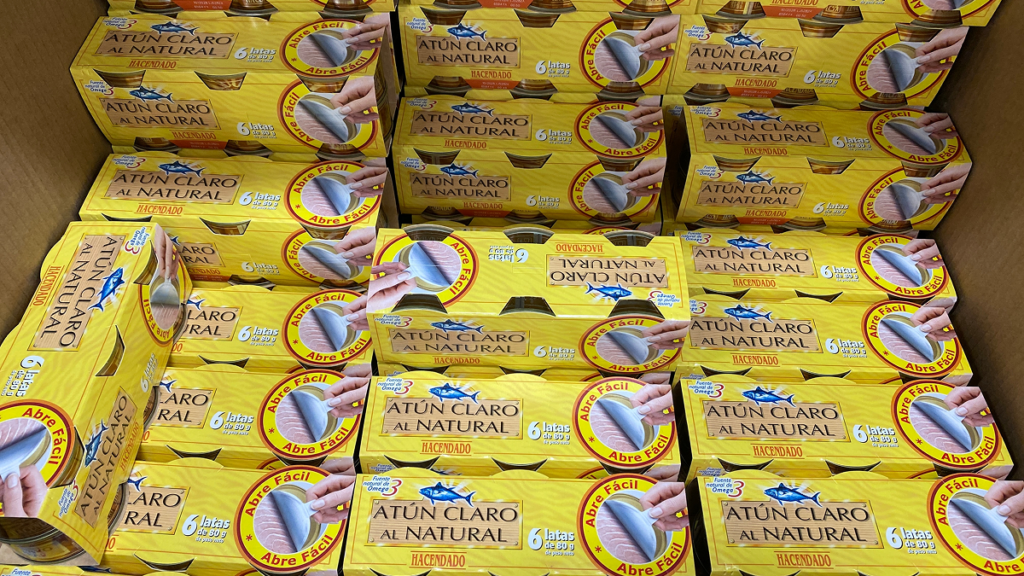
Tuna is nearly half of every tin of fish Spain buys, and the one with the least omega-3. Credit: Tetyana_Pidkaluyk / Shutterstock
You’ve probably been reaching for the same tins for years, and so has almost everyone else in Spain. Yet the sardines and mackerel sitting right beside it carry four to five times the omega-3, and the NHS doesn’t even count tuna as oily fish.
Tuna is nearly half of every tin Spain buys
Spanish households worked their way through 4.13 kilos of tinned fish and shellfish per person in 2024, and 1.95 kilos of that was tuna on its own, at €19.72 a head. It’s also the only corner of the fish counter holding up, with buying of fish and seafood overall down 4.9 per cent that year while tins crept up slightly. So the habit itself is sturdy, and the thinking behind it, ‘it’s fish, it’s protein, it’s healthy’, isn’t wrong either. It’s just pointed at the wrong tin.
The NHS doesn’t count tuna as oily fish
That’s the official wording, and it catches almost everyone out: fresh and canned tuna do not count as oily fish. The guidance recommends at least one portion of oily fish a week, roughly 140g, and a tuna sandwich won’t get you there.
The figures behind it are as follows: light tuna canned in water comes out at about 0.22g of combined EPA and DHA (the two omega-3 fats that do the work) per 100g drained. Canned mackerel sits at roughly 1.23g and sardines in oil at around 0.98g. That makes mackerel and sardines a much more sensible pick when looking for those valuable nutrients.
Tuna packed in oil is lower again, at about 0.13g, as the fish’s own oils drift out into the covering oil that you then usually tip down the sink.
Sardines bring the calcium that tuna can’t
The soft bones in a tin of sardines are the whole point, and they are why the same 100g carries 382mg of calcium against 17mg for tuna in water. That’s more than 20 times as much, with 4.8 micrograms of vitamin D on top.
Tuna isn’t beaten everywhere, mind. Drained tuna in water is the leanest protein of the four, at 19.5g for only 86 calories, which is the reason it ends up in so many salads and gym lunches.
Anchovies are where the salt really bites
Tinned fish averages around 415mg of sodium per 100g, and nutritionist Jessyca Redondo said that is worth keeping an eye on even if your blood pressure is fine.
Anchovies in oil are in a different league though, at about 3,668mg of sodium per 100g, close to nine times that average. The saving grace is that most people don’t eat a full 100g of anchovies, so two or three fillets on toast is a very different proposition to working through the tin.
Then there’s the weight on the front. A Spanish tin marked 80g drains down to roughly 52g of actual fish, so the protein you walk away with is nearer 13g than the 20g the label suggests.
Why alternating matters more than avoiding tuna
None of this makes tinned tuna a problem. AESAN, Spain’s food safety agency, keeps a short list of fish that pregnant women and children under 10 should skip over mercury, and it is swordfish, shark, pike and bluefin tuna sold fresh. The atún claro (light tuna) in the multipack is not on it.
The NHS sets its own pregnancy limit at no more than four tins of tuna or two tuna steaks a week, and nutritionist Jessyca Redondo’s advice runs the same way, alternating the bigger fish with smaller ones like sardines and mackerel, particularly for children.
So the simple version is this: next time you’re stocking the cupboard, swap one tin in three for sardines or caballa (mackerel), and eat the bones rather than picking them out, just maybe not in one gulp.
Follow Euro Weekly News on Google News
Get breaking news from Spain, travel updates, and expat stories directly on your Google News feed.
Follow on Google NewsSign up for personalised news
Subscribe to our Euro Weekly News alerts to get the latest stories into your inbox!
By signing up, you will create a Euro Weekly News account if you don't already have one. Review our Privacy Policy for more information about our privacy practices.





Harry Dennis
Born in the UK and raised on the Cádiz coast, Harry brings his background in design, music, and photography to his writing for Euro Weekly News, sharing stories that celebrate culture and lifestyle across Spain and beyond.
Comments