Autumn arrives in Spain tonight as daylight starts disappearing at almost three minutes a day
By Tara Russell • Published: 22 Sep 2026 • 10:36 • 3 minutes read
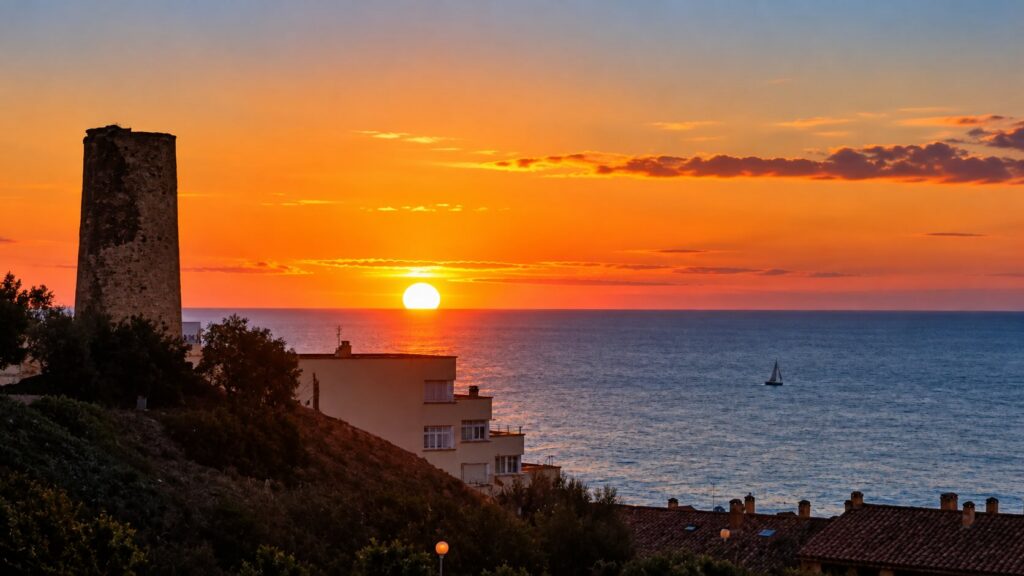
The arrival of autumn brings rapidly shorter days across Spain, with almost three minutes of daylight being lost each day. Photo Credit: EWM
Summer officially ends in Spain tonight, with autumn beginning at 1.05am on Wednesday, September 23, as the country enters the time of year when daylight disappears at its fastest rate.
According to Spain’s National Astronomical Observatory, autumn 2026 begins at precisely 1.05am Spanish mainland time and will last for approximately 89 days and 21 hours, ending when winter begins on December 21.
For anyone already noticing darker mornings and earlier evenings, one of the biggest seasonal changes is happening surprisingly quickly.
Spain is losing almost three minutes of daylight every day
Around the beginning of autumn, the amount of daylight across Spain decreases more rapidly than at any other time of the year.
At latitudes across mainland Spain, the Sun rises more than a minute later each morning and sets more than a minute earlier each evening around this point in the year.
Put those changes together and Spain can lose almost three minutes of daylight in a single day.
Over the course of just one week, that can amount to roughly 20 minutes less daylight.
The difference can feel particularly noticeable after Spain’s long summer evenings, when residents and holidaymakers have become accustomed to eating, walking, visiting terraces and spending time outdoors well into the evening.
Temperatures, however, may tell a very different story. Spain is entering astronomical autumn while parts of the country are still expecting temperatures of up to 37C, with unusually warm conditions forecast to continue into October.
EWN has more on why summer temperatures are refusing to leave Spain even as autumn begins.
Why is daylight disappearing so quickly?
The rapid change is connected to the autumn equinox.
Astronomically, the beginning of the season is determined by the position of the Sun as seen from Earth. The equinox occurs when the apparent position of the Sun crosses the celestial equator.
Around this point, day and night are close to equal in length, although they are not precisely equal because factors including atmospheric refraction affect when sunrise and sunset are observed.
From here, nights continue getting longer and days shorter across the Northern Hemisphere as the year moves towards the winter solstice.
The rate at which daylight changes is not constant throughout the year. Around the equinox, sunrise and sunset times change particularly quickly. As Spain moves deeper into autumn, the daily reduction in daylight gradually slows.
Why does autumn begin at 1.05am?
The beginning of autumn is determined astronomically rather than simply being fixed to a particular date on the calendar.
This year, Spain’s National Astronomical Observatory calculates that the precise moment occurs at 1.05am on September 23.
That is why the beginning of autumn can move slightly from one year to another rather than always falling on exactly the same date.
This year’s autumn will last 89.86 days, taking Spain from the final days of September through October and November before astronomical winter begins on December 21.
Autumn on the calendar, but summer may linger
The arrival of astronomical autumn does not mean temperatures will suddenly tumble.
Large parts of Spain, particularly around the Mediterranean, can continue experiencing warm and sunny conditions well after summer has officially ended.
The seasonal transition is already affecting everyday life in other ways. Gardeners, for example, are beginning to prepare terraces and outdoor spaces for changing conditions, and EWN recently looked at what people with gardens in Spain can do as summer gives way to autumn.
But unlike the temperature, which can continue behaving like summer for weeks, the loss of daylight follows a much more predictable pattern.
From Wednesday onwards, nights will continue getting longer and days shorter until Spain reaches the winter solstice and the shortest days of the year in December.
So while Spain officially enters autumn at 1.05am on Wednesday, the first unmistakable sign of the new season may not be cooler weather.
It could simply be how quickly the evenings begin to disappear.
Follow Euro Weekly News on Google News
Get breaking news from Spain, travel updates, and expat stories directly on your Google News feed.
Follow on Google NewsSign up for personalised news
Subscribe to our Euro Weekly News alerts to get the latest stories into your inbox!
By signing up, you will create a Euro Weekly News account if you don't already have one. Review our Privacy Policy for more information about our privacy practices.




Tara Russell
Tara is a writer and editorial team member at Euro Weekly News, specialising in news reporting and feature writing. Born and raised in Spain, she holds a B.A. in Applied Languages and Translation Studies. With a strong background in linguistics, communication, and cross-cultural storytelling, Tara previously worked as a language teacher before transitioning to journalism and media.
Comments