Cataluña proposes AI ban for under-14s as screen concerns grow
By Molly Grace • Published: 22 Sep 2026 • 21:32 • 3 minutes read
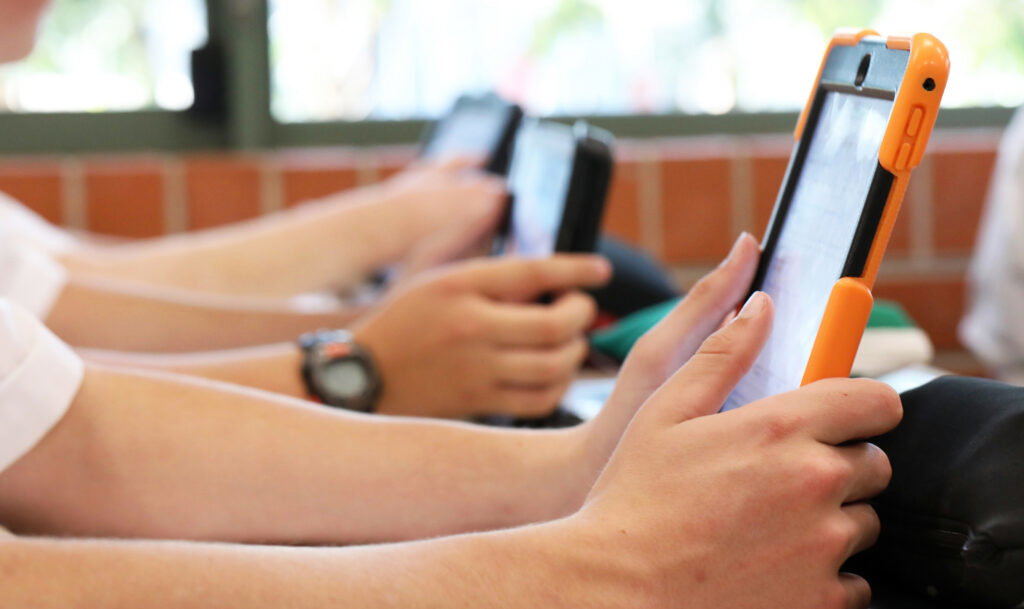
Illa has said he wants AI banned in Catalan classrooms until pupils reach 14. Photo credit: LBeddoe/Shutterstock
If you have ever handed your child a phone just to get five minutes of peace, you are hardly alone. Screens have become part of family life so quickly that it can be difficult to know where normal use ends and too much begins. Now, one Spanish region wants to put much stricter limits on how children use them, including keeping artificial intelligence out of schools until the age of 14. Cataluña is preparing a package of more than 60 measures aimed at reducing children’s exposure to screens and tackling problematic digital use.
The plans include a future law covering screen use and artificial intelligence, while Catalan president Salvador Illa has proposed banning AI in schools for pupils under 14. The proposals come after the Catalan Health Department published a new Digital Health Guide, based on a review of between 650 and 700 scientific references. The guidance warns about a range of potential health and developmental problems linked to excessive or poorly managed screen use among children and teenagers.
Children are getting phones younger
One figure in particular will make plenty of parents sit up. The Catalan data shows that 82.4 per cent of young people have their own mobile phone, with the average age at which they get their first one now just 10.8 years old. Among those aged 10 to 20, 92.5 per cent have at least one social media profile. The amount of time some teenagers spend online is also considerable. Those aged 14 to 18 reportedly spend an average of 4.8 hours a day on recreational internet use during the week, rising to 6.7 hours at weekends.
The research found signs of potentially problematic internet use among 23 per cent of 14 to 18-year-olds, while 34 per cent showed signs of potentially problematic social media use. Health officials have linked excessive screen exposure with problems including sleep difficulties, myopia, anxiety, attention problems and excess weight. The guide also stresses that the impact depends on factors such as what children are doing online, the content they are consuming, their age and how much supervision they receive.
AI ban proposed for under-14s
The most striking part of the plan is the proposed restriction on artificial intelligence in schools. Illa has said he wants AI banned in Catalan classrooms until pupils reach 14, while also pushing for a greater role for traditional textbooks and reading. The proposal forms part of a broader attempt to reduce screen dependence and encourage more direct interaction and reading.
This would build on guidance already introduced for the 2026–27 school year. Cataluña’s education department says pupils under 14 should not independently use general-purpose AI tools, while those aged between 14 and 18 require authorisation. That distinction matters: the proposed legislation has not simply switched off screens for every child under 14. Instead, Cataluña is looking at a broader set of restrictions and recommendations covering different ages, types of technology and circumstances.
A return to books?
Illa has also argued for bringing textbooks back to the centre of classroom learning, alongside handwriting and reading. The Catalan president has said the recommendations from the new health guide should ultimately be incorporated into a future law, with the government seeking the widest possible consensus and coordination with both Spain and the European Union.
The Generalitat wants Cataluña to become the first Spanish autonomous community with its own model for children’s and teenagers’ digital wellbeing. For parents, however, the debate is likely to extend far beyond what happens inside the classroom. A child may be protected from AI during school hours, but that does not stop them using it at home. Likewise, restricting phones or social media in one setting does little if the same child spends hours online elsewhere.
That is why the proposed law is being framed around digital wellbeing rather than simply banning technology. The aim is to change children’s relationship with screens while still recognising that technology has a place in modern education and everyday life. For families across Spain, the Catalan experiment could therefore be one to watch. If the legislation goes ahead, it could provide a test of just how far governments can go in trying to give children more time away from the screens that have become almost impossible to escape.
Follow Euro Weekly News on Google News
Get breaking news from Spain, travel updates, and expat stories directly on your Google News feed.
Follow on Google NewsSign up for personalised news
Subscribe to our Euro Weekly News alerts to get the latest stories into your inbox!
By signing up, you will create a Euro Weekly News account if you don't already have one. Review our Privacy Policy for more information about our privacy practices.





Molly Grace
Molly is a British journalist and author who has lived in Spain for over 25 years. With a background in animal welfare, equestrian science, and veterinary nursing, she brings curiosity, humour, and a sharp investigative eye to her work. At Euro Weekly News, Molly explores the intersections of nature, culture, and community - drawing on her deep local knowledge and passion for stories that reflect life in Spain from the ground up.
Comments