Spain wants the abortion pill at local health centres: what could change and when
By Harry Dennis • Published: 29 Sep 2026 • 12:46 • 3 minutes read
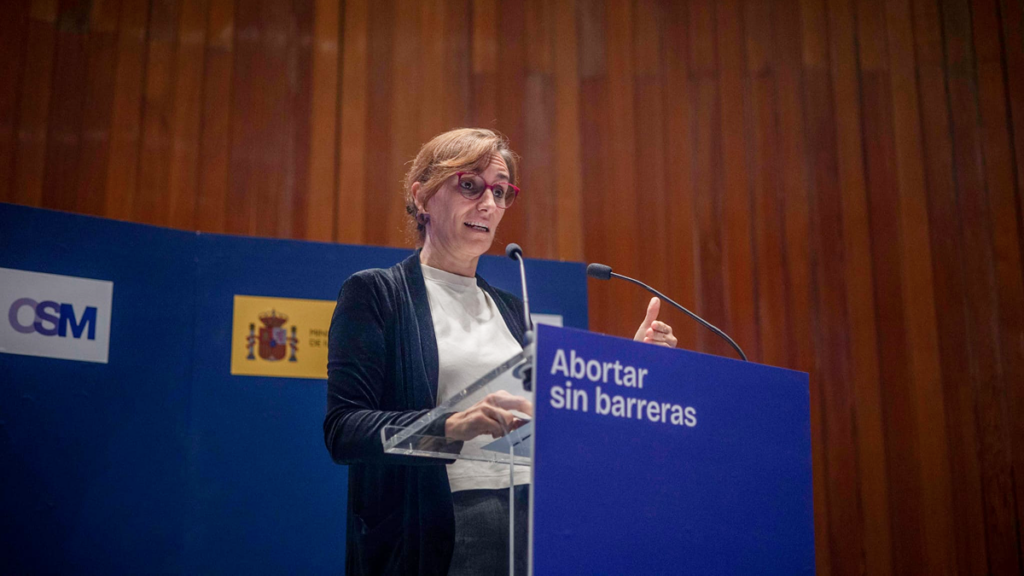
The Health Ministry's 'Abortar sin barreras' event on Monday September 28, where the plan was announced. Credit: Ministerio de Sanidad
Women who choose a medication abortion in Spain currently have to go to a hospital or a separate clinic, sometimes a long way from home. Now the Health Ministry wants their own local health centre to handle it instead, though it hasn’t said when that could happen.
The journey some women make could get much shorter
Spain’s Health Ministry wants women who choose a medication abortion to be able to get it at their local centro de salud (health centre) whenever it’s clinically suitable, rather than travelling to a hospital or a separate clinic.
Health Minister Mónica García announced the plan on Monday September 28 at an event marking International Safe Abortion Day, alongside Equality Minister Ana Redondo. García said the idea is for women to save themselves a journey, know who to call if they have a doubt and feel there’s a team that knows them and supports them.
Abortion has been legal on request in Spain up to 14 weeks of pregnancy for years, but the ministry says the reality on the ground depends heavily on where a woman lives. Speakers at the event, including the human rights lawyer Anand Grover, argued that having the right on paper isn’t enough if women can’t reach a service close enough to use it.
So how does it work? Medication abortion uses two pills, with mifepristone taken first and misoprostol 24 to 48 hours later, and it’s approved in Spain for pregnancies of up to nine weeks. At the moment mifepristone’s approved use is limited to hospital settings, and that’s the barrier the ministry wants to remove.
There’s no start date and three things have to change first
The ministry says it needs to change the royal decree that sets the rules for authorising health centres, and update mifepristone’s technical data sheet (the official document setting out where and how the drug can be used) so it’s no longer tied to hospitals.
It also has to add the service to the national health system’s common list of services (the cartera común, which sets out the care every region is expected to offer). It will then work out the details with regional governments and health professionals. However, the ministry hasn’t given a single date for any of that yet.
Nearly eight in 10 abortions happen in private centres
The reason the ministry is pushing this comes down to where abortions currently take place. Of the 106,172 abortions recorded in Spain in 2024, nearly 80 per cent were carried out in private centres, and in Andalucía it was 99.97 per cent, meaning almost none happened in public facilities.
Now, ‘private’ doesn’t automatically mean the woman paid. Many of those clinics are contracted by the regional health service, so the public system covers the cost, but it can still mean a trip to a specific clinic that might be nowhere near home, particularly outside the big cities.
For British and other foreign residents registered with a local centro de salud, that centre is normally where their care in Spain begins, which is why the change could matter to them too, depending on the region they live in.
García pointed to Cantabria as the model, saying 80 to 90 per cent of abortions there are already handled within the public system, partly through the pill.
Regions will decide how fast it happens
Primary care is run by the regional governments, so the ministry can set the framework but each region controls how quickly, and how willingly, it’s rolled out. That’s why at first it will most likely not work the same way across the whole of Spain.
García said she thinks it’s ‘perfectly feasible’ that some regions run by the opposition Partido Popular (PP) would support the idea. However, she acknowledged that Madrid and Andalucía probably wouldn’t, which could leave two of Spain’s biggest regions outside the plan, at least for now.
Doctors also keep the right to conscientious objection (refusing to take part on moral or religious grounds), so who is actually available at a particular health centre could vary too. Officials at the event said the right to an abortion has to be guaranteed while that objection is managed, so that no woman is left without care.
It wouldn’t suit everyone
The plan only covers women for whom the pill is clinically appropriate. That rules out anyone past nine weeks, and the pill isn’t recommended in cases including an ectopic pregnancy (when the pregnancy develops outside the womb) or certain bleeding disorders.
Even so, many women could be eligible. The ministry’s figures show 76.58 per cent of abortions in 2024 took place before eight weeks, although it’s not yet known how many of those women would choose the pill over surgery.
For now, nothing changes at your local health centre, so anyone who needs care today still goes through a hospital or an authorised clinic. Until the ministry publishes the changes to the royal decree, the mifepristone data sheet and the common list of services, and puts dates on them, the route stays exactly as it is.
Follow Euro Weekly News on Google News
Get breaking news from Spain, travel updates, and expat stories directly on your Google News feed.
Follow on Google NewsSign up for personalised news
Subscribe to our Euro Weekly News alerts to get the latest stories into your inbox!
By signing up, you will create a Euro Weekly News account if you don't already have one. Review our Privacy Policy for more information about our privacy practices.





Harry Dennis
Born in the UK and raised on the Cádiz coast, Harry brings his background in design, music, and photography to his writing for Euro Weekly News, sharing stories that celebrate culture and lifestyle across Spain and beyond.
Comments