Benidorm joins Zaragoza in double European green award win for Spain
By Harry Dennis • Published: 10 Oct 2026 • 12:29 • 4 minutes read
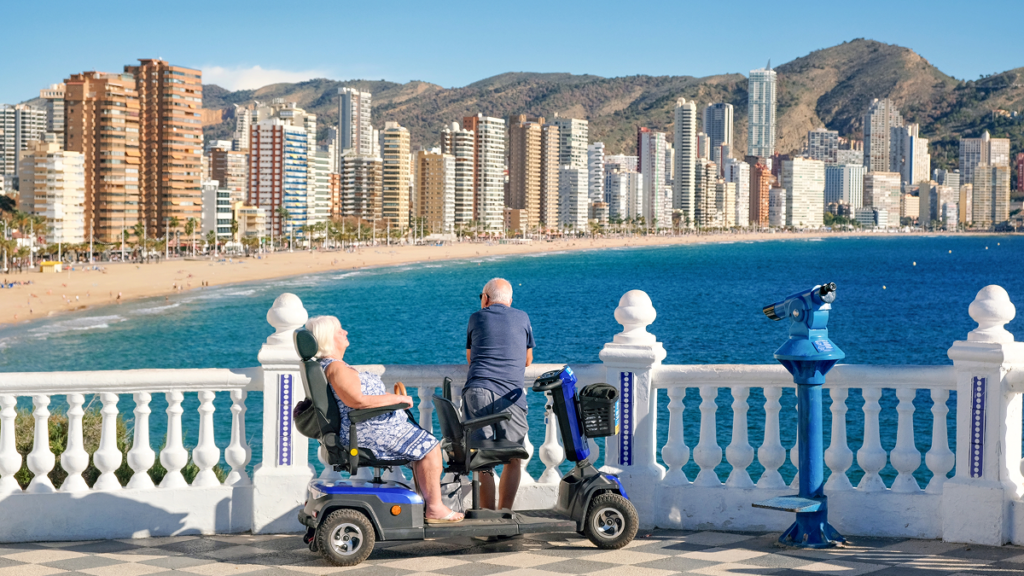
Skyscraper-packed Benidorm named one of Europe’s greenest towns as Zaragoza takes top 2028 prize. Credit: Veja / Shutterstock
Benidorm is far better known for its skyscrapers and packed summer beaches than for its green credentials, yet the Costa Blanca resort has just been named one of Europe’s greenest towns. It shares the spotlight with Zaragoza, which beat four rival cities to become European Green Capital 2028.
Spain takes two of Europe’s three green city titles
Residents in Zaragoza and Benidorm have plenty to celebrate, with both named among Europe’s greenest at a ceremony in Guimarães, Portugal, on the evening of Thursday October 8.
Zaragoza won European Green Capital 2028, the top prize for cities of more than 100,000 people, beating Aalborg in Denmark, Bielsko-Biała in Poland, Košice in Slovakia and Porto in Portugal. The title comes with €600,000 from the European Commission to fund its green year.
Benidorm, meanwhile, shares the European Green Leaf 2028 title (the same award for towns of 20,000 to 100,000 people) with Estarreja in Portugal, and takes home €200,000. It beat fellow Spanish finalist Chiclana de la Frontera in Cádiz to the prize.
Benidorm’s skyline turned out to be its strength
Plenty of holidaymakers will react with a raised eyebrow and a quick ‘Benidorm? Green?’ The resort’s wall of tower blocks and its crowded seafront are hardly the picture most people have of an eco-friendly town.
However, that’s exactly what caught the judges’ attention. The jury praised Benidorm for successfully managing the pressures of mass tourism while still protecting the environment, with an earlier assessment pointing to its strong focus on water management and adapting to climate change.
The Commission also noted that the resort has cut its emissions despite huge visitor numbers, and uses green infrastructure (parks, trees and planted areas) to tackle the urban heat island effect, where packed streets and buildings trap heat and leave towns hotter than the countryside around them.
A second try after missing out last year
It’s Benidorm’s second final in a row, having lost out last year to Assen in the Netherlands and Siena in Italy, who will hold the title in 2027, as awards are given two years in advance. The resort was also named the EU’s European Green Pioneer of Smart Tourism for 2025.
Mayor Toni Pérez led this year’s delegation to Portugal, joined by hotel association HOSBEC, the University of Alicante and water company Veolia.
After the win, Pérez said the award “endorses Benidorm’s planning and management as a tourist destination based on sustainability”, and set himself the goal of making Benidorm the best possible ambassador for the award in 2028.
Benidorm is reusing more of its own water
Water is where residents see that work most clearly. Benidorm’s treatment plant handles about 13 billion litres of wastewater a year, but only around four billion litres of that is currently reused.
So the town has drawn up a plan to cut its use of conventional water by around 15 per cent. The first phase of a new recycled water network (treated wastewater cleaned up for non-drinking uses) in the Poniente area will supply around 6,300 homes and more than 280,000 square metres of green space, for watering gardens and cleaning streets.
A desalination plant run by the Marina Baixa water consortium is also planned to start operating in 2028, adding up to six billion litres of drinking water a year on a stretch of coast that’s long struggled with water shortages.
Zaragoza’s water use has fallen by around 40 per cent
Zaragoza’s win is the bigger prize, though, and a long time coming. The city applied in 2009, 2011 and 2014 without ever reaching the final, and this year it was the only Spanish city in the running for the capital title.
The jury praised its strong governance and long-term commitment, which it said had helped the city respond to growing climate challenges while putting local communities first. Zaragoza scored especially well on nature, green spaces and land use, backed by a master plan to connect green areas right across the city.
According to the city council, Zaragoza’s total water use has dropped from around 105 billion litres a year in the 1980s to about 61 billion today, while 76.5 per cent of residents live within 300 metres of a public green space. Emissions fell by 25 per cent between 2005 and 2019 too, and a new urban forest project, Bosque de los Zaragozanos, plans to plant 700,000 trees.
Mayor Natalia Chueca said: “This award belongs to all of Zaragoza“, adding that the city’s green transformation “doesn’t start today” as it’s been working on it for years.
What 2028 will bring for both cities
Zaragoza has around 150 activities planned for its green year under the slogan Zaragoza cuida. Naturalmente (Zaragoza cares. Naturally). One will see a tree planted in the city for every ticket sold at the Vive Latino music festival, while another, Ebro Vivo, will mark 20 years since the city’s water-themed Expo 2008 by focusing on the River Ebro.
In Benidorm, the €200,000 will pay for a year of public activities and environmental awareness events. Both cities join a short list of Spanish winners including Vitoria-Gasteiz and Valencia as green capitals, and Mollet del Vallès and Viladecans as Green Leaf towns.
The titles run throughout 2028, so residents and visitors have just over a year before those tree plantings, river events and green activities start appearing on the streets of Zaragoza and Benidorm.
Follow Euro Weekly News on Google News
Get breaking news from Spain, travel updates, and expat stories directly on your Google News feed.
Follow on Google NewsSign up for personalised news
Subscribe to our Euro Weekly News alerts to get the latest stories into your inbox!
By signing up, you will create a Euro Weekly News account if you don't already have one. Review our Privacy Policy for more information about our privacy practices.


Harry Dennis
Born in the UK and raised on the Cádiz coast, Harry brings his background in design, music, and photography to his writing for Euro Weekly News, sharing stories that celebrate culture and lifestyle across Spain and beyond.
Comments