Canary Islands passengers could lose free buses and trams in January after Spain’s snap election
By Harry Dennis • Published: 12 Oct 2026 • 13:19 • 3 minutes read
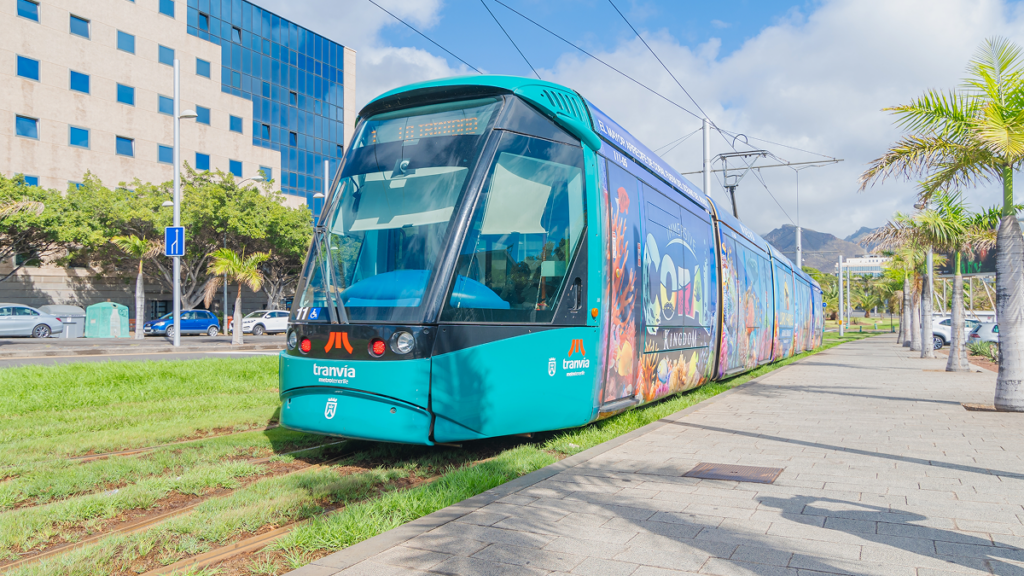
Free bus and tram travel in the Canaries is only funded until December 31. Credit: ODIN Daniel / Shutterstock
Bus and tram passengers across the Canary Islands have travelled for free since 2023, but nobody can yet say whether that’ll still be the case on New Year’s Day. Spain’s snap general election has landed just as Madrid was due to sign off the money for 2027.
Free travel is only guaranteed until December 31
Regular passengers have been hopping on guaguas (the Canarian word for bus) and the Tenerife tram without paying since January 2023. However, the money behind the free scheme only runs until Thursday December 31, and the extension for 2027 that the regional government was counting on hasn’t been signed.
That’s because Spanish Prime Minister Pedro Sánchez has called for a general election for Sunday November 29 after Congress threw out two of his housing decrees, and the regional government now fears the vote has knocked the funding timetable off course. Canary Islands government spokesperson Alfonso Cabello said free travel “is at risk”, with the extension that should be coming from the government costing more than €160 million. “The early election has broken off the work we were in the middle of,” he said.
Why the election makes the deal so much harder
Free travel for 2026 was secured through a royal decree-law approved on December 23, 2025 (an emergency law the government can bring in straight away, which Congress then has to back). Now that parliament has been dissolved, any new one would have to come from Sánchez’s caretaker government and then be approved by the Diputación Permanente (the small committee of MPs that keeps working while Congress is dissolved).
The new parliament won’t sit until Wednesday December 23, which leaves very little room before the money runs out. A meeting of transport chiefs from Madrid and the regions on Tuesday October 6 also ended without any guarantee from Transport Minister Óscar Puente’s department that free travel would carry on past New Year.
The islands’ director general of transport, María Fernández, said the reasons the decree was created in the first place “are still there”. Cabello went further, arguing that because it’s an extension “and not anything new”, it’s exactly what the Diputación Permanente is for.
Bus use soared once fares disappeared
Islanders took to free travel quickly, with urban bus journeys in the Canaries jumping by 44 per cent in 2023, the first year without fares, from 60.7 million to 87.2 million, according to Spain’s National Statistics Institute (INE). That was roughly double the rise seen in towns and cities across the rest of Spain, which only had discounts.
In Gran Canaria alone, bus journeys climbed from 66.25 million in 2022 to more than 107 million in 2025. Cabello called it “the most effective measure there’s ever been” for winning over passengers, and said it helps “directly in the pockets of Canarian families”.
Who actually rides for free
Free travel isn’t open to every holidaymaker stepping off a plane, though. It covers regular passengers using resident, youth and senior passes on buses and the tram, and in Gran Canaria, users need to make 30 journeys a quarter to qualify.
What happens if Madrid doesn’t sign it off
Regular fares won’t suddenly return on Friday January 1, at least not yet, as a decree could still be approved in time. If one isn’t, the regional government or the cabildos (island councils) could cover the cost themselves for a while, although that would mean finding the money from their own budgets.
If neither happens, free travel could be cut back to discounts for groups including young people and children, or replaced by standard fares with some reductions. The wider package of national discounts, including free travel for under-14s, 50 per cent off for under-26s and Renfe’s €20 monthly pass, was also only extended until the end of 2026.
So until a decree is signed, regular passengers in the Canaries won’t know whether they’ll need to start budgeting for their journeys again from January.
Follow Euro Weekly News on Google News
Get breaking news from Spain, travel updates, and expat stories directly on your Google News feed.
Follow on Google NewsSign up for personalised news
Subscribe to our Euro Weekly News alerts to get the latest stories into your inbox!
By signing up, you will create a Euro Weekly News account if you don't already have one. Review our Privacy Policy for more information about our privacy practices.




Harry Dennis
Born in the UK and raised on the Cádiz coast, Harry brings his background in design, music, and photography to his writing for Euro Weekly News, sharing stories that celebrate culture and lifestyle across Spain and beyond.
Comments