Malaga Province rockfall tragedy: Why orange weather alerts should never be ignored
By Adam Woodward • Updated: 19 Oct 2026 • 22:30 • 2 minutes read
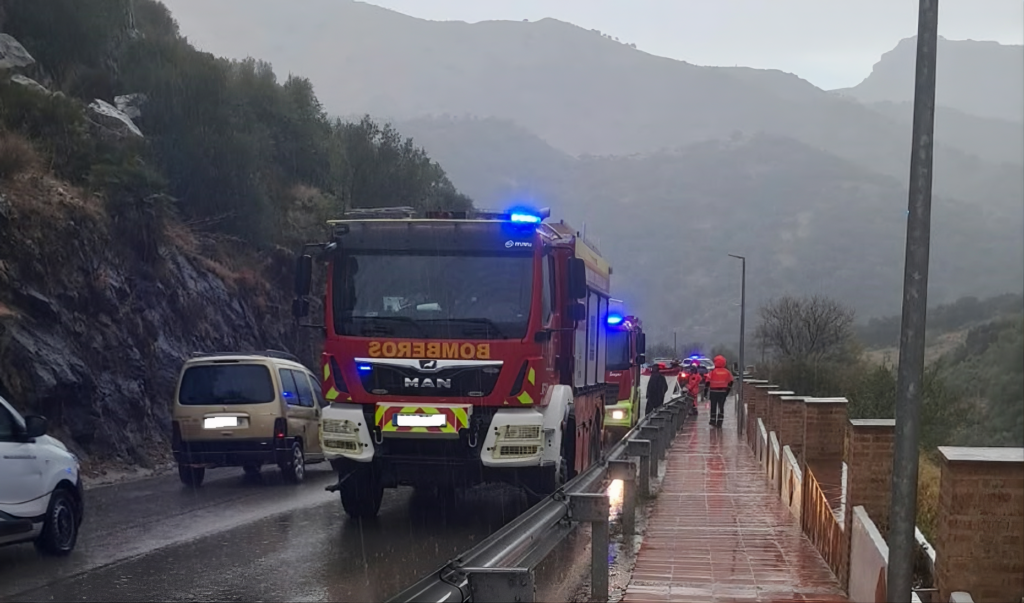
Fire crews arrive at scene of avalanche. Credit: Junta
A 41-year-old man has died after a large rock fell onto his car during Monday’s torrential rain in Malaga province, prompting renewed warnings about the dangers of driving in extreme weather.
Three other occupants of the vehicle, two men aged 21 and a woman aged 19, were injured in the incident on the MA-8400 road between Benaojan and Estacion de Benaojan, near Ronda, on Monday, October 19. They were taken to hospital for treatment, according to Andalucia’s 112 emergency service.
The accident happened at around 4.11pm, when a rock broke away from a hillside and struck the vehicle. The Guardia Civil, provincial firefighters and medical teams were called to the scene.
Orange weather alerts mean serious danger
The tragedy occurred as parts of Malaga province were experiencing intense rain and thunderstorms. The Spanish weather agency AEMET had issued orange warnings for areas including Ronda, with further warnings covering the Sol and Guadalhorce districts as the storm developed.
An orange weather warning is not simply advice to take an umbrella. AEMET classifies it as a level of important danger, meaning weather conditions could cause serious harm, particularly to people in exposed locations.
Heavy rain can make roads treacherous within minutes. Water reduces tyre grip, increases stopping distances and can cause aquaplaning. On rural and mountain roads, intense downpours can also contribute to flash flooding, landslides and falling rocks or branches. Drivers should remember that even a familiar route can become dangerous when conditions change rapidly.
What should drivers do in extreme rain?
Spain’s Directorate-General for Traffic (DGT) advises motorists to reduce their speed, increase the distance from the vehicle in front and use dipped headlights so they can be seen more easily.
Its recommendations also include:
- Avoid unnecessary journeys: If an orange warning is in force and conditions are deteriorating, consider postponing non-essential travel.
- Never drive through floodwater: Water depth and the condition of the road beneath it can be difficult to judge.
- Watch for falling debris: Take particular care on roads beneath steep slopes, cliffs and exposed rock faces.
- Avoid sudden braking: Smooth driving helps reduce the risk of losing grip on wet surfaces.
- Stop safely if visibility becomes dangerous: Pull completely off the carriageway at a suitable place and wait for conditions to improve. Never stop in a live traffic lane.
Check the forecast before setting off
Drivers in Spain can check the latest warnings on the official AEMET website and road conditions through the DGT. Weather alerts can change during the day, so checking before departure is not always enough if a journey is lengthy.
The Benaojan accident is a stark reminder that dangerous weather is not confined to flooded streets and motorways. On exposed mountain roads, falling rocks can pose a potentially fatal risk. When an orange warning is in force, the safest journey may be the one that can wait.
Follow Euro Weekly News on Google News
Get breaking news from Spain, travel updates, and expat stories directly on your Google News feed.
Follow on Google NewsSign up for personalised news
Subscribe to our Euro Weekly News alerts to get the latest stories into your inbox!
By signing up, you will create a Euro Weekly News account if you don't already have one. Review our Privacy Policy for more information about our privacy practices.





Adam Woodward
Adam is a writer who has lived in Spain for over 25 years. With a background in English teaching and a passion for music, food, and the arts, he brings a rich personal perspective to his work at Euro Weekly News. As a father of three with deep roots in Spanish life, Adam writes engaging stories that explore culture, lifestyle, and the everyday experiences that shape communities across Spain.
Comments