World Cup 2026 Finances: How much was invested, who sponsored it and what FIFA earned
By Nicola EWN • Published: 20 Oct 2026 • 13:28 • 7 minutes read
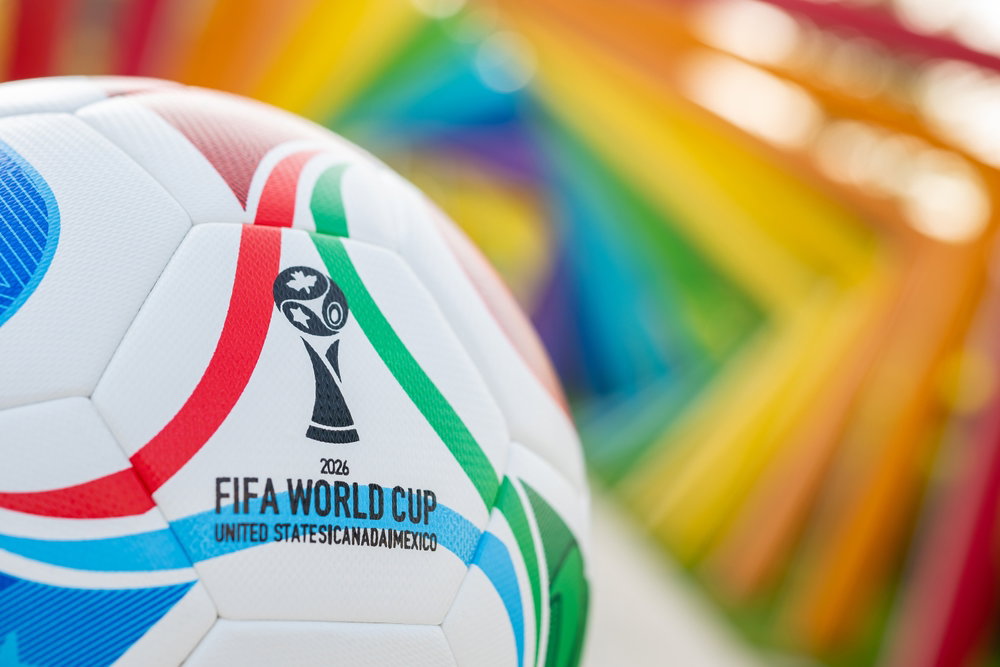
Credit:Freer / Shutterstock.com
The 2026 FIFA World Cup was not just the biggest tournament in football history by format. It was also the biggest commercial machine FIFA has ever operated. Forty-eight teams, 104 matches, 16 host cities across the United States, Mexico and Canada, premium stadiums, dynamic ticket pricing, global sponsors and a North American consumer market changed the scale of the event.
Around tournaments like this, fans do not only watch matches. They compare ticket prices, hospitality packages, betting rules and bonus terms. For anyone navigating the betting side of a major tournament, platforms like Legalbet provide practical guides to understanding how odds, registration and bet conditions work before committing money, the same careful reading that applies to World Cup finance generally
The first number: FIFA’s own tournament investment
FIFA budgeted almost $3.84 billion for World Cup 2026
The cleanest starting point is FIFA’s own cycle budget. In its 2023-2026 budget, FIFA listed $3.839 billion for “FIFA World Cup United 2026” inside a wider $10.9 billion investment budget for the four-year cycle. That figure should not be confused with stadium construction or all public costs in host cities. It is FIFA’s event-side budget: tournament operations, services, prize money, staffing, commercial delivery, broadcast operations, team services and the machinery required to run a 104-match World Cup.
FIFA’s wider competitions-and-events budget for 2023-2026 was $5.618 billion, with the men’s World Cup by far the largest item. The reason is obvious: the tournament expanded from 64 matches in Qatar 2022 to 104 matches in 2026. More teams mean more bases, more travel, more training sites, more broadcast windows, more security planning, more refereeing logistics and more matchday staffing.
Prize money was a major part of the bill
FIFA also approved a record $727 million financial contribution to participating associations for the 2026 World Cup. Of that, $655 million was allocated as prize money across the 48 teams. The champions were due $50 million, runners-up $33 million, third place $29 million, and even teams eliminated in positions 33-48 were due $9 million. Each qualified team also received $1.5 million for preparation costs, guaranteeing every participating association at least $10.5 million.
That matters because people often talk about “World Cup costs” as if it is all concrete, police and LED boards. A big part is football redistribution: team payments, operational grants, preparation money and tournament services.
Public spending: The host-city burden
Canada gives the clearest public-cost picture
Public spending is harder to calculate across three countries because costs are spread across federal, provincial, state, city, police, transport and venue budgets. Canada is the clearest example because its Parliamentary Budget Officer published a specific note. It estimated total Canadian government support for hosting at C$1.066 billion, including C$473 million from the federal government and C$593 million from other levels of government. Canada hosted 13 matches, seven in Vancouver and six in Toronto, putting the estimated cost at C$82 million per game.
Toronto’s own budget documents show how these costs appear on the ground. The city listed C$189.997 million in 2026 operating costs and C$47.004 million in 2026 capital budget items, within a broader C$380 million approved direct-cost framework. The key drivers were security, general operations, tournament operations, contingency, inflation, transport and city services.
Security became one of the most sensitive items
The U.S. picture was more fragmented. Host cities and local authorities had to negotiate responsibility for police, traffic, public safety and venue-related costs. One useful example came from Massachusetts: FIFA and the Kraft Group agreed to cover security costs at Gillette Stadium after Foxborough officials refused to issue a license without assurance that the town would not be left with a $7.8 million bill for seven matches.
This is the uncomfortable part of the World Cup model. FIFA captures the main global commercial revenues: broadcasting, sponsorship, ticketing and hospitality. Host cities carry large parts of public safety, transport management and local delivery. The split is not always unfair, because cities also expect tourism and visibility, but it creates tension when costs rise and direct ticket revenue does not flow back locally.
Revenue: From $11 billion budget to reported $15 billion
The original FIFA budget was already huge
FIFA’s 2023-2026 budget originally assumed total revenue of $11 billion, up $4.56 billion from the previous cycle. The biggest planned category was television broadcasting rights at $4.264 billion. Marketing rights were budgeted at $2.693 billion, licensing at $669 million, hospitality and ticket sales at $3.097 billion, and other revenue at $277 million.
Even before the tournament, those numbers showed why 2026 was different. North American time zones were attractive for broadcasters, the match count increased sharply, and FIFA had far more premium inventory to sell. Hospitality was especially important because FIFA moved away from simply outsourcing that business and took more direct control of the model.
The latest reported figure went even higher
By April 2026, The Guardian reported that FIFA’s most recent financial report pointed to $13 billion from the four-year cycle, with nearly $9 billion expected in the tournament year itself. It also described ticketing and hospitality as worth around $3 billion, sponsorship around $2.7 billion, and the World Cup’s direct cost to FIFA at about $3.8 billion.
Then, on the eve of the final, The Guardian reported that FIFA would announce record $15 billion revenues from the 2026 World Cup cycle, far above the original $11 billion target. The report said hospitality and ticketing, especially FIFA’s secondary market model, helped fuel the increase; FIFA reportedly took 15% from the buyer and another 15% from the seller on secondary-market transactions.
Important caveat: as of late September 2026, the full audited FIFA financial statements for the completed cycle had not yet been published in the same annual-report format. So the safest wording is this: official pre-tournament budget: $11 billion; reported late-cycle expectation: $13 billion; reported post-tournament figure to be announced: about $15 billion.
Sponsors: Who paid for the advertising stage
Global sponsorship sold out before kickoff
FIFA confirmed in March 2026 that all global sponsorship packages for the World Cup had been sold. That included both FIFA Partners and World Cup Sponsors. FIFA also said the tournament had generated the highest sponsorship revenue ever recorded by a stand-alone sporting event before a ball had even been kicked.
The top FIFA Partner layer included major global brands such as adidas, Aramco, Coca-Cola, Hyundai-Kia, Lenovo, Qatar Airways and Visa. These are not small logo buyers. They buy broad category association with FIFA’s global ecosystem. Adidas gets the ball and equipment story. Coca-Cola gets beverages and mass consumption. Visa owns payments. Qatar Airways owns travel. Lenovo leans into technology. Hyundai-Kia sits in mobility. Aramco brings energy money and geopolitical weight.
The sponsor list also reflected North America
The World Cup-specific sponsor layer included companies whose categories matched the host market: banking, telecoms, food, beer, electronics and consumer goods. Bank of America became FIFA’s first-ever global sponsor in the banking category for the 2026 World Cup, a logical move given that 11 of the 16 host cities were in the United States. Verizon became the Official Telecommunication Services Sponsor, with a role that went beyond branding: 5G, fiber, Fan Festival connectivity, operational networks and support for public-safety communications.
That is the important difference between old-style sponsorship and the 2026 model. A board around the pitch still matters, but the best deals now connect to actual tournament infrastructure: payments, transport, connectivity, accommodation, food delivery, hospitality and digital engagement.
What fans saw: banners, hospitality and premium pricing
LED boards were only the visible layer
Most viewers saw rotating LED perimeter boards, interview backdrops, branded Fan Festivals, app placements, sponsor activations and broadcast bumpers. That is the visible layer. The more valuable layer sat behind it: data capture, hospitality access, client entertainment, payment systems, ticketing, brand exclusivity and direct customer acquisition.
A sponsor does not spend World Cup money just to be “seen”. It pays to block rivals, entertain clients, collect user data, drive retail activation and link itself to football moments that get replayed for weeks.
Hospitality pushed the tournament into a new price category
Premium pricing was one of the financial stories of the tournament. The Guardian reported that, on the evening before the final between Spain and Argentina in New Jersey, VIP and hospitality packages were still listed on FIFA’s ticketing portal, with “trophy lounge” tickets at $34,500 per person.
This explains why revenue beat expectations. A regular seat has a ceiling. Hospitality does not. Once the World Cup sits in the U.S. corporate-entertainment market, the pricing logic changes. Companies buy suites, private lounges and client experiences in ways normal fans cannot match.
Did FIFA profit?
FIFA is formally a not-for-profit organisation, so the better word is not “profit” but surplus and reserves. The organisation says World Cup revenue is reinvested into football development across its 211 member associations. FIFA’s original 2023-2026 budget planned $2.25 billion for the Forward Programme and a $660 million Football Development Fund.
The politics start there. If FIFA revenue reaches $15 billion and reserves rise sharply, member associations, confederations, clubs and player unions will ask how that money is distributed. Reuters reported in September 2026 that UEFA and CONCACAF leaders were pushing for greater scrutiny of FIFA’s reserves and proposed a $2.1 billion distribution to member associations, arguing that reserves could reach $6 billion by the end of the 2023-2026 cycle.
What the numbers really say
The 2026 World Cup was financed through two different machines. FIFA’s machine was global and highly profitable: TV rights, sponsorship, tickets, hospitality, licensing and digital assets. Host-city machinery was local and expensive: security, transport, public safety, training sites, operations, emergency services and civic delivery.
The most honest financial summary is this: FIFA budgeted $3.839 billion to stage the tournament and originally projected $11 billion in cycle revenue; later reporting put expected revenue at $13 billion, and post-tournament reporting said FIFA would announce around $15 billion. Public spending is not captured in one global number, but Canada alone expected C$1.066 billion in government support, while U.S. city-level costs were handled through separate local negotiations and funding fights.
The lesson is simple. The 2026 World Cup did not become a financial giant because of one source of income. It became a giant because every category scaled at once: more matches to sell, more sponsors, higher ticket prices, richer hospitality, stronger U.S. demand and tighter commercial control. For FIFA, it was the most lucrative World Cup model yet. For host cities, it was a prestige project with serious public costs. For sponsors, it was the biggest billboard in sport, but with enough data, hospitality and digital infrastructure behind it to make the billboard only the beginning.
Follow Euro Weekly News on Google News
Get breaking news from Spain, travel updates, and expat stories directly on your Google News feed.
Follow on Google NewsSign up for personalised news
Subscribe to our Euro Weekly News alerts to get the latest stories into your inbox!
By signing up, you will create a Euro Weekly News account if you don't already have one. Review our Privacy Policy for more information about our privacy practices.


Nicola EWN
Nicola is a member of the editorial team specialising in features, digital content and online publishing. With broad experience across media and communications, she works across feature articles, editorial content and digital platforms, managing content across a range of subjects.
Comments