Man killed in wasp attack while working on forest track in northern Spain
By Molly Grace • Published: 21 Oct 2026 • 23:20 • 2 minutes read
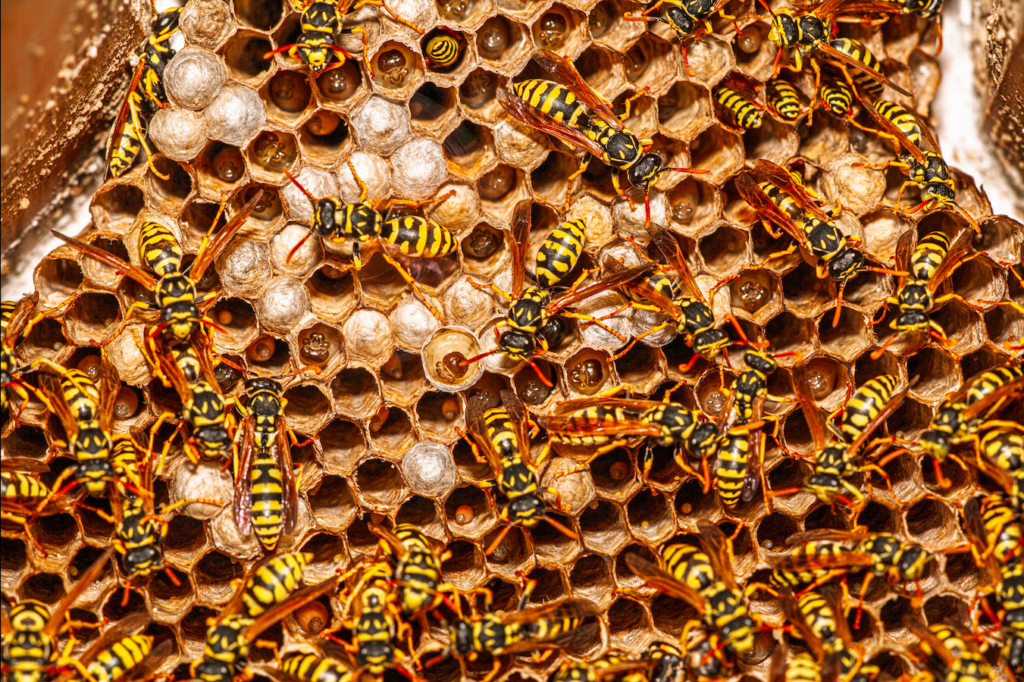
Wasps and hornets can build nests in sheltered places. Photo credit: Right Perspective Images/shutterstock
If you clear overgrown land, work in woodland or use a brush cutter to tackle thick vegetation, a hidden wasp nest is a hazard you may not see until it is too late to avoid it. A 56-year-old man has died after being attacked while clearing a forest track in Galicia, north-western Spain.
The man was working in Seadur, in the municipality of Larouco, Ourense, at around midday on Wednesday, October 21, when he encountered the nest. He lived in Manzaneda. Emergency services sent a medical helicopter to the scene, but he could not be saved.
Emergency helicopter dispatched after attack
The attack prompted an emergency response from Galicia’s 061 medical service. The man’s colleagues raised the alarm, and medical assistance was sent to try to save him. Despite the response, the 56-year-old died. The precise circumstances of the attack have not been fully established in the reports available.
There is also conflicting information about the insects involved. Some reports describe them as wasps, while others identify the Asian hornet, Vespa velutina. The species should not be treated as confirmed without definitive identification.
Why hidden nests pose a risk
Wasps and hornets can build nests in sheltered places, including hedges, tree cavities and dense vegetation close to the ground. When land is being cleared, those hiding places can be disturbed by cutting equipment, machinery or the movement of workers. An encounter can become dangerous when insects defend their colony. Someone who discovers a nest unexpectedly may have little time to get away before being stung repeatedly. The consequences depend on the number of stings, the insect species and the person’s individual response. Multiple stings can cause serious effects from venom, even in someone who is not allergic.
For people with an allergy, a single sting can trigger anaphylaxis, a potentially fatal reaction that can develop rapidly. Symptoms of anaphylaxis include difficulty breathing, swelling of the tongue or throat, dizziness and collapse. Anyone experiencing these symptoms needs emergency medical assistance. It has not been established whether the man in Larouco suffered an allergic reaction or died from the effects of multiple stings.
What to do if you encounter a swarm
Anyone who disturbs a nest and comes under attack should get away from the insects as quickly as possible, moving towards an enclosed building or vehicle if one is nearby. Protecting the face and head while escaping can help reduce the risk of stings to these vulnerable areas. Trying to swat the insects or stopping to collect tools can leave someone exposed for longer. If a nest is discovered during clearance work, the safest course is to stop, keep others away and arrange for a qualified pest-control professional to assess it.
Repeated stings, breathing difficulties, swelling around the mouth or throat, or sudden dizziness warrant urgent medical attention. In Spain, call 112 in an emergency. The unfortunate death of this gentleman in Ourense is a reminder for anyone working or living in the countryside or maintaining rural areas to take insect activity seriously, particularly when cutting through vegetation where nests may be concealed.
Follow Euro Weekly News on Google News
Get breaking news from Spain, travel updates, and expat stories directly on your Google News feed.
Follow on Google NewsSign up for personalised news
Subscribe to our Euro Weekly News alerts to get the latest stories into your inbox!
By signing up, you will create a Euro Weekly News account if you don't already have one. Review our Privacy Policy for more information about our privacy practices.




Molly Grace
Molly is a British journalist and author who has lived in Spain for over 25 years. With a background in animal welfare, equestrian science, and veterinary nursing, she brings curiosity, humour, and a sharp investigative eye to her work. At Euro Weekly News, Molly explores the intersections of nature, culture, and community - drawing on her deep local knowledge and passion for stories that reflect life in Spain from the ground up.
Comments