Irish Halloween magic: The tiny village packed with scarecrows and witches
By Adam Woodward • Published: 26 Oct 2026 • 21:59 • 2 minutes read
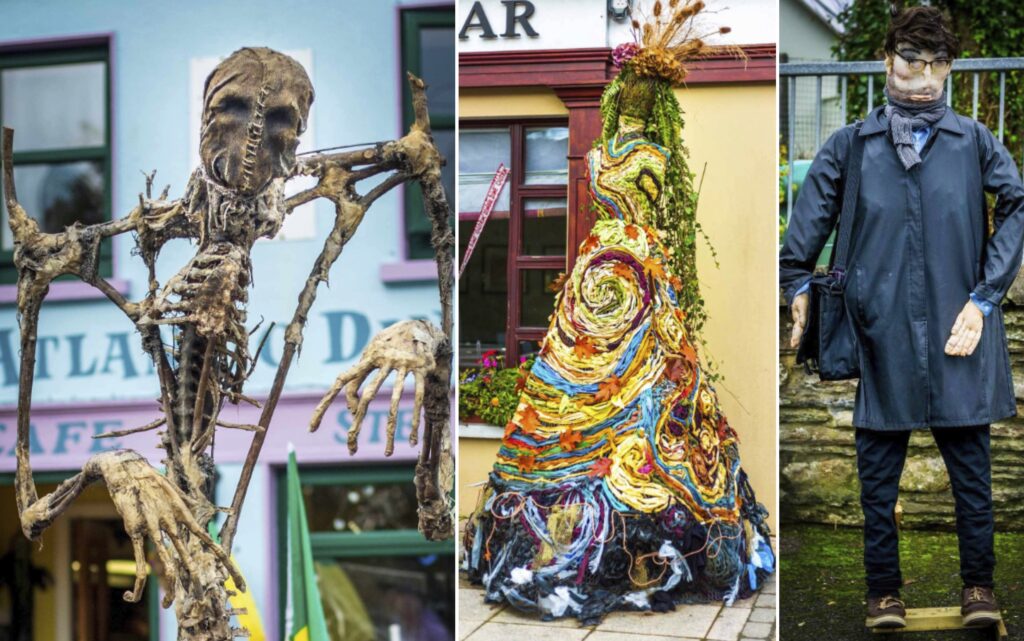
Leap's Scarecrow Festival. Credit: LSF FB
Forget haunted houses and pumpkin displays. In one small Irish village, Halloween takes over almost every corner, with scarecrows watching from gardens, walls and shopfronts as witches, banshees and other spooky characters take to the streets.
Leap, in County Cork, could arguably be home to Europe’s most Halloweeny festival, as its annual Scarecrow Festival turns the village into an extraordinary celebration of all things eerie.
Running from October 19 to November 1, the 2026 edition combines imaginative scarecrow displays with traditional Irish folklore, live music, family entertainment and plenty of Halloween mischief. Visitors can find the full programme on the official Leap Scarecrow Festival website.
Scarecrows take over an Irish village
Hundreds of handmade scarecrows are the stars of the show, with residents, schools, clubs and local businesses invited to create their own characters.
There is no set theme, allowing imaginations to run wild. Entries can draw inspiration from Irish mythology, local life, popular culture or current events, with prizes for the scariest, funniest, most creative and most sustainable creations.
The competition offers a €250 prize for the overall champion, while category winners can also collect cash prizes. Curious visitors can explore the village trail at their own pace, spotting everything from frightening folklore figures to humorous creations made from recycled materials. Details of the 2026 scarecrow competition and prizes are available online.
Witches, wheelbarrows and ancient Irish folklore
The festival goes well beyond scarecrows. The programme includes street entertainment, circus performances and the announcement of the scarecrow competition winners. One of the most unusual attractions is the Barrow Run, in which witches race in wheelbarrows through the village. A traditional Irish céilí dance event adds music and dancing to the Halloween festivities.
The celebrations have deep cultural roots, too. The festival embraces Samhain, the ancient Gaelic seasonal festival associated with the transition into winter and the origins of many Halloween traditions. EWN readers can discover more about Halloween’s roots in the Irish pagan festival of Samhain.
It also celebrates An Mascallacht, a traditional West Cork custom involving disguises, masks and costumes.
Visitors can explore these traditions further through A Scare at Samhain, a guided woodland experience featuring Irish myths, folklore and supernatural characters. Ireland’s official tourism website also explains the history of Halloween and its Irish traditions.
A community festival with a spooky spirit
The Leap Scarecrow Festival began in 2015, when local resident Rita Ryan wanted to bring music, fun and community spirit to the village for Halloween. More than a decade later, the event has developed into an attraction drawing visitors from across Ireland and beyond.
The 2026 programme continues through Halloween weekend, with further storytelling, witches’ dances and community celebrations planned before the festival closes on November 1.
Whether it really is Europe’s most Halloweeny festival is open to debate. But with scarecrows lining the streets, witches racing wheelbarrows and ancient Irish legends brought to life, Leap has a strong claim to the title.
For more information, visit Leap Scarecrow Festival’s official website.
Follow Euro Weekly News on Google News
Get breaking news from Spain, travel updates, and expat stories directly on your Google News feed.
Follow on Google NewsSign up for personalised news
Subscribe to our Euro Weekly News alerts to get the latest stories into your inbox!
By signing up, you will create a Euro Weekly News account if you don't already have one. Review our Privacy Policy for more information about our privacy practices.


Adam Woodward
Adam is a writer who has lived in Spain for over 25 years. With a background in English teaching and a passion for music, food, and the arts, he brings a rich personal perspective to his work at Euro Weekly News. As a father of three with deep roots in Spanish life, Adam writes engaging stories that explore culture, lifestyle, and the everyday experiences that shape communities across Spain.
Comments