Pets forced into coach luggage holds: Why Spain needs better travel rules
By Molly Grace • Published: 26 Oct 2026 • 22:51 • 3 minutes read
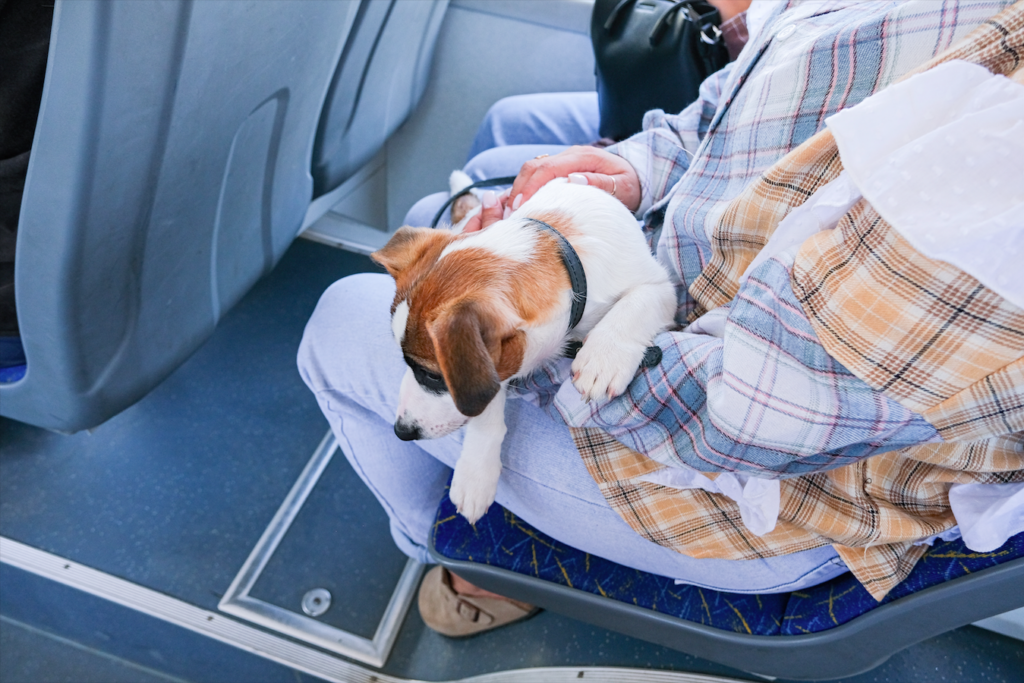
Spain's Animal Welfare Law requires animals to be transported in suitable conditions. Photo credit: ilona.shorokhova/Shutterstock
For people without a car, taking a pet to the vet or travelling with it to another town can mean relying on friends or family for a lift, paying for a taxi or struggling to find suitable transport. On long-distance coaches, pets may have to travel in the luggage compartment, separated from their owners for the journey.
Access to public transport with a pet should not depend on which Andalusian town you live in. Cádiz has taken a step towards making everyday journeys easier for pet owners, but the real question is whether other municipalities will follow and give people the same opportunity to travel with their animals.
Why pet-friendly public transport is needed
For many people, pets are part of everyday family life, but transport restrictions can make routine journeys difficult. Someone who needs to take a dog to a veterinary appointment may have to find a friend with a car or pay for a private journey. For elderly people, people with disabilities and residents who do not drive, those alternatives are not always practical. Allowing animals on buses under clear conditions would give owners greater independence and make essential journeys easier to organise. It could also reduce the need to use a car or taxi for short trips where public transport would otherwise be suitable.
There is already evidence that such arrangements can work. Cádiz began allowing small pets on its urban buses on October 19, provided owners follow specific rules designed to protect other passengers and keep the animals under control. That does not mean every animal should be allowed onto every bus without restrictions. Carrier requirements, limits on numbers, hygiene rules and consideration for passengers with allergies or a fear of animals can all form part of a workable policy. The important point is that these arrangements should be considered consistently across the region.
Is the luggage compartment a safe alternative?
On many long-distance coach services, small pets can travel only in a secure carrier in a designated section of the luggage hold. ALSA, for example, requires animals to travel in a closed, rigid and waterproof carrier in the coach’s dedicated compartment. The company also advises against travelling with pets when outside temperatures exceed 25C.
Although a carrier provides some protection, the owner cannot see or check on the animal during the journey. Movement, noise and temperature conditions are all relevant welfare considerations. If a carrier is not properly secured, vehicle movement can also cause it to shift among other luggage as well as travelling separately from the owner makes it harder to monitor an animal if it becomes distressed or conditions change.
Spain’s Animal Welfare Law requires animals to be transported in suitable conditions that protect them from injury and suffering, with appropriate ventilation and temperature control. It also states that companion animals must travel in specially adapted compartments unless they travel in the same space as their responsible person, subject to road safety rules. Allowing pets to travel beside their owners, where practical and safe, offers a different arrangement: the animal can be monitored throughout the journey rather than left out of sight.
Cádiz shows what can be done
Under Cádiz’s new rules, one pet weighing no more than 10kg may travel per passenger, provided it is inside a closed, approved carrier measuring no more than 45 x 35 x 25 centimetres. The carrier cannot occupy a seat or block the aisle, owners must remain beside it, and passengers must board through the front door.
The change has practical benefits, but the weight limit still excludes many medium and large dogs, even those that are calm and well behaved. Any policy could consider different arrangements for larger animals, such as leads, muzzles where appropriate and designated spaces, while taking account of passenger safety and the layout of each vehicle. Cádiz is not the only municipality where the issue has been raised. San Fernando’s council approved a motion supporting pets on urban buses in April, although that approval did not itself mean the rules had come into force.
Will the rest of Andalucía follow?
There is no confirmed region-wide plan requiring every Andalusian municipality to allow pets on urban buses. Each council and transport operator must decide which conditions can work for its services. That leaves pet owners facing different rules depending on where they live and which service they need to use. A more consistent approach would make journeys easier to plan, particularly for people travelling between towns or relying on public transport for veterinary appointments and other essential trips.
The aim would not be to remove every restriction, but to make travelling with a pet a practical option wherever possible. Clear rules on carriers, animal size, numbers permitted and safe positioning could help operators balance animal welfare with the needs of other passengers. Cádiz has shown that pets can be accommodated on urban buses under defined conditions. The question is whether other municipalities will follow, so that travelling with an animal becomes less dependent on local rules and more accessible across Andalucía.
Follow Euro Weekly News on Google News
Get breaking news from Spain, travel updates, and expat stories directly on your Google News feed.
Follow on Google NewsSign up for personalised news
Subscribe to our Euro Weekly News alerts to get the latest stories into your inbox!
By signing up, you will create a Euro Weekly News account if you don't already have one. Review our Privacy Policy for more information about our privacy practices.





Molly Grace
Molly is a British journalist and author who has lived in Spain for over 25 years. With a background in animal welfare, equestrian science, and veterinary nursing, she brings curiosity, humour, and a sharp investigative eye to her work. At Euro Weekly News, Molly explores the intersections of nature, culture, and community - drawing on her deep local knowledge and passion for stories that reflect life in Spain from the ground up.
Comments