Quirónsalud Torrevieja Hospital’s Patient and Community Advisory Council marks its first year with new initiatives to improve patient care and accessibility
By Penny • Published: 26 Oct 2026 • 12:12 • 4 minutes read
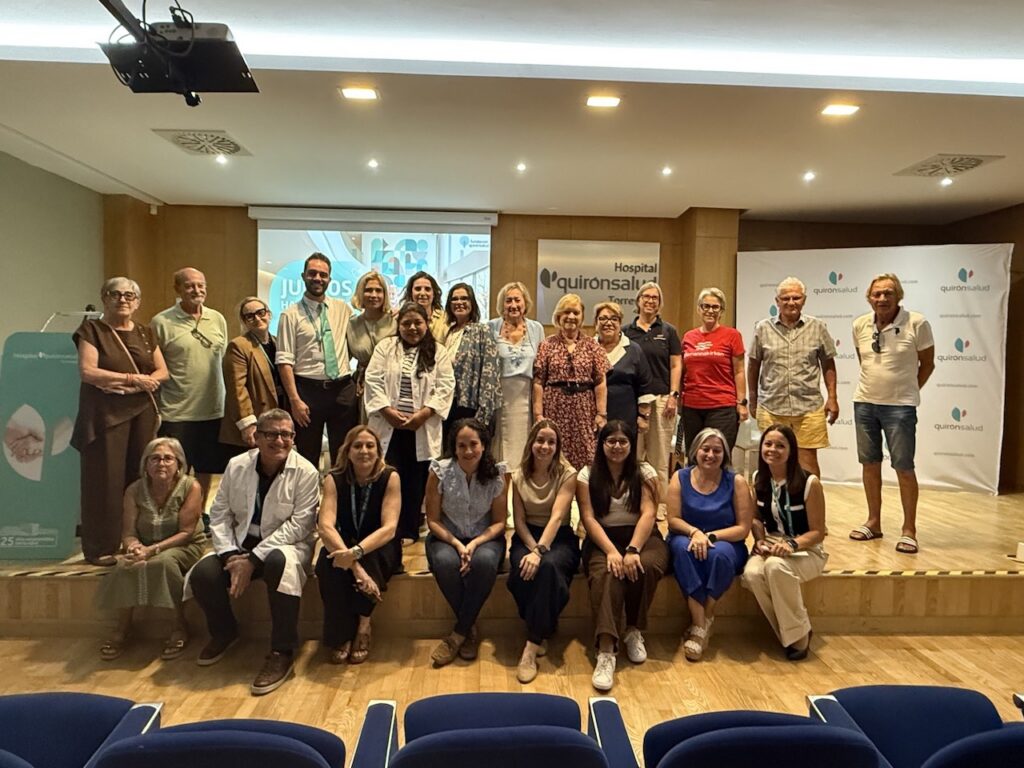
Quirónsalud Torrevieja Hospital’s Patient and Community Advisory Council Credit: Quironsalud Torrevieja
Established in December 2025, the Patient and Community Advisory Council has held its first formal meeting, reviewing progress made throughout 2026 across four working groups.
Quirónsalud Torrevieja Hospital has held the first formal meeting of its Patient and Community Advisory Council. Established in December 2025 to give patients, families and local associations a greater say in healthcare decisions, the Council reviewed its achievements during 2026 and outlined its priorities for the remainder of the year and 2027.
The initiative places patients’ and carers’ experiences at the heart of healthcare improvements, identifying the challenges they face and working alongside medical teams and community organisations to develop, test and evaluate practical solutions.
Turning patient feedback into practical improvements
This approach has led to the creation of four working groups, each focusing on a specific area of patient care.
In Oncology, AFECÁNCER and the Spanish Association Against Cancer (AECC) are working to strengthen patient support and coordination of care, particularly for those without family support, while also seeking to reinstate the second medical opinion pathway.
The Neurosciences working group, bringing together AFA (the Torrevieja Association of Families and Friends of People with Alzheimer’s), AMFA and the Quirónsalud Foundation, has promoted neurology sessions, regular consultations and ongoing psychological support. The group is also reviewing its existing partnership agreement.
The International Community working group, which includes Hispola, the Schweizerischer Club and the Swedish/Norwegian Church, is collaborating with the hospital’s Admissions, International and Communications departments to support hospitalised patients, overcome language barriers and expand its network of community organisations. The formal inclusion of SWEA is still pending.
Meanwhile, the Vulnerable Patients working group brings together medical, nursing and physiotherapy professionals alongside ADIEM and ALPE to improve access to physiotherapy, provide training and develop volunteer support for patients attending hospital appointments alone.
Neurosciences and AFA: a model for patient involvement
The Neurosciences working group provides a clear example of how listening to patients can lead to meaningful improvements in healthcare.
Dr Erika Torres, Head of the Advanced Neurosciences Department at Quirónsalud Torrevieja and Alicante, joined representatives from AFA to present the main areas for improvement identified through discussions with patients and their families.
These include providing clearer guidance on available support services and dependency-related assistance, making it easier for carers and family members to stay involved in follow-up appointments, and adapting Emergency Department procedures to better meet the needs of patients with an existing neurological diagnosis.
The initiative also aims to improve communication throughout the patient journey, explore alternatives such as home-based support where feasible, and update the partnership with AFA through clearly defined objectives and regular evaluation.
In 2027, the group will implement the full process of listening, prioritising, co-designing, testing and evaluating improvements, establishing a model that can subsequently be adopted by the Council’s other three working groups.
“Patient involvement is essential if we are to continue moving towards healthcare that is more personal, compassionate and responsive to people’s needs. Listening to their experiences helps us identify areas for improvement that may not always be apparent from a healthcare professional’s perspective, allowing us to work together to provide better care,” said Teresa Álvarez, Director of Corporate Social Responsibility and Managing Director of the Quirónsalud Foundation.
Looking ahead: priorities for 2027
The Council’s review of 2026 has helped establish a clear programme of action for the coming months and the year ahead.
In Oncology, the final quarter of 2026 will focus on agreeing a second medical opinion protocol with AFECÁNCER and the Alicante Association Against Cancer. The procedure will ensure informed patient consent, secure handling of medical records, clearly defined response times and coordinated communication with patients.
Other planned initiatives include a free cardiopulmonary resuscitation (CPR) refresher workshop for volunteers and a series of “Solidarity Coffee” meetings, designed to give patients an opportunity to share their experiences and receive practical guidance on using the hospital’s Patient Portal.
Feedback gathered during these sessions will help improve the portal’s instructions, support resources and assistance channels.
Looking ahead to 2027, the Council plans to organise a charity run in Torrevieja, bringing together all participating associations. A dedicated organising team will be established, involving hospital representatives and partner organisations.
The Vulnerable Patients working group will also be formally launched, with designated coordinators, a timetable, performance indicators and regular monitoring of its activities in patient support, physiotherapy and training.
Another key priority is the development of an inclusive communication project covering the Intensive Care Unit, Emergency Department and Outpatient Clinics.
The project will review key stages of the patient journey, including digital communication channels, to introduce clearer language, easy-read information, visual aids and augmentative or alternative communication methods.
Patients, AFA and other associations will help assess and validate these improvements throughout 2027, in accordance with Spanish Royal Decree 707/2026.
“We want our patients’ experiences to have a genuine impact on how we organise and deliver healthcare. The Council provides a valuable forum for collaboration, enabling us to listen, consider proposals and work together on solutions that improve both the quality of care and the experience of those who place their trust in our hospital,” explained Carlos Yago, Medical Director of Quirónsalud Torrevieja Hospital.
Putting people at the heart of healthcare
The Patient and Community Advisory Council is becoming an established forum for ongoing dialogue and collaboration, ensuring that patients’ experiences translate into tangible improvements.
Through this approach, Quirónsalud Torrevieja Hospital continues to promote a more inclusive, accessible and patient-centred healthcare model, giving patients, families and community organisations an active role in shaping the services they receive.
Follow Euro Weekly News on Google News
Get breaking news from Spain, travel updates, and expat stories directly on your Google News feed.
Follow on Google NewsSign up for personalised news
Subscribe to our Euro Weekly News alerts to get the latest stories into your inbox!
By signing up, you will create a Euro Weekly News account if you don't already have one. Review our Privacy Policy for more information about our privacy practices.





Penny
Penny has been a writer and a key member of the editorial department at Euro Weekly News, Europe’s largest free English-language newspaper in Spain, for many years. Specialising in cultural commentary, community features, and regional lifestyle trends, Penny crafts engaging stories that matter to the expatriate community. From local events to lifestyle insights across the Costa del Sol and beyond, her work connects readers with the heartbeat of Spain.
Comments