EU plans €11.8 billion border force with 30,000 officers across Europe
By Molly Grace • Published: 30 Oct 2026 • 23:56 • 3 minutes read
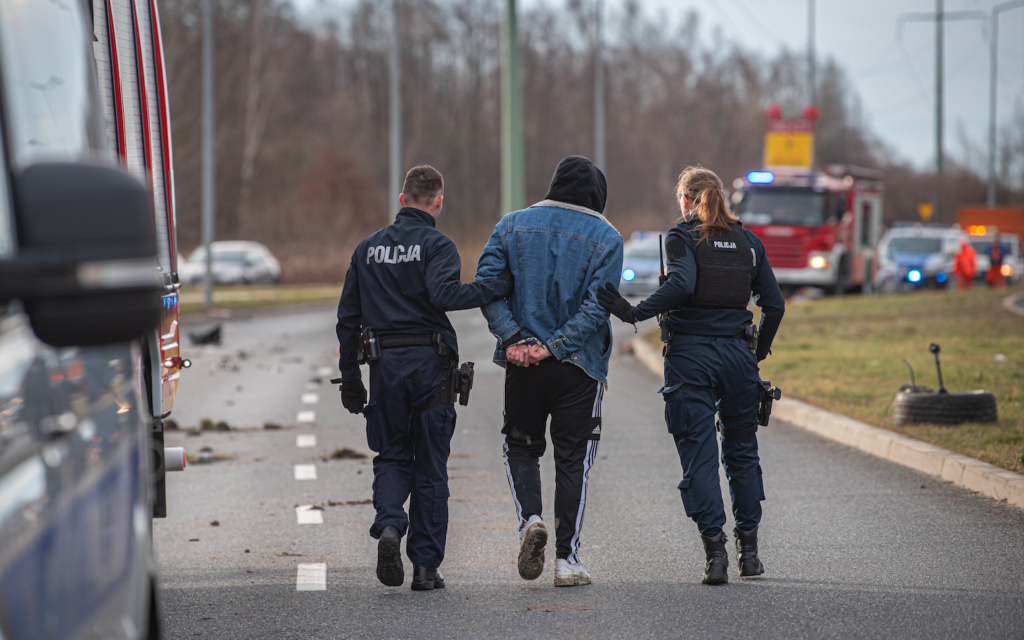
The agency would also have more freedom to buy, lease or jointly own equipment. Photo credit: KSikorski/Shutterstock
The number of people arriving at Spain’s borders can quickly become a European issue, particularly when pressure builds around Ceuta, Melilla or the Canary Islands. Brussels now wants a much larger border agency ready to support countries facing sudden increases in arrivals, while giving it a bigger role in organising deportations. The European Commission has proposed spending €11.8 billion on Frontex over the 2028–2034 EU budget period and gradually increasing its standing corps to 30,000 officers by 2041. Frontex is the EU’s border and coast guard agency.
It works alongside national authorities at the bloc’s external borders and helps coordinate operations involving several countries. The proposal follows the arrival of more than 72,000 people in Spain’s North African enclave of Ceuta from Morocco in July. The Commission says Europe’s changing security situation requires a stronger response, although the plan would affect border operations across the EU rather than Spain alone.
30,000 officers does not mean 30,000 new recruits
The proposed force would be made up of three groups. Frontex’s own standing corps would double from 3,000 to 6,000 officers. A further 7,000 would be officers seconded by EU member states, as under the existing arrangements. The remaining 17,000 would form a new European Border and Return Reserve. These officers would continue to belong to national border services and remain in their home countries unless they were needed for deployment. Frontex would train them to its standards.
The Commission is therefore not proposing to recruit 30,000 people directly into a single European police force. It wants a larger pool of personnel that can be sent to assist national authorities when required. The increase would happen gradually, extending beyond the 2028–2034 budget period and towards 2041. The agency would also have more freedom to buy, lease or jointly own equipment, including surveillance technology and digital tools. It could organise joint purchases with member states and act as a central purchasing body for equipment, including tools using artificial intelligence.
A stronger role in deportations
One of the most significant changes concerns people who have been ordered to leave the EU. Frontex would take a more proactive role in coordinating returns, with a dedicated Return Coordination Centre to gather information, plan operations and help countries organise them. Its involvement could cover the entire process, from identifying people who may be subject to return and offering voluntary-return counselling to organising removal operations and providing reintegration support.
The proposal would also allow Frontex to help organise and carry out returns from one non-EU country to another. This would require an agreement with the countries concerned and would have to comply with fundamental rights and international standards. It is a proposed power, not permission for the agency to begin carrying out such operations immediately.
Rapid response and online monitoring
The Commission also wants a Quick Reaction Force that could be sent to an EU external border during an emergency. Deployment would follow a request from the member state concerned. The Commission says the force would be able to respond at very short notice, with a 24-hour deployment cited as an example. A new Online Monitoring and Response Centre would look for developments that could affect border management, including information published on publicly accessible social media accounts.
The proposal envisages Frontex identifying potentially illegal content and referring it to online platforms under the Digital Services Act, rather than giving the agency a general power to remove posts itself. The plan has raised questions about oversight. The proposal would narrow the role of Frontex’s internal fundamental-rights watchdog by referring complaints to national authorities. Rights organisations have also warned that expanding the agency’s operational powers without strengthening safeguards could put migrants’ rights at risk.
The money and the next steps
The proposed €11.8 billion allocation is almost double the funding envisaged for Frontex in the current 2021–2027 EU budget period. It forms part of the Commission’s proposed long-term budget for 2028–2034. It is not a separate payment being made now, and the final amount will depend on negotiations over the EU budget. The Commission has also put forward a separate proposal to digitalise return, readmission and reintegration procedures.
It wants national authorities to use more connected systems to manage cases, exchange relevant information and reduce administrative work. The proposal includes rules on access to personal data, security and how long information can be retained. Neither proposal is law yet. The European Parliament and the Council, representing EU member states, must examine and agree on the legislation. They can amend the plans during negotiations, so the final size of the force, its powers and the funding could change.
Follow Euro Weekly News on Google News
Get breaking news from Spain, travel updates, and expat stories directly on your Google News feed.
Follow on Google NewsSign up for personalised news
Subscribe to our Euro Weekly News alerts to get the latest stories into your inbox!
By signing up, you will create a Euro Weekly News account if you don't already have one. Review our Privacy Policy for more information about our privacy practices.





Molly Grace
Molly is a British journalist and author who has lived in Spain for over 25 years. With a background in animal welfare, equestrian science, and veterinary nursing, she brings curiosity, humour, and a sharp investigative eye to her work. At Euro Weekly News, Molly explores the intersections of nature, culture, and community - drawing on her deep local knowledge and passion for stories that reflect life in Spain from the ground up.
Comments