Britain can only dream of this. Morocco says it will take migrants back, so why has Spain not sent them?
By Adam Woodward • Published: 25 Sep 2026 • 13:21 • 4 minutes read
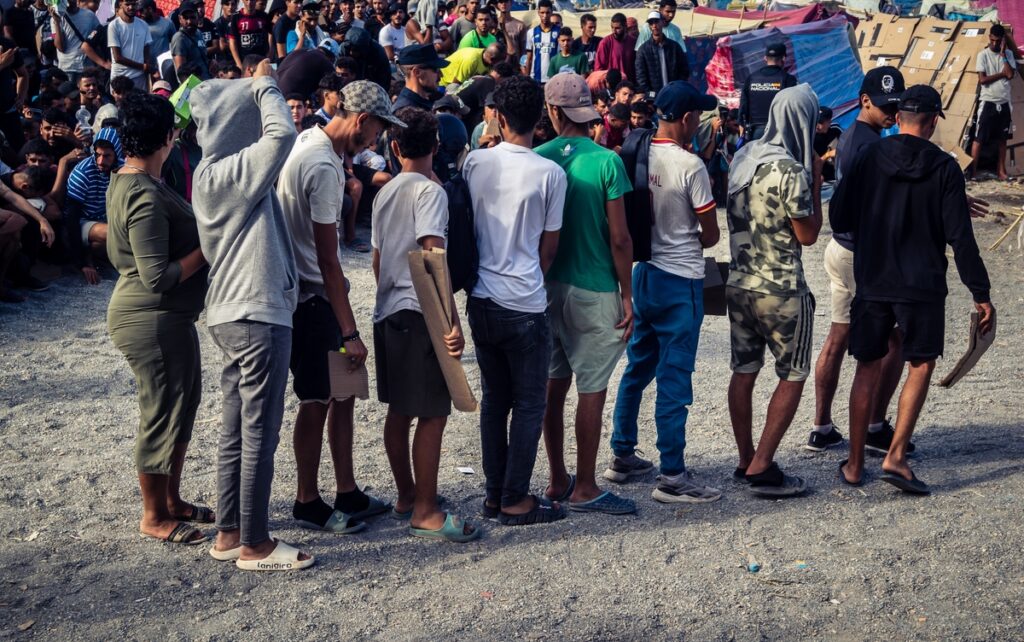
Young migrants on Ceuta beaches. Credit: Jose HERNANDEZ Camera 51 - Shutterstock
Imagine Britain being told that the country on the other side of the Channel was ready to take back people who had crossed illegally. For a government that has spent years wrestling with Channel crossings, asylum claims and removals, it would sound like the breakthrough ministers had been waiting for.
Spain appears to have that offer on its doorstep. After meeting Spanish foreign minister José Manuel Albares in New York during the UN General Assembly, Morocco’s foreign minister, Nasser Bourita, said his country was willing to receive returns from Ceuta. He went further. If irregular migrants and unaccompanied minors have not gone back, he said, the question should be put to Spain, not Morocco.
That leaves Madrid with a glaring problem. If Morocco will take them, why are so many still in Ceuta?
Ceuta is a small Spanish town on the North African coast, separated from Morocco by a land and sea border. At the end of July tens of thousands of people crossed into it in two days. Most were Moroccan. Many went home again within hours, but thousands did not. The town is still trying to cope with the aftermath: crowded facilities, street camps, beaches, even underground drainpipes, and of course, political rows in Madrid and pressure from other European governments.
Morocco says the delay is Spain’s
Bourita and Albares discussed the return of people who entered from July 30 and who have no right to international protection. Morocco repeated that it would co-operate. Then Bourita told journalists that the obstacles were Spanish: controversies, procedures and difficulties on Madrid’s side, not a lack of will in Rabat.
Spain, for its part, also says that many of those remaining will eventually have to leave. The two governments therefore appear to agree on the destination. They do not yet agree on the pace.
Spanish government says thousands have already gone back
The Spanish government’s latest official update, given by territorial policy minister Ángel Víctor Torres on 22 September, put returns since August 10 at more than 7,000. Of those, 6,791 had gone back voluntarily and 318 had been expelled. More than 6,000 adults were still being housed in state facilities. Ceuta was looking after more than 2,000 identified unaccompanied minors, with several hundred more still thought to be on the streets.
Adults must first be identified and interviewed. Then, officials then decide whether the person has a claim to protection or should be returned. Torres says most of those seeking protection are Moroccan. Those found not to qualify are told that return proceedings will begin. Some then choose to leave of their own accord rather than wait for a formal expulsion. For adults without a right to remain, the government’s stated destination is Morocco.
Willingness is not the same as a removal order
Even when both governments name the same destination, Spain still has to apply Spanish and European law. People have to be identified. Protection claims have to be examined. A return decision has to follow the proper procedure, and that takes time, staff and court capacity.
There is therefore a gap between Morocco saying “we will receive them” and Spain technically being ready to put a particular person on a bus. After weeks of crisis, Bourita’s remarks raise a fair question: if the destination is agreed, can those procedures be completed faster? Madrid has sent extra officials and judicial staff to Ceuta to speed up the identification process. That is an admission that the bottleneck is real.
Children are a different case
Unaccompanied minors cannot be treated as adults on a standard return track. By September 22, the government had formally identified 2,321 children. Madrid says the priority is family reunification. While Morocco may be willing to receive minors, that does not allow Spain to send thousands of children back as a group.
Each case is supposed to be examined: identity, family circumstances, whether reunification is possible, and the protections required for children under international law. There is a reason Madrid is cautious. But, it does raise questions over Spain’s opinion of Moroccan standards.
Spain has tried rapid returns of children before – and lost
In August 2021 Spanish authorities returned groups of Moroccan minors from Ceuta after an earlier influx. The case reached the Supreme Court, and in January 2024 the court confirmed that those returns were illegal. Officials had not followed the individual procedures required by immigration law: an assessment of each child’s circumstances, a hearing for those mature enough to be heard, and the involvement of prosecutors. Sending large numbers of children back without that process amounted to a prohibited collective expulsion. Madrid therefore knows what happens if it attempts another mass return of minors simply because Morocco says it is ready to receive them.
Adults are the harder political question
The law on children answers part of Bourita’s challenge, although it does not answer all of it. Spain says many remaining adults have no right to stay, and Morocco promises it will take them back. More than 7,000 people have already returned since mid-August, yet thousands of adults are still in temporary accommodation in Ceuta while cases are processed.
For British readers the contrast is obvious. Britain has spent years trying to remove people whose countries of origin often will not take them, or whose removal is blocked by individual asylum claims, human-rights litigation and missing travel documents. Spain now has the neighbouring state publicly insisting that co-operation is available.
That does not make the Spanish problem simple. Geography does help: Ceuta is on Morocco’s doorstep and most of those who crossed were Moroccan nationals. Law still requires an individual process. But the remaining question is becoming harder for Madrid to dodge. If Spain and Morocco agree that people without a legal right to remain should go back, how long should Ceuta have to wait?
Follow Euro Weekly News on Google News
Get breaking news from Spain, travel updates, and expat stories directly on your Google News feed.
Follow on Google NewsSign up for personalised news
Subscribe to our Euro Weekly News alerts to get the latest stories into your inbox!
By signing up, you will create a Euro Weekly News account if you don't already have one. Review our Privacy Policy for more information about our privacy practices.




Adam Woodward
Adam is a writer who has lived in Spain for over 25 years. With a background in English teaching and a passion for music, food, and the arts, he brings a rich personal perspective to his work at Euro Weekly News. As a father of three with deep roots in Spanish life, Adam writes engaging stories that explore culture, lifestyle, and the everyday experiences that shape communities across Spain.
Comments