Can’t afford a home, worried about your next train. Spain calls this progress
By Nazario Rodriguez • Published: 31 Oct 2026 • 19:21 • 4 minutes read
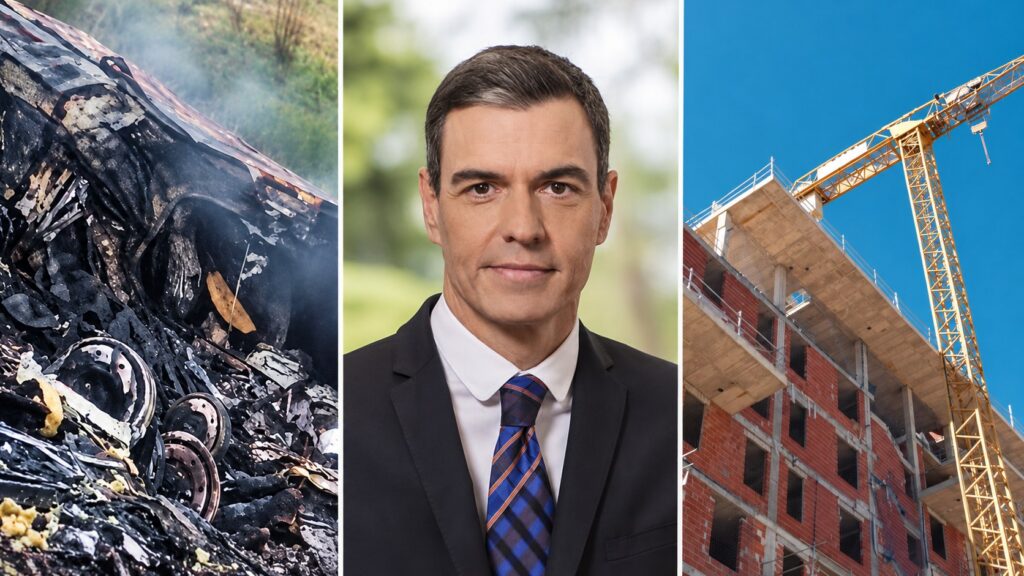
Editorial montage illustrating questions over housing, rail safety and government accountability in Spain. Created with AI assistance using photographic references.
Opinion
Finding a home you can afford and boarding a train you can trust should be ordinary expectations of life in Spain. Neither ought to require exceptional wealth or a minister’s personal reassurance. Yet housing pressures and the deadly Toledo rail collision have raised profoundly different, but urgent, questions about what people can expect from those governing the country.
There is a particular talent in modern politics for confusing expenditure with achievement. Announce enough billions, promise enough reforms and eventually someone may mistake the performance of government for the practice of governing. After more than eight years under Pedro Sánchez, the public is entitled to ask what all the announcements have delivered.
A housing crisis built on promises
For young people without family wealth, buying a home can begin to resemble an inheritance lottery. Renters face their own uncomfortable choices over location, space and cost. Being told that housing is a national priority offers limited comfort when the property you need remains beyond your means.
Anyone familiar with Britain’s housing market will recognise the predicament. Moving to Spain may change the paperwork, but it does not necessarily remove the struggle to find somewhere affordable.
After eight years of promises, the Sánchez period has the lowest annual average of protected homes completed in a comparison of Spanish governments stretching back to 1981. An impressive distinction for a government so generous with announcements.
Tenant protection matters, but so does having somewhere for tenants to live. Declaring housing a national priority does not produce the land, workers and infrastructure needed to build homes. If declarations were construction materials, Spain would have a surplus.
Regional and local administrations, including those governed by the Partido Popular, must answer for their decisions too. They cannot denounce the national housing crisis while expecting their own record to escape examination. There is enough responsibility here to accommodate more than one party, however inconvenient that may be for the campaign literature.
Announcing money is the easy part
A spending announcement is an expression of intent. It becomes an achievement when something useful has been delivered. This distinction is elementary, although political communication frequently depends on the public overlooking it.
European recovery funding offered Spain an opportunity to modernise its economy and improve public services. An opportunity of that scale requires scrutiny equal to its ambition, rather than applause proportionate to the number of zeros in the announcement.
In May 2026, the European Court of Auditors warned of gaps in the recovery fund’s transparency and traceability. Public information about recipients, actual costs and results was insufficient. The audit covered the wider European programme, but also identified deficiencies in Spain’s reporting, including publishing allocated amounts rather than amounts received by its largest beneficiaries.
That does not establish theft. It establishes grounds to ask how much reached its destination, what it purchased and what improved. A government should be able to answer without behaving as though the taxpayer had committed an offence against good manners.
European funds have specific purposes and conditions. They are not a common pot from which every national problem can be paid away. But those conditions do not cancel the obligation to demonstrate results. The taxpayer should not need an archaeological expedition to discover what became of a public promise.
A resignation cannot be the whole answer
On Spain’s railways, accountability has acquired terrible urgency. The October 28 collision near Urda, in Toledo province, left 69 confirmed dead, according to the regional government’s October 31 update. Behind that figure are families whose need for truthful answers must take precedence over anyone’s political convenience.
EWN has examined the unfinished safety upgrade and questions facing Spain’s transport minister. Investigators must establish what caused the collision. Ministers must answer for the decisions within their responsibilities. An investigation should establish the evidence, not become a waiting room in which every question about oversight is deposited indefinitely.
The PP has demanded the resignation or dismissal of transport minister Óscar Puente. His departure would not bring back the dead, nor would it, by itself, make the next journey safer. That does not diminish the case for resignation where responsibility warrants it. It means a resignation cannot be accepted as the whole answer.
Accountability must establish what failed, who was responsible and what must change. Otherwise, removing a minister risks becoming one final public relations exercise, with a new face at the lectern and the same unanswered questions. The families deserve the truth and passengers deserve demonstrable improvements. Neither obligation is discharged by changing the name on an office door.
The opposition has a job too
The Partido Popular should not mistake the government’s failures for its own achievements. EWN has reported on Spain’s missing budget submissions and prolonged reliance on extended spending plans. The PP has challenged the budget situation and sought parliamentary scrutiny, so the criticism cannot honestly be that it has said nothing. The question is whether its scrutiny is effective enough.
Issuing complaints is the beginning of opposition, not its completion. Establishing where money has gone, what it has delivered and which promises remain unfulfilled requires documents, hearings and sustained pressure. Spain deserves more than indignation followed by the patient expectation of electoral reward.
If budgets matter, pursue them. If accountability matters, demand the accounts. Outrage should have a longer working day than the press conference. Waiting to inherit power is an ambition, but it is not the discharge of a public duty.
What residents are entitled to expect
After eight years, Sánchez cannot keep presenting Spain’s problems as unfortunate discoveries made on his way to the office. He sought the power to govern. The obligation to answer for the results was included.
People need homes, functioning services and an explanation of where their money went. The government offers announcements. The opposition offers to become the government. Neither appears short of confidence in its own suitability.
Spain has heard the promises and paid the bills. Asking what it received in return is not ingratitude. It is checking the receipt.
Follow Euro Weekly News on Google News
Get breaking news from Spain, travel updates, and expat stories directly on your Google News feed.
Follow on Google NewsSign up for personalised news
Subscribe to our Euro Weekly News alerts to get the latest stories into your inbox!
By signing up, you will create a Euro Weekly News account if you don't already have one. Review our Privacy Policy for more information about our privacy practices.





Nazario Rodriguez
I’ve worked in news media for over 10 years, previously as Production Manager at Euro Weekly News, and I now focus on audience strategy and content performance. I specialise in understanding what readers engage with and shaping content that serves them well.
Comments