Sánchez under fire: Speech on Transport Minister’s resignation raises fresh questions
By Adam Woodward • Published: 04 Nov 2026 • 10:39 • 2 minutes read
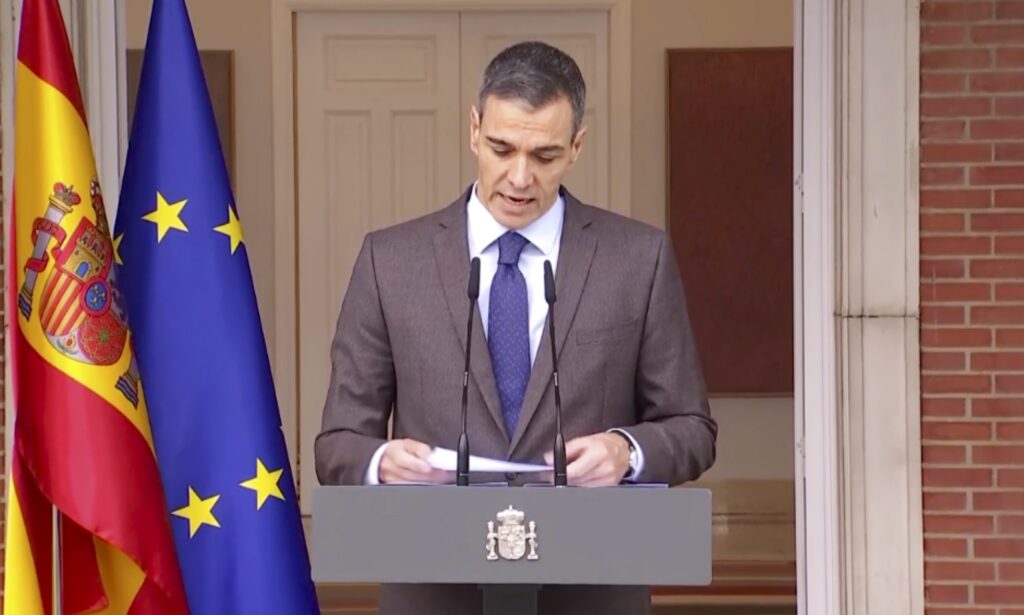
Pedro Sánchez addresses the nation. Credit: Moncloa
Pedro Sánchez is facing questions over his handling of Spain’s railway crisis after his defence of former Transport Minister Óscar Puente appeared to contradict the Prime Minister’s earlier position on his colleague’s departure.
Following Puente’s resignation on Tuesday, November 3, Sánchez praised his decision as an act of “dignity” and “respect” for the victims of the Urda railway disaster. However, his comments have reopened debate about political responsibility, public confidence and whether the Government is doing enough to address serious problems affecting Spain’s railway network.
The controversy comes just days after Sánchez acknowledged that confidence in Spain’s high-speed railway system had been broken.
Sánchez previously defended Puente’s position
One of the most striking points concerns the Prime Minister’s change of position. Following the October 28 collision near Urda, which killed 69 people, Sánchez initially stood firmly behind his Transport Minister. On October 30, Puente revealed that he had offered to put his position at Sánchez’s disposal, but the Prime Minister had reportedly considered his departure unfair.
However, Puente subsequently announced his departure without informing Sánchez until shortly before making it public. Spanish press revealed that even the Prime Minister’s closest team had been taken by surprise. Now Sánchez has described the resignation as an example of political dignity, saying it demonstrates that not all politicians behave in the same way.
The apparent change raises questions about why the Prime Minister initially considered Puente’s departure unjust but now presents it as the right thing to do.
Can a minister’s resignation restore public confidence?
Sánchez praised Puente for facing questions and providing solutions, adding that his resignation demonstrated respect for the victims. He said: “Con su renuncia Óscar ayuda a que España recupere la confianza en el sistema ferroviario”. Translated, this means Puente’s resignation would help Spain recover confidence in its railway system.
However, critics may question how the departure of one minister can restore confidence when the underlying safety concerns have yet to be fully investigated. The two disasters in Adamuz and Urda have claimed 115 lives in total. Their causes and the possible failures in railway management, infrastructure and safety procedures are still subject to investigation.
EWN previously examined questions surrounding railway safety, including the unfinished safety upgrade on the Madrid-Andalucia high-speed line.
Criticism of political opponents raises eyebrows
Another controversial part of Sánchez’s comments concerned political polarisation. The Prime Minister complained about what he described as an atmosphere of political noise and extraordinary dehumanisation. He also suggested that some people wanted everything to fall apart because they benefited from confrontation and fear.
Critics could question whether attacking the motives of political opponents sits comfortably with an appeal for less polarisation. PP leader Alberto Núñez Feijóo was quick to respond. Referring to Sánchez’s praise of Puente for resigning on grounds of dignity, he told the Prime Minister to apply the same argument to himself.
Feijóo’s response added another dimension to the political dispute, with the opposition questioning why responsibility should end with the former Transport Minister.
Carlos Cuerpo takes temporary charge
Sánchez confirmed that First Deputy Prime Minister Carlos Cuerpo would temporarily take over responsibility for the Transport Ministry. He commended Cuerpo’s management abilities and said he would continue the reforms introduced by Puente.
That announcement raises another question: if the Government believes the existing reform programme is the right approach, what changes will now be made to address the problems exposed by the two disasters?
For families who lost loved ones, and passengers worried about travelling by train, political statements will count for little without clear answers and demonstrable improvements in railway safety.
The investigations must establish what went wrong. Meanwhile, Sánchez’s comments have ensured that questions about political accountability are not going away.
Follow Euro Weekly News on Google News
Get breaking news from Spain, travel updates, and expat stories directly on your Google News feed.
Follow on Google NewsSign up for personalised news
Subscribe to our Euro Weekly News alerts to get the latest stories into your inbox!
By signing up, you will create a Euro Weekly News account if you don't already have one. Review our Privacy Policy for more information about our privacy practices.




Adam Woodward
Adam is a writer who has lived in Spain for over 25 years. With a background in English teaching and a passion for music, food, and the arts, he brings a rich personal perspective to his work at Euro Weekly News. As a father of three with deep roots in Spanish life, Adam writes engaging stories that explore culture, lifestyle, and the everyday experiences that shape communities across Spain.
Comments