Spain ends Low Emission Zone grace period: Drivers see mandatory €200 fines
By Natascha Rivera • Published: 04 Nov 2026 • 11:29 • 2 minutes read
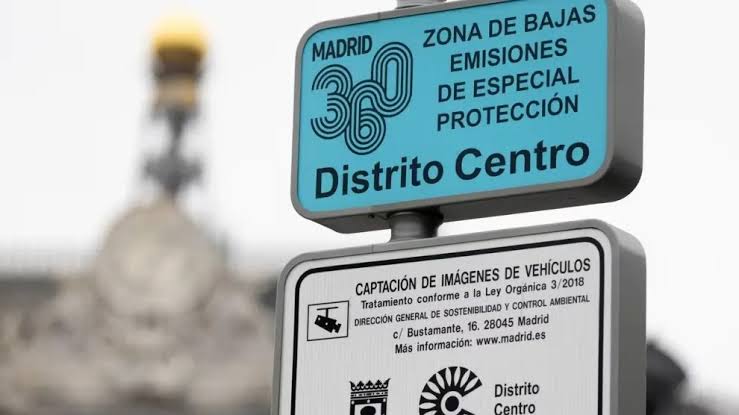
Spain tightens Low Emission Zone enforcement, making traffic fines mandatory. Photo Credit: Automovilistas Europeos Asociados
Spain’s Council of Ministers has announced the official end of the grace periods for traffic fines in Low Emission Zones, meaning that the country is moving towards stricter enforcement of these zones, as well as the fines if they are not complied with. With the official end of the grace period, drivers are now more likely to receive fines for entering restricted areas when their vehicles are not permitted.
Spain puts end to long grace periods and slaps on the wrist for drivers
Previously, many towns across Spain had been applying “excessively long moratoriums on the application of the penalty system”, according to the Council of Ministers. In effect, towns and local areas across Spain had been letting drivers off with a warning during lengthy grace periods, without penalising them for driving in these Low Emission Zones when their vehicles were not permitted or the proper documentation was not shown. Other towns had established zones with very limited restrictions or not enough enforcement.
Now, from Tuesday, November 4, local governing bodies will be obligated to fine drivers who do not comply with the regulations of these zones.
Additionally, local authorities which are required to establish Low Emission Zones must provide documentary evidence of their compliance with the requirements. This includes reporting prohibitions or restrictions on vehicle access, circulation, and parking, as well as the implementation of access control, monitoring, and tracking systems.
What is a Low Emission Zone and how to identify them?
A Low Emission Zone, (Zona de baja emisiones, or ZBE, in Spanish) is a designated area where access is restricted for more polluting vehicles to reduce air pollution and improve air quality.
The official sign for a Low Emission Zone generally features:
- A red circular prohibition symbol.
- The graphic of a car emitting pollution.
- The letters or wording indicating a ZBE.
- An additional panel underneath specifying which environmental labels are permitted.
Which towns and areas are affected?
Three major groups of areas are most affected by the change:
- Spanish towns (municipalidades) with more than 50,000 inhabitants.
- Island territories.
- Towns with more than 20,000 inhabitants that exceed permitted air-quality pollution limits.
This means that the change will be felt most by people who regularly drive in larger Spanish towns and cities with tens of thousands of inhabitants.
What does this mean for the average driver?
The relevancy of this change depends on the driver’s vehicle classification.
- 0 emissions – Fewest access restrictions.
- ECO – Generally permitted in most Low Emission Zones.
- C – Generally permitted, although some local restrictions can apply.
- B – Generally permitted in many zones, but may face restrictions.
- No label (A) – Most likely to face access restrictions and fines.
It should be noted that these are general regulations, and some towns and local authorities may impose different rules.
How much could drivers be fined?
The standard fine for the offence of unauthorised Low Emission Zone access is €200, although this may be lowered to €100 if paid within the early payment period.
Follow Euro Weekly News on Google News
Get breaking news from Spain, travel updates, and expat stories directly on your Google News feed.
Follow on Google NewsSign up for personalised news
Subscribe to our Euro Weekly News alerts to get the latest stories into your inbox!
By signing up, you will create a Euro Weekly News account if you don't already have one. Review our Privacy Policy for more information about our privacy practices.


Natascha Rivera
Natascha is a Dominican writer based in Spain with a background in audiovisual and marketing communication. A lifelong reader and passionate storyteller, she brings a creative edge to her work at Euro Weekly News. Her multicultural perspective informs her coverage of lifestyle and community stories, offering fresh angles and relatable storytelling that connects with a diverse audience.
Comments