Tunnel tensions: Should Spain abandon Morocco’s controversial Gibraltar Strait underwater link?
By Adam Woodward • Published: 05 Nov 2026 • 17:31 • 3 minutes read
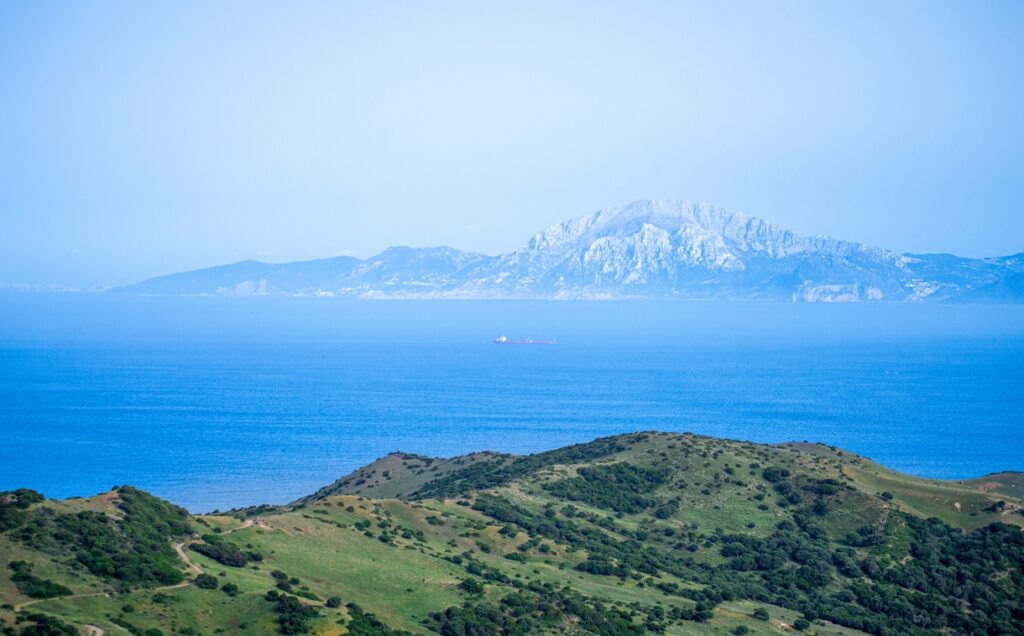
Morocco seen from Spain. Credit: Vitalii Biliak - Shutterstock
Rabat has promised another €11 million for studies into the Strait of Gibraltar railway tunnel linking Morocco and Spain, despite the fallout from this summer’s extraordinary Ceuta migration crisis.
Morocco is saying they will spend another €11 million on plans for an undersea railway tunnel connecting North Africa with Europe, raising an uncomfortable question for Madrid: should a country that depends on Moroccan cooperation to protect its borders continue pursuing such an ambitious joint project?
According to Spanish newspaper Europa Sur, Morocco’s state-owned National Company for Strait Studies (SNED) has earmarked more than 120 million dirhams, approximately €11 million, for further investigations during 2027.
The proposed allocation forms part of a joint programme with Spain’s equivalent organisation, SECEGSA, which is continuing to update the original engineering plans and investigate the geology beneath the Strait of Gibraltar.
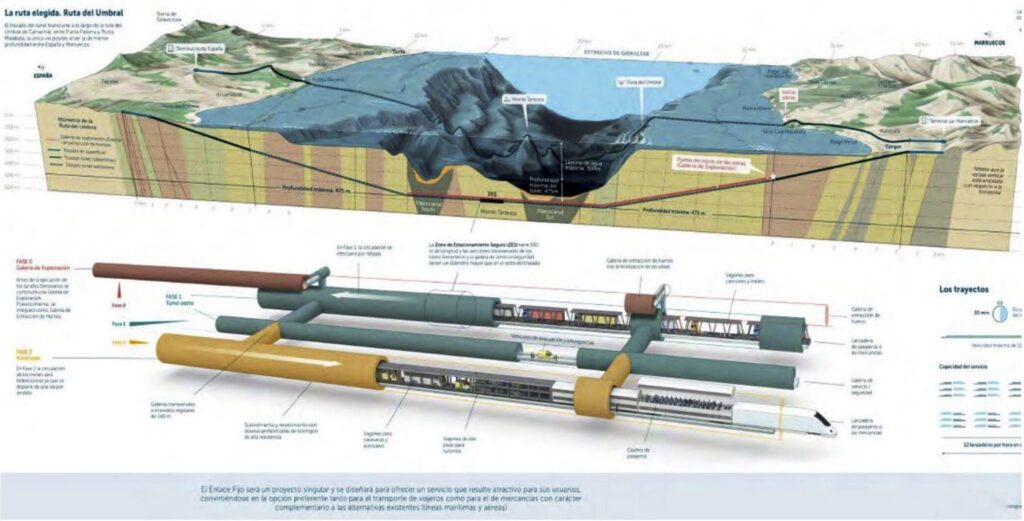
Credit: Ministerio transportes
Importantly, this is not a simple construction budget. Money would fund engineering reviews, environmental assessments, geological investigations and further legal and economic studies. No final decision to build the tunnel has been taken.
Morocco presses ahead after Ceuta crisis
However, the timing of the announcement is likely to raise eyebrows among many Spanish residents, particularly those who followed the extraordinary events at the border with Ceuta at the end of July.
During July 30 and 31, around 70,000 people entered the Spanish North African city illegally from Morocco, according to figures subsequently given by Prime Minister Pedro Sánchez. The scale of the crossings placed enormous pressure on local authorities, police and emergency services, and the tiny town is still trying to deal with the sudden influx as many of the illegal immigrants are still said to be living on the streets.
A subsequent Spanish National Police report, reported by RTVE, alleged that Moroccan gendarmes, including some in civilian clothing, had guided groups towards crossing points. The report raised questions about the apparent lack of intervention by Moroccan security personnel during crucial hours.
Sánchez, however, told Parliament on September 3 that Spain had received no solid evidence that Moroccan authorities had planned or carried out the incident, in spite of amature video footage suggesting otherwise. He said investigators needed to establish whether the lack of control resulted from incapacity or deliberate inaction. His statement to the Spanish Parliament also acknowledged the importance of Moroccan cooperation in the subsequent returns, with approximately 63,000 people sent back within 72 hours.
Nevertheless, for the population of Ceuta, as well as many in mainland Spain, the episode left serious questions about the reliability of border cooperation between the neighbouring countries.
Could the tunnel become another illegal migration route?
For many people living in Spain, the prospect of a permanent railway connection between Morocco and mainland Europe raises another concern: could it make illegal immigration easier?
Unlike the Channel Tunnel, which operates under established border arrangements between Britain and France, the proposed Gibraltar connection would link an EU external border directly with a North African country.
Passenger checks, freight inspections, concealed travellers, document fraud and people-smuggling would all need careful consideration. Spain would have to establish exactly how its border controls would operate and who would be responsible for enforcing them.
A properly controlled railway could offer better monitoring than some existing crossing routes. However, that would depend on effective cooperation, reliable (and continuous) security arrangements and Spain retaining full control of its external border.
Should Spain continue with the project?
Morocco’s proposed €11 million allocation is relatively modest compared with the billions of euros that construction could eventually cost. Yet it signals that Rabat wants to continue negotiating and developing an idea first discussed by the two countries decades ago.
Spain is also spending public money on its side of the investigations, including geological research and the updating of the original project. Both countries have invested years in examining the possibility of a fixed rail connection beneath the Strait. But
Economic benefits could be considerable, with faster passenger and freight links between Europe and Africa potentially transforming transport and trade.
But should those possibilities outweigh concerns about border security and the diplomatic relationship with Morocco?
Some readers may argue that the tunnel should be abandoned until Spain receives convincing guarantees about future cooperation. Others may believe that a project of such strategic importance should continue, provided strict border controls are built into the arrangements from the outset.
After the events in Ceuta, should Spain continue working with Morocco on the tunnel, or is it time to scrap the project altogether? We would like to hear your views.
Follow Euro Weekly News on Google News
Get breaking news from Spain, travel updates, and expat stories directly on your Google News feed.
Follow on Google NewsSign up for personalised news
Subscribe to our Euro Weekly News alerts to get the latest stories into your inbox!
By signing up, you will create a Euro Weekly News account if you don't already have one. Review our Privacy Policy for more information about our privacy practices.



Adam Woodward
Adam is a writer who has lived in Spain for over 25 years. With a background in English teaching and a passion for music, food, and the arts, he brings a rich personal perspective to his work at Euro Weekly News. As a father of three with deep roots in Spanish life, Adam writes engaging stories that explore culture, lifestyle, and the everyday experiences that shape communities across Spain.
Comments