Spain’s general strike on Wednesday: What will run, what may close and how to prepare
By Harry Dennis • Updated: 09 Nov 2026 • 11:18 • 4 minutes read
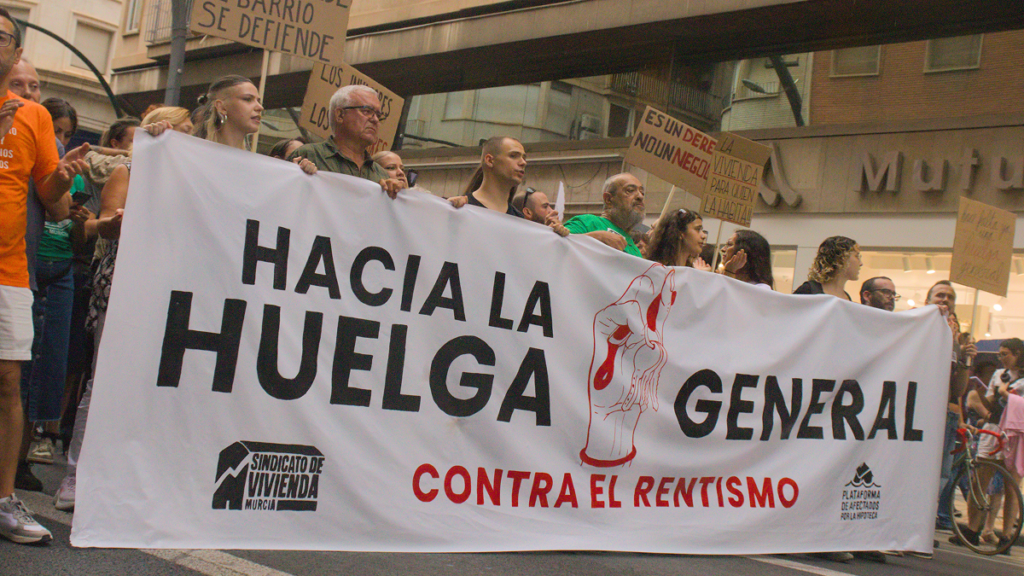
Housing costs and wages are behind Wednesday’s walkout. Credit: LoboPhotoESP / Shutterstock
Commuters, travellers and families across Spain face thinned-out trains, reduced metro services and postponed hospital appointments on Wednesday November 11, as workers stage the country’s first general strike in 14 years. Minimum service levels have now been set for transport, schools and healthcare, and they vary a great deal depending on where you live.
Who’s striking on Wednesday and why
The 24-hour strike runs from midnight to midnight, although in workplaces that run shifts it starts with the first shift, even if that begins on Tuesday night.
It’s been called by Spain’s two biggest unions, CCOO and UGT, with backing from smaller unions including CGT, Galicia’s CIG and the Basque unions ELA and LAB, as well as the tenants’ unions that first proposed the date. It also lands 18 days before the general election on Sunday November 29.
Under the slogan ‘Wages, housing and prices’, the unions want pay rises of 4 to 7 per cent, limits on rents and a permanent stock of public protected housing.
Rail passengers face three disrupted days in a row
Wednesday sits right between two separate walkouts by Renfe train drivers, with a full-day stoppage on Tuesday November 10 and three partial stoppages on Thursday November 12. For Wednesday itself, the Ministry of Transport has ordered Renfe to run 75 per cent of Cercanías’ commuter trains at peak times, which are 6am to 9am, 1.30pm to 3.30pm and 6.30pm to 8.30pm. Outside those hours, there’ll be at least one train an hour each way, capped at 50 per cent.
High-speed AVE and long-distance services will run at 73 per cent and regional Media Distancia routes at an average of 65 per cent. Low-cost operator Ouigo plans to run 18 of its 26 scheduled trains.
Metro and bus cuts vary widely by region
Madrid has the most generous cover, with Metro de Madrid running 80 per cent of trains at peak times and 50 per cent the rest of the day. EMT city buses will run at between 40 and 50 per cent all day, while interurban buses and Metro Ligero will run at 50 per cent at peak times and 45 per cent otherwise.
Barcelona is a different story, though. The metro, buses, trams, FGC (Catalan regional railways) and Rodalies (the Catalan commuter trains) only have to run 25 per cent of normal services, and only between 6.30am and 9.30am and between 4.30pm and 9pm.
In the Baleares, interurban buses will run a Sunday timetable, as will the Ibiza to Formentera ferry. Anyone relying on minimum services for Metrovalencia, the TRAM d’Alacant or the metro and bus networks in Málaga and Sevilla should check the operator’s website or app on Tuesday evening, as at the time of writing no confirmed schedules were published.
Island flights are better protected than short mainland hops
Airports will stay open, but airlines can cancel part of their schedules. The ministry has set a minimum share of flights to be protected at each airport, and flights to and from the Canarias, Baleares, Ceuta and Melilla get the most cover, at between 56 and 80 per cent, with Palma at 75 per cent.
International flights are protected at between 39 and 64 per cent, with 57 per cent at both Málaga and Madrid-Barajas, while short domestic routes, including Madrid to Sevilla, get the least, mostly around 32 per cent.
Those are minimums, not a list of cancellations, and each airline decides which flights to keep, so passengers should check directly with their airline and airport.
Schools will open with a minimum of staff
Arrangements differ by region and school, although Cataluña and the Baleares both require schools to open. In Cataluña, at least one member of each school’s management team must be in, with one teacher for every six primary classes and a third of nursery staff.
In the Baleares, primary schools need one teacher for every four classes and school transport must run in full, while in Madrid 60 per cent of school transport is protected. With so few teachers required, normal lessons can’t be guaranteed, so families should keep an eye on messages from their school.
Routine appointments are the most likely casualty
Emergency departments, intensive care, maternity units and dialysis are covered in the regions that have published their orders. In Andalucía, the regional government has put hospitals on a Sunday-level service and specifically left out routine scheduled activity, non-urgent outpatient appointments, planned operations and tests that can wait.
Cataluña has set primary care at 25 per cent of staff, while in the Baleares health centres will stay open with a reduced team, so anyone with a non-urgent appointment on Wednesday should call ahead to check it’s still on.
Shops, pharmacies and bins
Private shops, bars, supermarkets and bank branches don’t have minimum services, so whether they open will depend on whether their staff join the strike. Pharmacies will keep working, with Sunday opening hours in Andalucía, while in the Baleares rubbish collection will run at Sunday levels.
Demonstrations are planned across the country too, including 6pm marches in Alicante and Elche, which could slow traffic in both city centres.
How to get through Wednesday
Check your train, bus or flight on Tuesday night and again on Wednesday morning, and allow extra time, as the services that do run will be busier than usual. Call ahead to confirm medical, bank or council appointments, and follow updates from Renfe, your local transport operator, your airline and your child’s school.
Workers worried about getting in can find out where they stand in EWN’s guide to pay and lateness on strike day. Rail passengers should also check Thursday’s timetable before setting off, with the drivers’ partial strike starting again at 6.20am.
Follow Euro Weekly News on Google News
Get breaking news from Spain, travel updates, and expat stories directly on your Google News feed.
Follow on Google NewsSign up for personalised news
Subscribe to our Euro Weekly News alerts to get the latest stories into your inbox!
By signing up, you will create a Euro Weekly News account if you don't already have one. Review our Privacy Policy for more information about our privacy practices.



Harry Dennis
Born in the UK and raised on the Cádiz coast, Harry brings a creative eye to his writing, sharing stories that celebrate culture and lifestyle across Spain and beyond.
Comments