Spanish food company uncovers explosive surprise hidden in French potato shipment
By Molly Grace • Published: 19 Nov 2026 • 22:20 • 2 minutes read
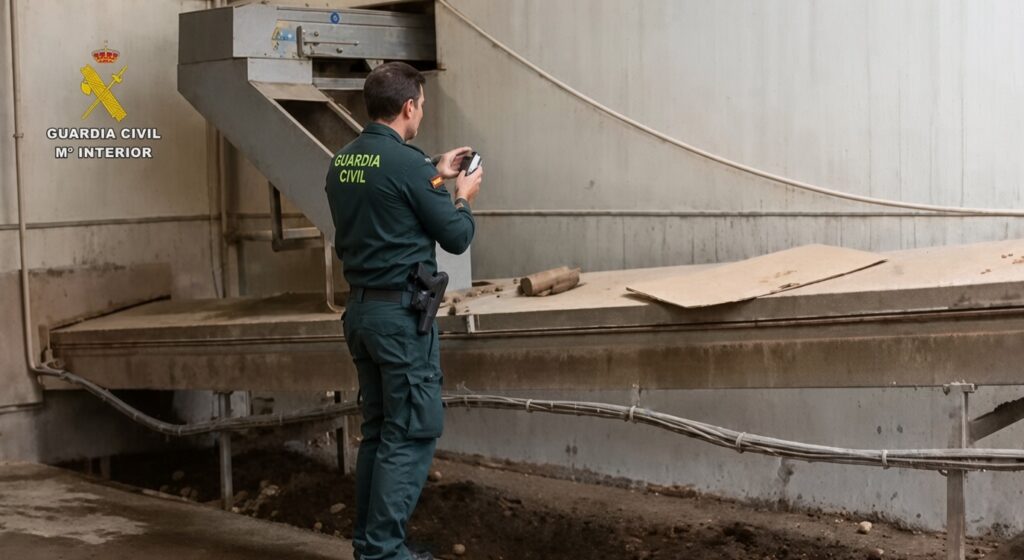
The projectile measured 75mm and was identified as ammunition from the Second World War. Photo credit: Guardia Civil/Ministerio de Interior
A company in León got considerably more than it bargained for when a shipment of potatoes from France arrived with an unexploded Second World War artillery shell hidden among the produce.
The 75mm projectile was discovered by workers on a conveyor belt at the company’s premises in Santovenia de la Valdoncina. It still contained explosive material, prompting staff to stop the machinery and call the Guardia Civil. Fortunately no one was injured, but the discovery required the intervention of the Guardia Civil’s explosives disposal specialists.
Bomb found among imported potatoes
The incident happened at a company in Santovenia de la Valdoncina, in the province of León, while workers were handling a shipment of potatoes imported from France. The shell was spotted on the processing line by, where potatoes are moved along a conveyor belt for handling. Once its appearance raised suspicions, staff stopped the machinery and alerted the authorities rather than risk moving it.
The projectile measured 75mm and was identified as ammunition from the Second World War. Despite the decades that had passed, it had not been rendered harmless and still contained explosive material. The discovery meant the shipment had brought a piece of wartime weaponry into a food-processing workplace, where employees could have been seriously injured had it been mishandled or gone unnoticed.
Guardia Civil explosives experts called in
The Guardia Civil sent its explosives disposal specialists, known as EDEX, to deal with the device. Their work involved assessing the condition of the shell and making it safe to remove. The operation was carried out without injuries, and there were no reports of damage at the company. The shell was subsequently taken to a quarry in La Pola de Gordón, where specialists destroyed it in a controlled explosion.
The operation removed the explosive device, but the discovery raised an obvious question: how had a wartime projectile ended up among potatoes being transported commercially from France? The obvious explanation would be that it had been uncovered in a field where the potatoes were being grown, but how it managed to not detonate through the entire collection, transport and delivery process is a miracle in itself.
Old explosives can remain dangerous
Unexploded ammunition from past conflicts can remain hazardous long after the fighting has ended. Rust, damage and deterioration do not necessarily remove the explosive risk, and moving or handling an old projectile can trigger a detonation. The Guardia Civil regularly deals with discoveries of old military explosives across Spain, including devices found during building work, agricultural activity and land clearance.
Anyone who comes across a suspected grenade, shell or other piece of ammunition is advised not to touch it, move it or attempt to inspect it. The safest response is to keep away and contact the emergency services so trained specialists can assess it. The French connection sets this find apart from many old shells recovered in León, where unexploded ammunition is more commonly associated with battles fought during the Spanish Civil War.
Old military ammunition can turn up in unexpected places, particularly during agricultural and construction work, the Guardia Civil advises anyone finding suspected ammunition to leave it untouched, move away, keep others clear and call 062 right away.
Follow Euro Weekly News on Google News
Get breaking news from Spain, travel updates, and expat stories directly on your Google News feed.
Follow on Google NewsSign up for personalised news
Subscribe to our Euro Weekly News alerts to get the latest stories into your inbox!
By signing up, you will create a Euro Weekly News account if you don't already have one. Review our Privacy Policy for more information about our privacy practices.




Molly Grace
Molly is a British journalist and author who has lived in Spain for over 25 years. With a background in animal welfare, equestrian science, and veterinary nursing, she brings curiosity, humour, and a sharp investigative eye to her work. At Euro Weekly News, Molly explores the intersections of nature, culture, and community - drawing on her deep local knowledge and passion for stories that reflect life in Spain from the ground up.
Comments