Hospital Quirónsalud Marbella installs Spain’s first eye laser system for correcting vision in complex cases
By Nicola EWN • Updated: 20 Nov 2026 • 9:20 • 4 minutes read
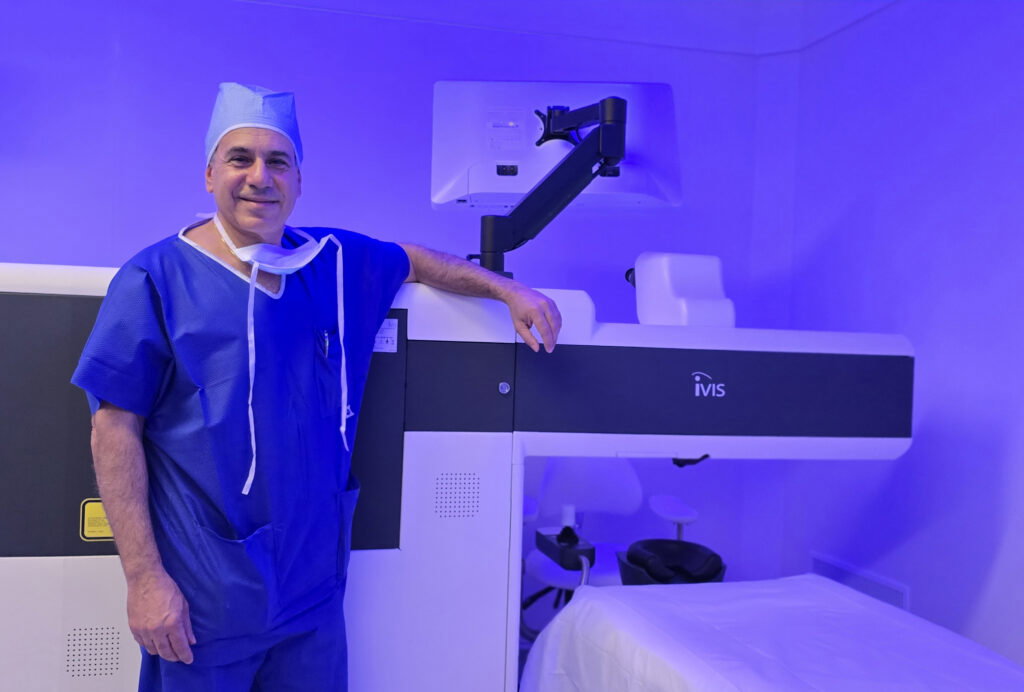
Credit: Quironsalud Marbella
The technology enables highly precise examination of the eye and the treatment of patients with keratoconus, irregular or thin corneas, and high prescriptions who have so far had limited refractive surgery options
Marbella, 19 de noviembre de 2026. Hospital Quirónsalud Marbella has introduced innovative refractive surgery technology that places the hospital at the forefront of ophthalmology in Spain. With this development, the hospital becomes the first in the country to have the IVIS iRES² laser, a system capable of examining and treating the cornea point by point, offering a highly personalised solution for patients with complex visual problems who have until now had more limited options for correcting their vision.
The new technology is based on advanced corneal tomography and optical analysis using ray tracing, a technique that produces an extremely precise three-dimensional map of the eye. Using this information, specialists can design a fully personalised treatment tailored to each patient’s individual characteristics and the specific irregularities of their cornea.
Dr Nabil Ragaei Kamel, Head of the Ophthalmology Department at Hospital Quirónsalud Marbella, explains: “This technology allows us to analyse the cornea with unprecedented precision and design personalised treatments for each patient. No two eyes are the same, and we can now tailor the procedure much more accurately to each person’s visual needs.”
New opportunities for patients with complex cases
One of the main advances offered by this system is its ability to broaden treatment options for patient groups that have traditionally posed a challenge for refractive surgery. It can therefore be used in cases involving thin corneas, irregular corneas, keratoconus, corneal ectasia and high refractive errors, such as high myopia, hypermetropia or astigmatism.
“Its main strength lies in treating patients with irregular corneas or corneal conditions, particularly those diagnosed with keratoconus,” the specialist explains. “These are cases in which personalisation is essential and where this technology offers a distinctive advantage.”
Until now, many of these patients faced limitations in accessing certain vision-correction procedures or required less personalised treatments. The diagnostic and therapeutic precision of this new system makes it possible to assess each case individually and design a specific treatment map for each eye.
Point-by-point diagnosis and treatment
The main difference between this system and other refractive surgery platforms is that it incorporates its own advanced corneal diagnostic system, which can analyse the surface of the eye point by point.
Following this detailed examination, the laser also delivers treatment point by point across the entire cornea, adapting to each patient’s anatomical and optical characteristics.
“The treatment map is assessed individually for each patient. The system identifies every irregularity and enables us to treat it in a completely personalised way,” explains Dr Ragaei .
This ability to tailor treatment aims not only to correct the refractive error, but also to optimise the patient’s visual quality by taking the specific characteristics of their cornea into account.
Integrated technology for the treatment of keratoconus
Another distinctive advantage of this platform is that it incorporates cross-linking technology into the laser treatment itself, making it part of the same procedure. Although this technique was already used to strengthen the structure of the cornea, it had previously been performed as a separate treatment. What is new about this system is that it allows cross-linking to be incorporated into the treatment plan designed for each patient.
In addition, the procedure allows cross-linking to be applied selectively and on an individual basis, targeting only the areas of the cornea that show greater weakness, in accordance with the personalised map previously prepared by the specialists. In this way, the treatment can address both the correction of corneal irregularities and the strengthening of the cornea’s structure in a coordinated manner.
This combination of advanced diagnosis, personalised correction and corneal reinforcement represents a particularly significant advance for patients with keratoconus and other complex corneal conditions.
With this addition, Hospital Quirónsalud Marbella strengthens its commitment to technological innovation and personalised medicine, consolidating its position as a centre of reference for national and international patients seeking the most advanced solutions for their eye health.
Quirónsalud in Andalusia
The Quirónsalud Group in Andalusia currently has eight hospitals located in Málaga, Marbella, Los Barrios (Cádiz), three in Seville (Sagrado Corazón, Infanta Luisa and Materno-Infantil), Córdoba and Huelva. It also has two surgical day hospitals in Seville and Málaga, as well as 22 medical centres specialising in outpatient care and diagnostics, making it the leading private hospital group in the region.
About Quirónsalud
Quirónsalud is the leading healthcare group in Spain and, together with its parent company Fresenius-Helios, also in Europe. In addition to its operations in Spain, Quirónsalud is also present in Latin America. Together, the group has more than 55,000 professionals working across more than 180 healthcare centres, including 57 hospitals with over 8,000 beds. It has state-of-the-art technology and a large team of highly specialised professionals with an international reputation. Its centres include Hospital Universitario Fundación Jiménez Díaz, Centro Médico Teknon, Ruber Internacional, Hospital Universitario Quirónsalud Pozuelo, Hospital Universitari Quirónsalud Barcelona, Hospital Universitari Dexeus, Policlínica Gipuzkoa, Hospital Universitari General de Catalunya and Hospital Universitario Quirónsalud Sagrado Corazón, among others.
The Group promotes education and training (15 of its hospitals are university hospitals) and medical and scientific research (through the FJD Health Research Institute, accredited by the Spanish Ministry of Science and Innovation).
Its healthcare services are also organised into units and cross-centre networks, enabling it to make the most of the experience gained across its different centres and translate research findings into clinical practice. Quirónsalud is currently developing numerous research projects throughout Spain, and many of its centres are at the forefront of their fields, pioneering work in specialities such as oncology, cardiology, endocrinology, gynaecology and neurology, among others.
Más información:
Rocío Sánchez
Responsable de Comunicación
Hospital Quirónsalud Marbella
689 533 267 – rocio.srivera@quironsalud.es
Follow Euro Weekly News on Google News
Get breaking news from Spain, travel updates, and expat stories directly on your Google News feed.
Follow on Google NewsSign up for personalised news
Subscribe to our Euro Weekly News alerts to get the latest stories into your inbox!
By signing up, you will create a Euro Weekly News account if you don't already have one. Review our Privacy Policy for more information about our privacy practices.





Nicola EWN
Nicola is a member of the editorial team specialising in features, digital content and online publishing. With broad experience across media and communications, she works across feature articles, editorial content and digital platforms, managing content across a range of subjects.
Comments