Data centre boom: Water fears grow as AI projects spread across Spain’s Costas
By Adam Woodward • Published: 22 Nov 2026 • 13:13 • 4 minutes read
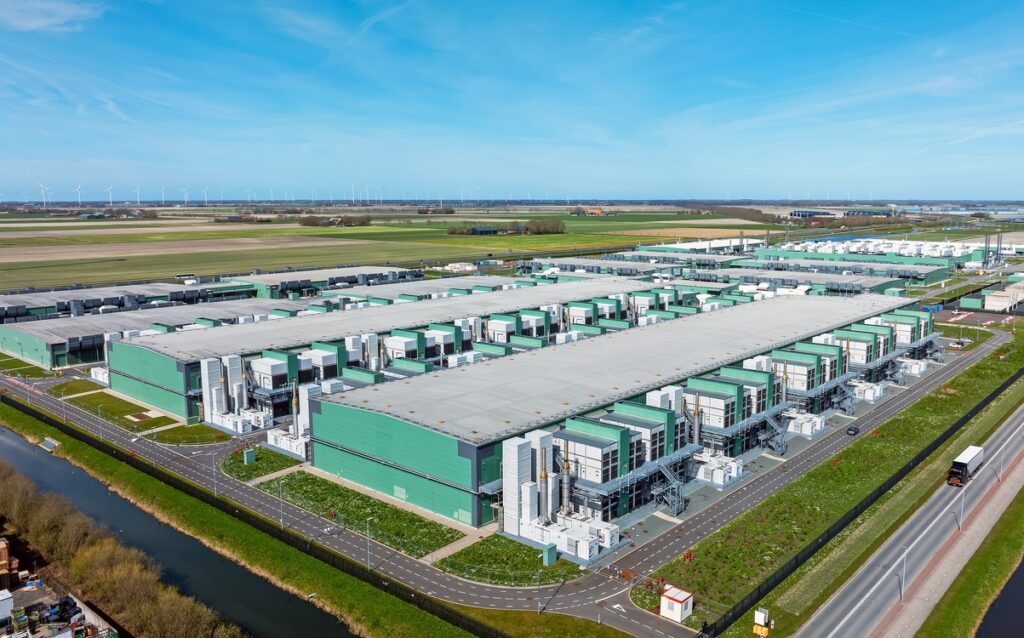
One of many massive data centres. Credit: Steve Photography - Shutterstock
Spain is attracting billions of euros in investment for data centres as demand for artificial intelligence (AI), cloud computing and online services continues to grow. But the expansion is causing concern about how much water and electricity these facilities will need, particularly in regions already familiar with drought restrictions.
Andalucia has one of the largest pipelines of projects. A regional inventory identifies up to 19 developments at different stages, with a combined investment running into billions of euros. If all the facilities were operating at full capacity, each of their estimated annual water consumption would be equivalent to that of 300,000 people, while their electricity requirements would compare with the needs of around 14 million.
The figures go to show the scale of the challenge for a part of the World where water supplies and electricity network capacity are already touchy subjects.
Where are the data centres being built?
Projects are at very different stages across Malaga, Granada, Valencia, Murcia and the Balearic Islands. Some facilities are already operating, while others have only recently been announced.
| Region | Location | Company or project | Status and details |
|---|---|---|---|
| Andalucia
|
Malaga TechPark expansion, Sector SUS CA-23, Parcel C
|
Saltburn Holding
|
Approved as a strategic investment project. The proposed facility has 100MW of IT capacity and is expected to use 150MW of electricity. Official Junta documentation.
|
| Escúzar, Granada – CITAI Technology Park
|
Alto Infrastructure, SP01
|
Under construction. The campus is planned to reach 70MW of IT capacity, with its first 10MW phase scheduled to become operational in October 2027. Project details.
|
|
| Valencian Community
|
Vara de Quart industrial estate, Valencia city
|
NxN Data Centers, NX01
|
Under construction. The €60 million facility is expected to create around 100 direct jobs and open in 2027. Valencia City Council announcement.
|
| Parque Empresarial Táctica, Paterna
|
Kumo Networks
|
Operating. The company’s new Valencia data centre has been inaugurated and joins its existing facility in Murcia. Company announcement.
|
|
| Vall d’Alba, Castellon province
|
Valfortec and SGS
|
Announced. A proposed €100 million investment to develop what the companies describe as the province’s first data centre. Project announcement.
|
|
| Murcia
|
Espinardo, Murcia city
|
Kumo Networks
|
Operating. An existing data centre.
|
| Magalia industrial estate, Alcantarilla
|
SYS4NET
|
Operating. An existing facility.
|
|
| Espinardo area, Murcia city
|
Casiopeia, Grupo Fotones
|
Announced. The proposed site has not been finalised. Two possible locations have been discussed near the university campus.
|
|
| Valle de Escombreras, Cartagena
|
Cartagena Data Green
|
Planning stage. The proposal involves using residual cooling from the nearby Enagás regasification plant. It is dependent on land and environmental approvals.
|
|
| Balearic Islands
|
Son Castelló industrial estate, Palma
|
Infotelecom
|
Operating. The new Palma facility works with the company’s existing data centres in Ciutadella and Maó, Menorca. Company announcement.
|
The table is not a list of confirmed construction sites. Some projects are already operating, while others are still proposals or at an early stage of development. The 19 Andalucian entries also include projects at different stages, rather than 19 completed data centre buildings.
Why do data centres need so much water?
Servers generate heat and must be kept within a controlled temperature range. Many cooling systems use water through evaporation, which can consume substantial quantities. Other technologies, including closed-loop and air-based cooling, can use much less.
The European Commission’s report on data centre sustainability explains how water use varies according to the cooling technology and the way a facility is operated. This means the water footprint of one data centre can be very different from another. The location alone does not tell residents how much water a proposed facility will require.
For people living in areas that have experienced restrictions, the issue is particularly sensitive. Euro Weekly News has previously reported on Axarquia residents facing strict water restrictions and Costa del Sol rules limiting swimming pool filling and garden watering.
Jobs and investment versus pressure on resources
Supporters argue that data centres bring investment, skilled employment and infrastructure that can help attract technology companies. They are also increasingly important to the development of AI and cloud services.
However, the number of permanent jobs can be modest compared with the scale of the investment, and the facilities can place heavy demands on electricity networks. Their water requirements depend heavily on the cooling systems selected.
Spain has introduced new rules through Royal Decree 1032/2026, which introduces energy and water-efficiency requirements and reporting obligations for data centres above specified capacity thresholds. The rules do not apply in exactly the same way to every facility.
For communities near proposed sites, the key questions are likely to be how much water each project will consume, where that supply will come from, what cooling technology will be used and whether local electricity infrastructure can cope.
The investment figures may be impressive, but residents will want clear answers about the impact on the resources they rely on every day.
Follow Euro Weekly News on Google News
Get breaking news from Spain, travel updates, and expat stories directly on your Google News feed.
Follow on Google NewsSign up for personalised news
Subscribe to our Euro Weekly News alerts to get the latest stories into your inbox!
By signing up, you will create a Euro Weekly News account if you don't already have one. Review our Privacy Policy for more information about our privacy practices.




Adam Woodward
Adam is a writer who has lived in Spain for over 25 years. With a background in English teaching and a passion for music, food, and the arts, he brings a rich personal perspective to his work at Euro Weekly News. As a father of three with deep roots in Spanish life, Adam writes engaging stories that explore culture, lifestyle, and the everyday experiences that shape communities across Spain.
Comments