Going to the beach in Spain! New law means fines for things you might not be aware of
By Olivier Acuña Barba • Updated: 11 May 2025 • 13:47 • 3 minutes read
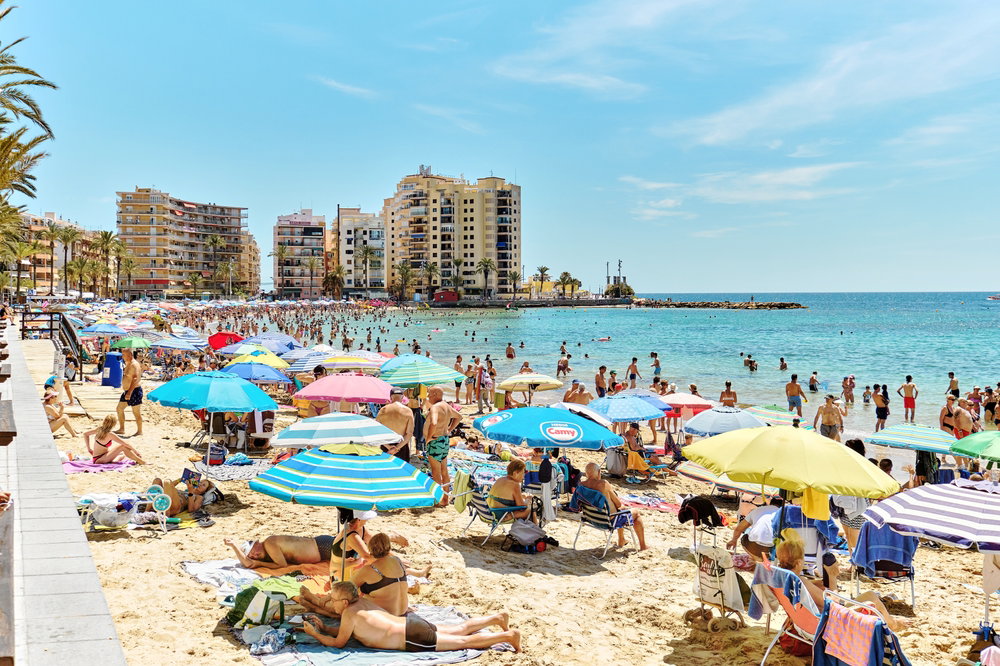
Things you used to do now carry hefty fines so beware of the Spain new Ley de Costas | Photo: Alex Tihonovs/Shutterstock
Spain boasts thousands of miles of beaches and coastline from the Basque coast to the Costa Brava, passing through Andalusia, the Canary Islands, and the Balearic Islands.
These beaches and coves have been packed with people enjoying the sun, sand, and water in recent weeks.
Thus, Spain’s beaches are public places, and as such, as users, those who visit them must follow a series of rules that facilitate collective well-being and make everyone’s stay comfortable.
In Spain, all beaches are governed by the Ley de Costas (Coastal Law), which establishes regulations for protecting and conserving these natural spaces. This same law also establishes reasons for which we can be fined during our vacation.
Each municipality has different rules
However, each municipality supplements these regulations through its own ordinances, which can result in different rules and restrictions on each of Spain’s beaches.
As such, the offences for which a person can be fined on these coasts of our country are diverse and range from leaving an umbrella on the sand or smoking, to playing loud music, depending on your location. In Spain, each city imposes fines on the beaches.
Similarly, the aforementioned Coastal Law stipulates that beaches under municipal or regional jurisdiction must exercise jurisdiction over territorial and coastal planning matters.
This includes ports, urban planning, and discharges into the sea, among others.
According to the regulations, local governments must “maintain beaches and public bathing areas in proper conditions of cleanliness, hygiene, and health, as well as ensure compliance with the rules and instructions issued by the State Administration regarding the rescue and safety of human lives.”
Below are some examples of some of the things that are typically regulated on the most popular beaches during the month of August.
What you can’t do on Spanish beaches (and if you do, possible fines)
- Pets: . Pets are generally not allowed on most beaches, except for guide or assistance dogs. Some beaches may allow access during certain hours or the off-season. Depending on the municipality, fines are up to 3,000 euros.
- Beach parties are increasingly regulated by municipalities, which establish rules regarding noise and the placement of facilities. Some beaches in Spain may prohibit specific activities, such as music devices, while others allow them as long as they do not disturb others. However, coastal law does contemplate a 22 euro per square yard fine if authorities deem it to have merits.
- Public vending: Some beaches may allow street vending, while others prohibit it or limit the number of stalls allowed. Without a permit, the fine is up to 1,500 euros.
- Setting up tents without authorisation. Some beaches in Spain carry fines for setting up tents without prior authorisation. The Valencia City Council considers this offence “very serious” and can carry a fine of 1,501 euros to 3,000 euros.
- Showering with soap or shampoo is prohibited on all Spanish beaches. The fine is 750 euros. The use of chemical products is not permitted.
- If we are caught urinating in the sea, the fine could yank 705 euros from your wallet or debit card in areas like Vigo.
- Sleeping on Valencia’s beach is considered a serious offence, with a 40 to 1,500 euros fine.
- Setting up an umbrella or reserving a spot on the beach with towels can cost up to 750 euros in Benidorm or 300 euros in Malaga, for example. Furthermore, owners may be left without their belongings because the local police are responsible for removing them.
- Swimming under a red flag is very expensive: up to 3,000 euros.
- Playing paddle tennis is also prohibited in some places, such as Benidorm or San Javier, Murcia, and is punishable by a fine of up to 3,000 euros.
- Playing loud music on the beach can cost 750 euros in places like Badalona, Sanxenxo, Denia, or Chipiona.
- No smoking: As part of the initiative to reduce tobacco consumption by 30 per cent compared to 2010, the government has created a network of smoke-free beaches in Spain to “promote the cleanliness and sustainability of our coastline.” Thus, virtually all coastal provinces have at least one smoke-free beach. A sign on the beach will indicate this. Fines for smoking were not allowed or if caught flicking a cigarrette butt onto the sand or water, is up to 450 euros.
- Alcoholic beverages: You can usually get away with it, and sometimes police turn a blind eye. However, the law contemplates fines between 1,501 euros and 3,000 euros for drinking on the beach or the promenade.
- Rubbish: Don’t forget to pick up after yourself, because if caught leaving or dropping rubbish on the beach, it can cost you anywhere between 751 euros and 1,500 euros.
So, get your sun tan lotion ready, sunglasses and your picnic basket, but remember the new law to avoid surprises you might regret dearly.
Sign up for personalised news
Subscribe to our Euro Weekly News alerts to get the latest stories into your inbox!
By signing up, you will create a Euro Weekly News account if you don't already have one. Review our Privacy Policy for more information about our privacy practices.




Olivier Acuña Barba
Olivier is a veteran journalist with over 40 years of experience writing in both English and Spanish. His career has covered a wide spectrum of topics—including organised crime, politics, business, entertainment, and international affairs—with work published by major outlets such as The Guardian, ITV News, and the Associated Press. At Euro Weekly News, Olivier brings depth and insight to stories that inform and engage international readers, drawing on decades of frontline reporting and interviews with world leaders, ministers, and renowned cultural figures.
Comments
Brian
12 May 2025 • 12:53Good grief! Something sensible for a change!
Comments are closed.