France’s ‘keep calm’ survival guide lands this autumn – here’s what’s really in it
By Farah Mokrani • Published: 14 Aug 2025 • 10:07 • 5 minutes read
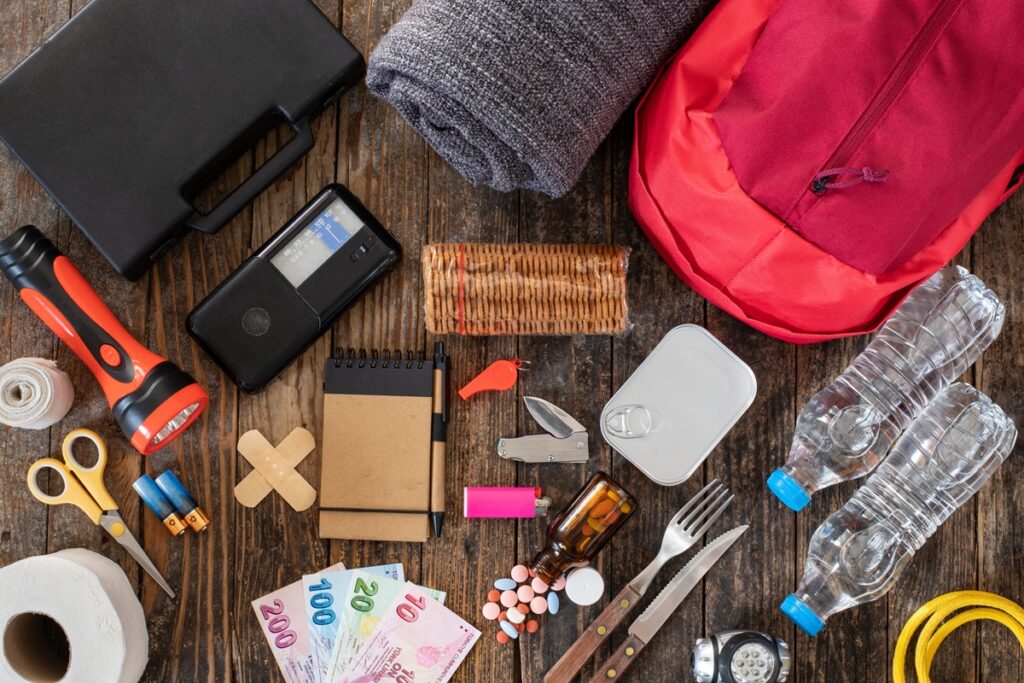
A simple 72-hour home emergency kit—water, non-perishable food, torch, battery radio, first-aid and spare batteries—like the basics highlighted in France’s forthcoming “Tous résilients” survival guide. Credit : Gulcin Ragiboglu, Shutterstock
France is about to post out (or at least publish) a plain-speaking, picture-led survival booklet for every household. The 30-page guide – working title Tous résilients – has been sitting on Prime Minister François Bayrou’s desk since July, according to briefings in Paris, with a tentative mid-October release to tie in with the national Risk Awareness Day.
Crucially, this isn’t a call to build bunkers. It’s a how-to for real world crises France faces every year: flash floods, wildfires, heatwaves, power or comms outages – the sort of shocks that turn up on a lambda day and ruin plans.
What the new resilience guide actually covers
The booklet is structured around three simple pillars – prepare, protect, take part – and it reads more like a practical leaflet than a lecture.
Prepare: Before anything goes wrong, it nudges families to agree meeting points, learn local risks (river flooding in one town, wildfire danger in another) and sort a small home kit you can grab at 2am: drinking water, torch, first-aid basics, long-life food, essential meds and documents, plus a battery or crank radio. Nothing doomsday, just the first few hours covered until help arrives.
Protect: When alarms sound, the booklet explains – with clear diagrams and short captions – what different sirens mean, what to do with an SMS alert, and when to stay put, move upstairs, or evacuate. It also points to the official information channels to check when social feeds are all noise.
Take part: The final section is an invitation to get involved — from joining civil protection or fire-service volunteers to exploring reserve roles in the armed forces or police. The premise is simple: resilience improves when neighbours know each other and communities pitch in.
France’s new survival guide: Why now, what’s inside (and what isn’t)
Back in spring, an early draft sparked jitters, not least because the idea echoed Sweden’s civil-defence leaflet. Officials now stress the French version is firmly focused on today’s likely threats, not Cold War nightmares. As one adviser put it privately, war is a tiny sub-section; the bulk is about weather extremes and major disruptions that are already here.
The guide also dovetails with the government’s risks portal, info.gouv.fr/risques, which maps five big categories: natural, technological, health/epidemic, cyber and terror. The new booklet is meant to stitch all that into one fridge-door reference, written so kids and grandparents can follow it.
When and how you’ll receive France’s emergency guide – plus quick prep to do today
Distribution is the last moving part. Options on the table range from a nationwide letterbox drop to a digital release via official sites and social channels, with printed stacks at town halls. The working window is mid-October, just ahead of the stormier season.
In the meantime, a few five-minute jobs go a long way:
- Check your local risk map and note two safe places if you had to leave home fast.
- Assemble a tiny grab-bag (water, torch, radio, meds, documents).
- Agree a family plan for when mobiles don’t work.
This isn’t about frightening people; it’s about making common sense automatic. If you know what the siren means, where the torch and radio live, and who on your street might need a knock on the door, you’re already most of the way there.
When Tous résilients lands this autumn — whether in your letterbox or your downloads folder — give it ten minutes and a cuppa. With summers getting hotter and storms more vicious, those few pages could be the most useful read you have all year.
Back in time: where did this ‘survival guide’ idea actually start?
This autumn’s French booklet doesn’t come out of nowhere. Europe has been edging towards a ‘be ready at home’ mindset for nearly a year, nudged along by war on the continent, wilder weather and a few too many near-misses on the energy front. Here’s how we got here—no scare tactics, just the breadcrumb trail.
November 2024 – Sweden dusts off a cold war habit
The first big nudge came from Sweden, which reissued its famous pamphlet If Crisis or War Comes to every household. It’s the slim, fridge-magnet style guide that dates back to WWII and was a staple through the Cold War. The 2024 version doubled in size and tone: calm but firm. Early on it states, “If Sweden is attacked, we will never give up,” then immediately pivots to the practical—water, first-aid, long-life food (think potatoes, cabbage, tins), how to stay informed when power and mobile networks are down, and which alerts to follow. It also reflects a changed Sweden: from neutrality to NATO member, and from theory to everyday readiness.
Close by, the Nordics moved in parallel. Finland took the digital route—smart for a country that updates often and faces brutal winters. Its advice leans heavily on surviving prolonged blackouts below zero, keeping iodine tablets and backup heat, and making sure households can cope without help for a bit. Norway posted a printed reminder to manage a week of self-reliance, refreshed for climate-driven extremes. Denmark emailed adults a concise three-day checklist. The common thread? Preparedness as a normal civic habit, not stockpiling or panic.
March 2025 – Brussels gets practical with a 72-hour kit
By late March, the European Commission put the idea on a single, simple line: every home should hold a 72-hour emergency kit. The logic is dull but important: the first three days of any major incident are the crunch point, when responders are stretched and information is patchy. The Commission didn’t prescribe a one-size-fits-all list, but the staples are familiar: bottled water, non-perishables, essential meds, a torch with batteries, and a battery/hand-crank radio so you can hear verified updates if the power’s gone. Alongside kits, Brussels pressed for public training, awareness campaigns and cross-border drills—the bureaucratic way of saying ‘treat preparedness like smoke alarms and seatbelts.’
It also named the risks out loud: war on the EU’s doorstep, cyber threats, and climate shocks that snarl supply chains as easily as they flood roads. None of it is sensational; it’s just an acceptance that households play a part in resilience, not just ministries.
April 2025 – the UK’s ‘just in case’ moment
A few weeks later the UK had its own reality check. After a winter wobble – low wind, plants offline, demand spiking—the grid only just kept things stable, paying to fire up gas stations and rushing an interconnector back early. At the same time, officials fretted about the security of undersea cables and the Langeled pipeline from Norway. Formally, London stopped short of telling people to stock up; informally, energy and security voices echoed Brussels: a modest 72-hour kit at home is common sense, not ‘prepper’ behaviour.
And that’s the backdrop to France’s ‘Tous résilients’. The booklet sits squarely in this European pivot: plain-English advice, small steps you take now, so you’re not scrambling later. No bunkers. No panic. Just the sort of basic readiness that turns a bad day into a manageable one.
Follow Euro Weekly News on Google News
Get breaking news from Spain, travel updates, and expat stories directly on your Google News feed.
Follow on Google NewsSign up for personalised news
Subscribe to our Euro Weekly News alerts to get the latest stories into your inbox!
By signing up, you will create a Euro Weekly News account if you don't already have one. Review our Privacy Policy for more information about our privacy practices.


Farah Mokrani
Farah is a journalist and content writer with over a decade of experience in both digital and print media. Originally from Tunisia and now based in Spain, she has covered current affairs, investigative reports, and long-form features for a range of international publications. At Euro Weekly News, Farah brings a global perspective to her reporting, contributing news and analysis informed by her editorial background and passion for clear, accurate storytelling.
Comments