Six hours from Madrid to Paris? Europe’s €550bn rail plan could change travel forever
By Farah Mokrani • Published: 05 Nov 2025 • 22:16 • 3 minutes read
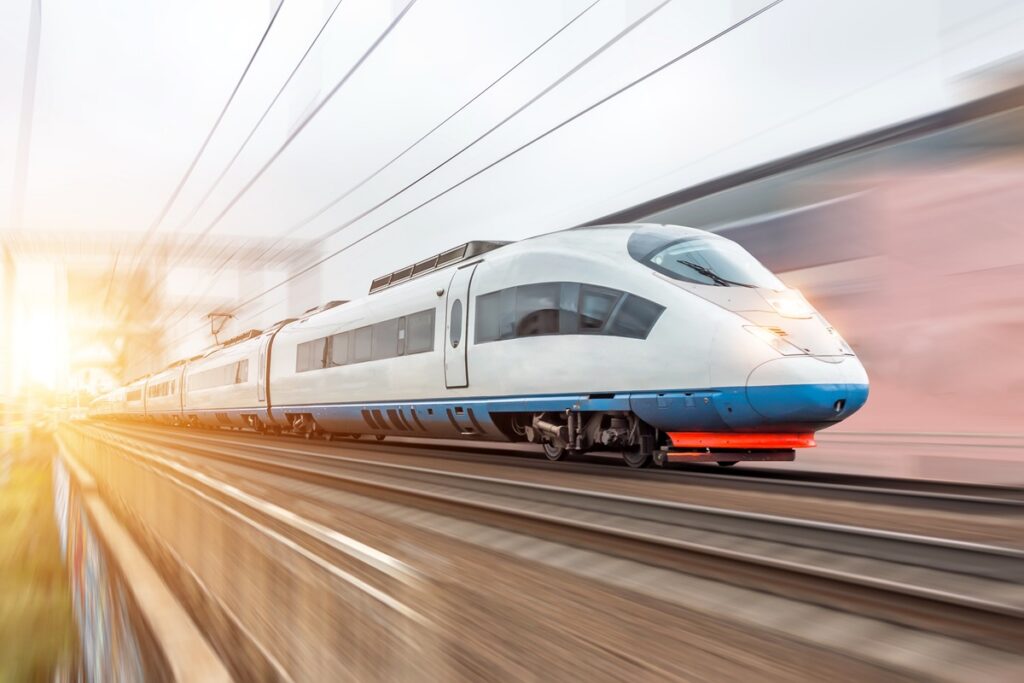
High-speed rail is at the centre of the EU’s new €550bn connectivity plan. Credit : aapsky, Shutterstock
It may soon be just as easy to jump on a high-speed train from Madrid to Paris as it is to fly. That’s the vision Brussels laid out this week, as the European Commission unveiled a €550 billion plan to stitch together the continent’s capitals and major cities with a new, upgraded high-speed rail network by 2040.
The project is enormous in scale and ambition. It’s not just about faster trains, but about re-shaping the way Europeans move – and nudging travellers away from short-haul flights and long motorway journeys. The plan also arrives at a moment when European governments are under pressure to cut emissions, reduce congestion, and boost links between member states that still feel oddly disconnected.
Spain and Portugal stand right at the heart of this vision.
Madrid–Paris and Madrid–Porto: New High-Speed Corridors for 2040
The Commission confirmed that one of the new priority corridors would allow passengers to travel from Madrid to Paris in around six hours, while another would connect Madrid to Porto in a little over four. These routes would build on the already-announced Madrid-Lisbon high-speed line, expected by 2034, which would bring the two Iberian capitals within three hours of one another. That line would then connect north through the Basque high-speed routes, linking the entire Iberian Peninsula more directly with France.
Presenting the plan, European Transport Commissioner Apostolos Tzitzikostas stressed that this is about more than convenience or tourism. “Europe cannot function properly if large parts of the Single Market remain poorly connected,” he said, adding that he is in “constant discussion” with Spanish, French and Portuguese ministers to make sure the Iberian Peninsula is fully linked by rail and road in the coming years.
At the moment, Spain already has the largest high-speed rail network in Europe – far bigger than France’s in terms of kilometres built. And yet, one of the most striking weaknesses has been the lack of efficient cross-border links, particularly over the Pyrenees, where infrastructure, planning delays and geographical obstacles have slowed progress for decades. The Commission refers to this as a ‘bottleneck’, one it now wants to remove with binding construction milestones set for 2027.
The idea is simple: to ensure that the main European nodes are connected by trains running at 200 km/h or more, with the possibility of reaching above 250 km/h where the investment makes sense. If the plan goes ahead, journeys like Sofia to Athens could shrink dramatically, down to around six hours from the current 13 and a half.
How competition could lower fares across Europe
But speed is only part of the story. The Commission is also betting heavily on competition as a way to bring down prices and raise service standards. And here again, Spain has become a reference point.
When high-speed services between Madrid and Barcelona were opened to operators beyond national carrier Renfe – with French-owned Ouigo and Italian-backed Iryo entering the market – something remarkable happened. Ticket prices dropped by around 40 per cent. Travellers suddenly found more timetable options, newer trains, better Wi-Fi onboard, and, ironically, a more pleasant experience than on many airlines. Brussels wants that same shift to take place across Europe, and believes that once multiple operators begin sharing major lines, passengers will see the benefits quickly.
Of course, all of this depends on something far less romantic than scenic train rides across the continent: money. The Commission’s €550 billion estimate assumes coordinated public and private investment, plus the ability of member states to agree on financing, planning, and regulation – not always Europe’s strong suit. The Commission says it will push for a “High-Speed Rail Investment Pact”, bringing together governments, infrastructure operators and banks to lock in the funding needed.
There’s also the question of political will. Some countries have historically prioritised their air networks or motorway systems. Others have been slower to liberalise rail services. And many national rail companies have long resisted opening routes to competition.
Yet Brussels insists the benefits go well beyond quicker city breaks. High-speed rail expansion would free capacity on conventional lines, allowing for more night trains, more space for freight, and better military mobility — something that has taken on greater urgency since the war in Ukraine. It would also support tourism and regional development, especially in areas that feel off-centre today.
For now, it remains a plan – ambitious, expensive and, in some places, politically delicate. But the idea of stepping onto a train in Madrid and stepping off six hours later under the Eiffel Tower is no longer science fiction. It’s a project with a timeline, a budget, and clear political backing.
Stay tuned with Euro Weekly News for more news about Travel
Follow Euro Weekly News on Google News
Get breaking news from Spain, travel updates, and expat stories directly on your Google News feed.
Follow on Google NewsSign up for personalised news
Subscribe to our Euro Weekly News alerts to get the latest stories into your inbox!
By signing up, you will create a Euro Weekly News account if you don't already have one. Review our Privacy Policy for more information about our privacy practices.




Farah Mokrani
Farah is a journalist and content writer with over a decade of experience in both digital and print media. Originally from Tunisia and now based in Spain, she has covered current affairs, investigative reports, and long-form features for a range of international publications. At Euro Weekly News, Farah brings a global perspective to her reporting, contributing news and analysis informed by her editorial background and passion for clear, accurate storytelling.
Comments