13% oil spike triggers 2026 budget rewrite: How Spain’s economic shift affects expats
By Dora Urbancsek • Published: 03 Apr 2026 • 9:02 • 3 minutes read
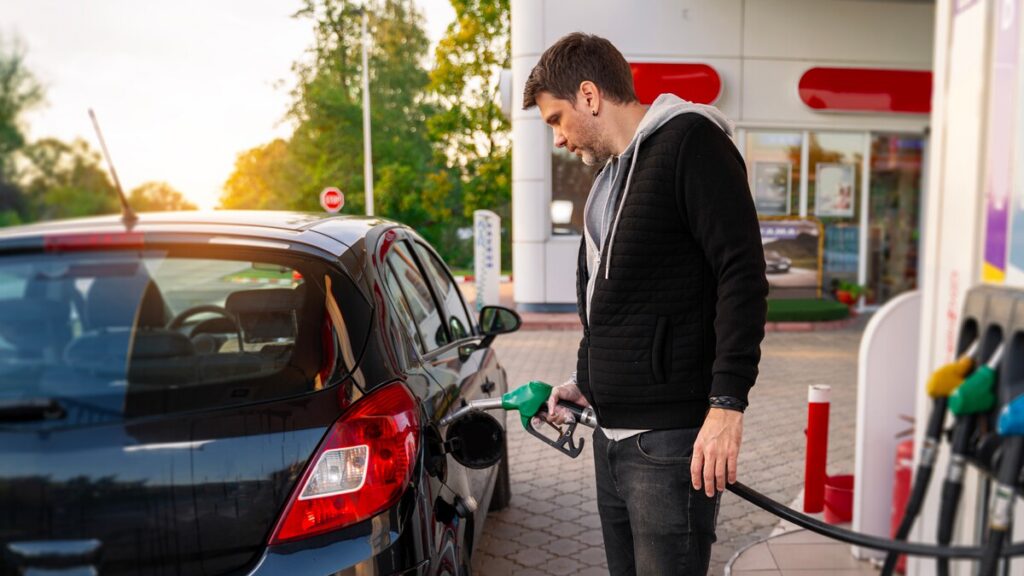
Fuel prices are rising across Spain, adding pressure to household costs as oil climbs above government forecasts Credit: Shutterstock/Phoenixns
Spain has officially triggered a €5 billion emergency response plan this April 2026 as surging oil prices push national inflation to a two-year high of 3.3%. Under the new Royal Decree-Law 7/2026, the government has implemented a rent freeze on expiring contracts and slashed VAT on fuel and electricity to 10% to offset the impact of the Middle East crisis.
For expats and residents, the immediate consequence is a 30-cent-per-litre reduction at petrol stations and an 80% cut in energy tolls for industry. While these 2026 “social safety net” measures aim to stabilize the cost of living, the Bank of Spain warns that stickier inflation may force further budget revisions by summer.
Why are Spain’s 2026 budget assumptions suddenly under pressure?
The issue is not just that oil is more expensive. It is that the numbers used to plan Spain’s economic path no longer match reality. The government’s earlier medium-term fiscal plan, published last year, used a much more favourable energy backdrop for 2026 than the one Spain now faces. More recently, Economy Minister Carlos Cuerpo confirmed that the macroeconomic forecasts are being updated after Brent crude moved around 13 per cent above the level used in the government’s planning assumptions, according to reporting by 20minutos.
That matters because oil is not an isolated cost. It feeds into transport, logistics, food distribution, flights, manufacturing and business overheads. Even when the increase does not hit every household at once, it raises costs across the system. The European Central Bank has already revised up its 2026 euro area inflation outlook, saying energy prices are higher because of the war in the Middle East. The Bank of Spain’s March projections also point to stronger price pressures in 2026 and warn that energy prices could still evolve above the central scenario.
Why this matters beyond petrol stations
For many readers, “budget assumptions” sounds abstract. In practice, it is the foundation for decisions on spending, tax measures and how much room the government has to cushion shocks. Spain has already responded to the current crisis with a major package. The government approved an integrated response plan worth more than €5 billion, including lower taxes on electricity and fuels, support for affected sectors and a temporary freeze on rental price increases. It also authorised the release of up to 11.5 million barrels from strategic reserves to ease supply stress.
That helps in the short term, but it also shows how quickly a geopolitical shock can start reshaping public finances. If oil stays elevated for longer, Spain may have to devote more resources to offsetting the impact, while dealing with inflation that is proving stickier than hoped. That does not automatically mean tax rises or cuts to public services are around the corner. It does mean the fiscal margin becomes tighter, and future choices become harder.
What does a 13 per cent oil jump mean for your cost of living in Spain?
The most immediate effect is likely to be in daily costs. Driving, delivery-linked prices and some travel expenses are the obvious front line. But second-round effects are often more important. When energy becomes pricier, businesses pass on part of that cost through goods and services, from supermarket prices to restaurant bills and maintenance charges.
Housing is another area to watch. Spain’s current emergency package includes a temporary rent freeze, which offers some protection to tenants for now. But if inflation and energy costs remain under pressure, the debate over how long support measures can stay in place is likely to intensify. For expats renting in major cities, coastal areas or high-demand zones, that matters.
Then there is the broader question of public services and tax policy. When a government’s underlying assumptions break, it has to recalculate. Sometimes that means updating growth and inflation forecasts. Sometimes it affects borrowing needs, deficit expectations and what can realistically be funded without new measures elsewhere. Spain is not in a panic scenario, but it is clearly in a more fragile one than officials expected when earlier forecasts were drawn up.
What happens next for Spain’s economy and your everyday costs?
For now, there is no sudden shock, but the pressure is building in the background. As long as oil remains above the levels used in Spain’s original forecasts, the government will have to keep adjusting its outlook and its response.
That means the focus will shift to how long support measures can be maintained and whether new ones are needed if costs continue to rise. For expats, the real impact will not come from a single price jump, but from how these decisions play out over time through bills, housing and public support.
Sign up for personalised news
Subscribe to our Euro Weekly News alerts to get the latest stories into your inbox!
By signing up, you will create a Euro Weekly News account if you don't already have one. Review our Privacy Policy for more information about our privacy practices.





Dora Urbancsek
Dora Urbancsek is an SEO writer with over eight years of experience producing high-quality, search-optimised journalism and digital content. Based in Spain for more than five years, she covers a wide range of topics concerning Spain and Europe, including current affairs, community stories, culture, and lifestyle. Dora is known for accurate, well-researched reporting that keeps readers informed and engaged.
Comments