The future of online casinos, and how artificial intelligence changes the gambling industry in 2026
By Guest Writer • Published: 27 Apr 2026 • 16:48 • 3 minutes read

Image: Shutterstock AI
Online gambling stopped being a niche hobby years ago. According to Astute Analytica, the global casino market hit $310.8 billion in 2024 and heads toward $561.9 billion by 2033. What matters more is how operators earn that money. And that’s where artificial intelligence takes centre stage.
AI crunches massive datasets in seconds, but it doesn’t replace human expertise. Smart players should stick to detailed reviews from pro websites that know the industry inside out. Treat AI as a handy sidekick for extra stats, but let the experts guide your big decisions.
Personalisation as the new norm
The days of identical banners for every visitor are over. Modern platforms know enough about each player to show exactly what they want to see.
How it works in practice
AI engines dig through betting history, favorite games, active hours, deposit sizes. The output includes tailored slot recommendations, custom bonuses, even adjusted interfaces. One major operator generates over 200,000 unique promotional offers daily – each assembled for a specific user. A good example of such is the Slotozilla platform. In addition to the most up-to-date information on everything in the gaming industry, users can get an exclusive deposit match from Slotozilla, which boosts their initial funds and gives them a much better chance to test the brand’s features.
Why players value this
Research from Esports Insider found that 80% of customers consider personalized offers and bets valuable. This goes beyond marketing speak – people genuinely prefer relevant content over spam about games they don’t care about.

Responsible gambling and safety tools
AI learned to spot problem behaviour before players recognise it themselves. This ranks among the few applications that benefit everyone involved. What algorithms track:
- Night sessions that grow longer each time.
- Chasing losses after a bad streak.
- Cancelling withdrawals to keep playing.
- Sudden spikes in bet sizes.
Systems send warnings, suggest breaks, block accounts in extreme cases. Data from a PMC study shows online gambling reached $102 billion in revenue back in 2021. As the market expands, so does the pool of people with potential issues. Early detection tools shift from nice-to-have to mandatory.
Customer support through smart bots
Casino chatbots evolved from annoying auto-responders to actual helpers. Today, 78% of companies in the industry have integrated AI into customer service. What modern bots handle:
- Instant answers about bonuses and wagering requirements.
- Document verification assistance.
- Deposit and withdrawal troubleshooting.
- Hand off to human agents when conversations get complicated.
One large operator reported that AI bots processed 150,000 support tickets in 2024. Casinos with deployed AI show player retention increases up to 20% thanks to faster, better service.

Immersive gameplay: VR, AR, and hybrid formats
Virtual reality stopped being an experiment. In 2026, VR casinos deliver experiences impossible to get in a browser or standard app. Let’s look at the important points in the table:
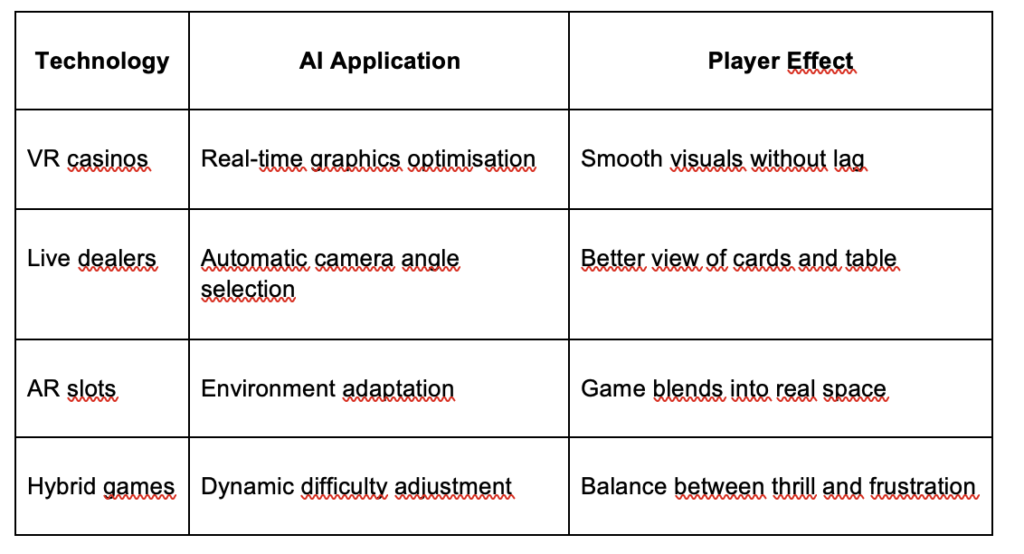
Algorithms optimise visuals for specific devices, adjust game pace based on user reactions, tweak difficulty on the fly. In live dealer games, AI controls cameras, picks the best angles, keeps streams smooth even on shaky connections.
Operational efficiency and fraud detection
Behind polished interfaces runs a complex infrastructure. AI took over tasks that once required armies of analysts. Algorithms watch for suspicious activity: unusual betting patterns, money laundering attempts, and multiple accounts. Whimsy Games notes that online casino revenues reached $107.30 billion by 2024. Protecting that money from fraudsters sits at priority number one.
Dynamic promotions launch without marketers lifting a finger. Compliance checks run automatically. Regulatory reports generate themselves. People handle strategy while machines execute.
Challenges, regulation, and ethical questions
Not everyone celebrates how casinos use player data. Critics raise fair points.
Problem areas
Personalisation cuts both ways. The same algorithms that match players with games they’ll enjoy can keep problem gamblers engaged longer than healthy. Research from RG.org asks the uncomfortable question: where does quality service end and vulnerability exploitation begin?
Regulatory response
European and American watchdogs tighten transparency requirements around algorithms. Operators must explain how decisions about bonuses, limits, and bans get made. Black boxes no longer pass as acceptable answers.
What comes next
The industry balances innovation against responsibility. AI keeps advancing. Regulators keep adapting rules. Winners will be operators who figure out how to use technology for better player experiences rather than just maximum extraction. Those who treat AI as a tool for building trust rather than exploiting it will come out ahead. The stakes run high – and not just the money sitting in casino accounts.
Sign up for personalised news
Subscribe to our Euro Weekly News alerts to get the latest stories into your inbox!
By signing up, you will create a Euro Weekly News account if you don't already have one. Review our Privacy Policy for more information about our privacy practices.





Guest Writer
Comments