Orihuela prepares to open Los Saladares prehistoric site
By Natascha Rivera • Published: 19 Apr 2026 • 10:48 • 2 minutes read
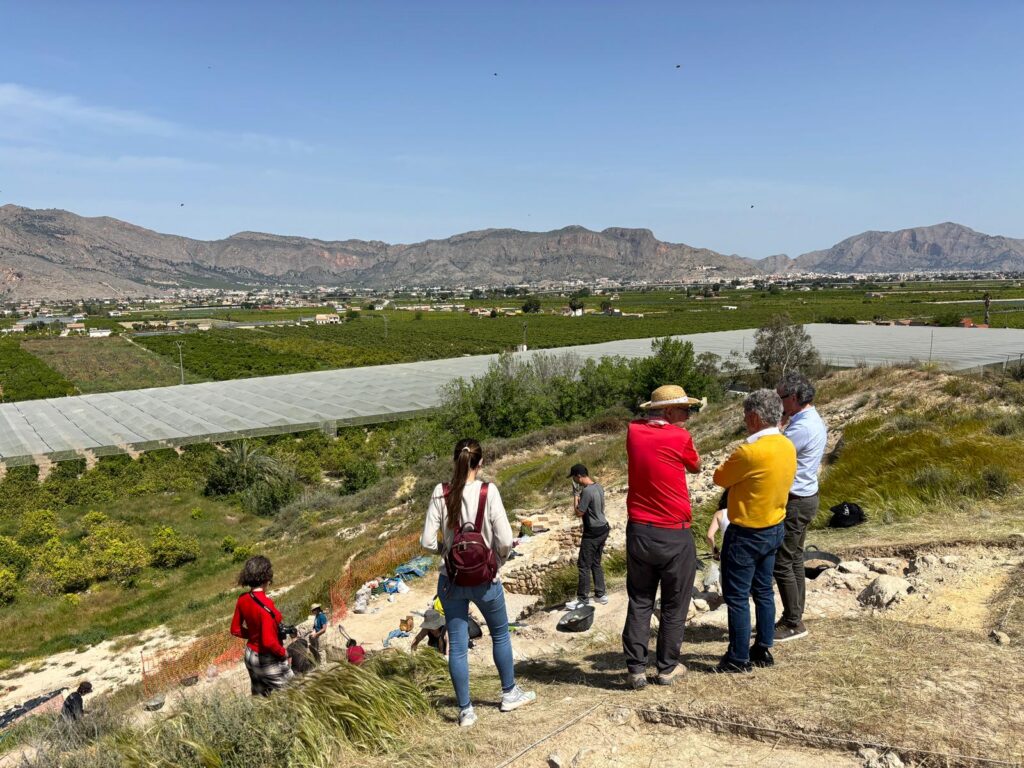
Orihuela moves to open major prehistoric site after key discoveries. Photo Credit: Orihuela Town Hall
The Orihuela Town Council is preparing for the future opening of the Los Saladares site, one of the most significant prehistoric sites in the southeast of Spain, following the final stretch of the archaeological excavations. The site is being developed in collaboration with the University of Alicante, and represents a significant step forward for the conservation of, and eventual public access to, the site.
Final excavation before a public reveal: A gold mine of Iberian history
The last excavation campaign featured a team made up of 13 people, including archaeologists, university professors, research staff, students and collaborators, and consolidated a project that unites scientific research, heritage conservation and dissemination.
The site, which contains an archaeological gold mine whose chronology extends from as far back as the 9th century to the 2nd century BC, is key to studying the history of the southeast of the Iberian peninsula. The site has already yielded incredible archaeological finds, including fragments of Phoenician amphorae, or two-handled ceramic jars used to transport goods like olive oil and wine, from the late 1st century AD.
According to the Orihuela Town Council, the findings at the site reinforce the importance of Los Saladares as a key puzzle piece to understand the relationships between indigenous populations and early colonial influences at the mouth of the river Segura.
Site to be transformed into a public access museum
The findings of the last stretch of the excavation will be revealed soon in a presentation, given by the professor of Prehistory of the University of Alicante and director of the excavation, Alberto J. Lorrio. The final step after the last excavation project would be conservation of the site, installing signage, and opening it to the public.
Orihuela officials have expressed plans for turning the archaeological site into a museum, adapting it for public access with minimal intervention that respects the environment. Officials plan to add information panels and an access path using wooden planks, with limited routes in order to tour the site safely and in an orderly fashion.
Six years of intense archaeological work
The excavations at the site go back to the year 2020, when the Orihuela Town Council and the University of Alicante excavations resumed after decades had passed since the first projects carried out in the 70s. Since then, the site has proved invaluable for the study of archaeological remains of ancient settlers in the southeast.
All the material recovered during the campaigns will be temporarily stored in the archaeological warehouse until the works are completed.
Sign up for personalised news
Subscribe to our Euro Weekly News alerts to get the latest stories into your inbox!
By signing up, you will create a Euro Weekly News account if you don't already have one. Review our Privacy Policy for more information about our privacy practices.




Natascha Rivera
Natascha is a Dominican writer based in Spain with a background in audiovisual and marketing communication. A lifelong reader and passionate storyteller, she brings a creative edge to her work at Euro Weekly News. Her multicultural perspective informs her coverage of lifestyle and community stories, offering fresh angles and relatable storytelling that connects with a diverse audience.
Comments