Picasso power battle: Guernica becomes a symbol of Spain’s divide
By Elli Freeman • Published: 24 Apr 2026 • 12:32 • 2 minutes read
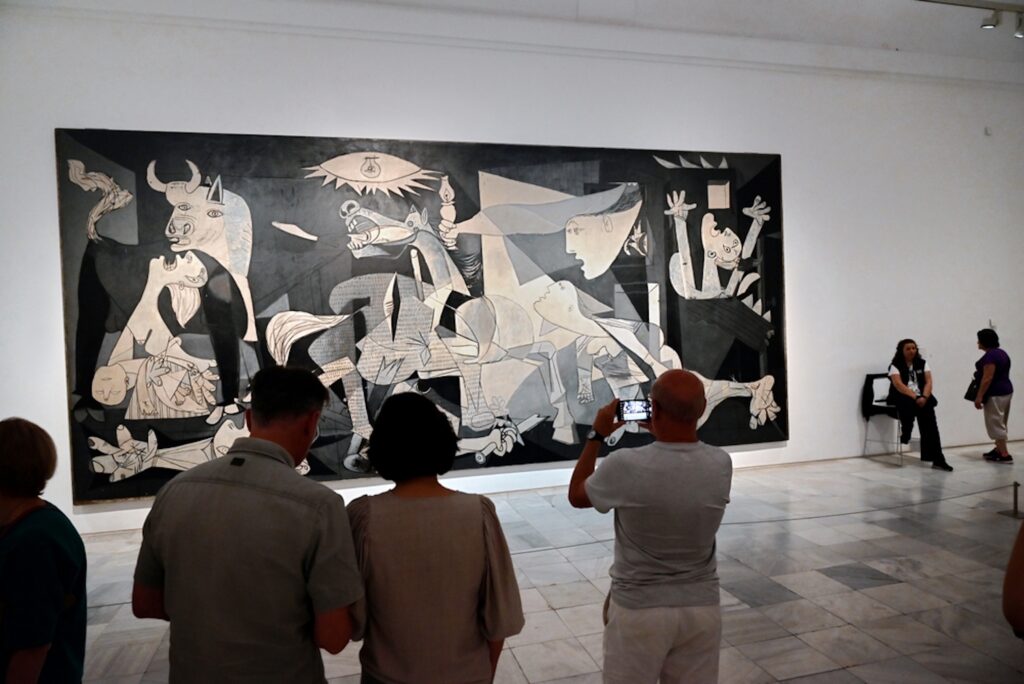
Guernica caught in the middle of cultural battle Credit: Shutterstock, RVillalon
Madrid and the Basque Country have locked horns over Guernica, the iconic anti-war masterpiece by Pablo Picasso, in a dispute that has reignited debates about heritage, identity, and the ownership of cultural symbols. What began as a request to temporarily relocate the painting has escalated into a broader political confrontation and cultural clash, with both sides framing the issue as one of national significance and historical memory.
Guernica, Picasso’s most famous work of art
Guernica is one of, if not Picasso’s most famous piece. Measuring 3.39 metres tall by 7.76 metres wide, the massive oil painting towers over visitors. It is a beautiful but intimidating work of art, depicting the horrors of the 1937 bombing of the Basque town of Gernika during the Spanish Civil War, an event that continues to shape regional identity today.
Why the Basque Country wants Guernica in Bilbao
In April, the Basque government formally requested that the painting be displayed at the Guggenheim Museum Bilbao from October 2026 to June 2027. The proposed exhibition would coincide with the 90th anniversary of the bombing and the formation of the first Basque government, framed as a gesture of “symbolic reparation” and historical recognition.
For many in the region, hosting the painting, even temporarily, would reconnect the artwork with the place and tragedy that inspired it. Basque leaders argue that the move would carry emotional and cultural weight, reinforcing identity and acknowledging past suffering.
Madrid’s refusal and conservation concerns
The request, however, has been denied. Guernica is currently housed at the Museo Reina Sofía in Madrid, where it has remained for decades. Authorities and museum experts insist the decision is based on conservation, not politics.
The painting is currently protected in a closely controlled environment. Technical reports warn that transporting the painting could cause irreversible damage. Vibrations during transit could lead to cracks, lifting of the paint layer, or even tearing, given the canvas’s fragile condition after extensive past travel. Expert advised against the loan for risk of irreparable damage.
The work has not left Madrid in over thirty years, and similar loan requests have been repeatedly rejected on the same grounds.
A political and cultural flashpoint
Despite the technical reasoning, the refusal has sparked backlash. Critics in the Basque Country see the decision as symbolic centralisation, accusing Madrid of holding onto a piece of shared history. The dispute has drawn in politicians across Spain, turning a museum decision into a wider political confrontation.
Commentators have also warned against politicising the artwork. As noted, Guernica was created as a universal condemnation of war, and reducing it to a territorial dispute risks undermining its broader message.
A masterpiece caught between memory and preservation
In accordance with Picasso’s wishes, the painting was displayed at the Museum of Modern Art until the end of Franco dictatorship, returning to Spain in 1981. Today, it remains one of the country’s most protected cultural treasures.
The current standoff highlights a deeper tension: balancing preservation with accessibility, and national stewardship with regional identity. For now, “Guernica” stays in Madrid, but the debate surrounding it shows no sign of fading.
Sign up for personalised news
Subscribe to our Euro Weekly News alerts to get the latest stories into your inbox!
By signing up, you will create a Euro Weekly News account if you don't already have one. Review our Privacy Policy for more information about our privacy practices.




Elli Freeman
Originally from the UK, Elli has lived in Spain for more than half of her life. She holds a B.A in English Literature and Creative Writing. Before joining the Euro Weekly News team, Elli was an avid traveller, with a keen interest in exploring new cultures.
Comments