Scientists say hidden Atlantic current could hit Europe harder than expected
By Farah Mokrani • Published: 26 Apr 2026 • 15:00 • 4 minutes read
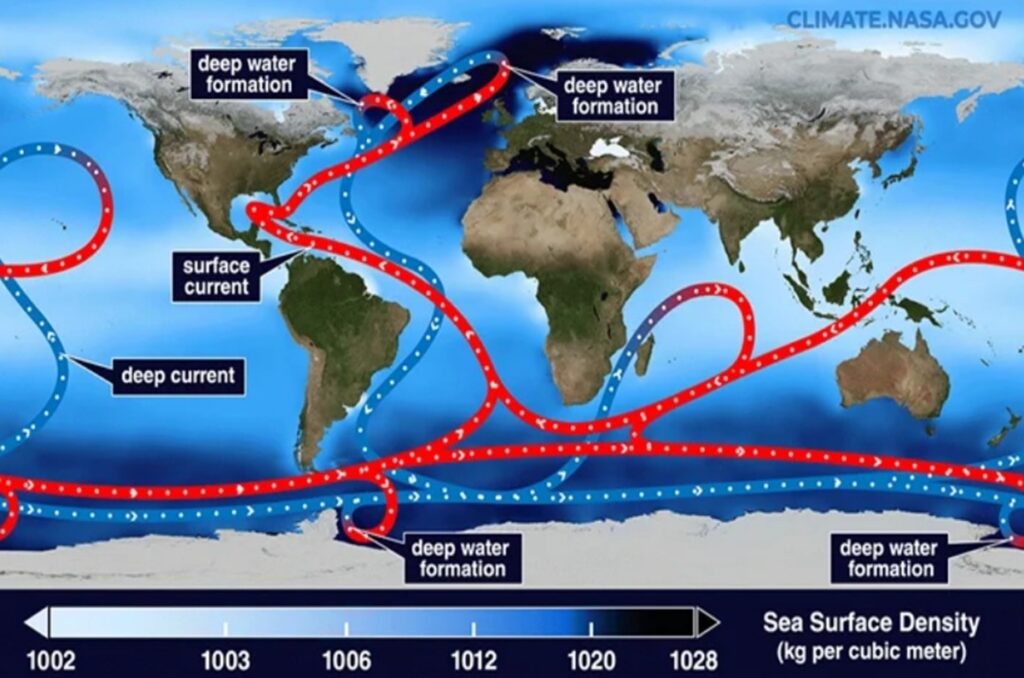
Scientists warn the AMOC Atlantic current could weaken faster than expected this century Credit : Estudio de visualización científica de la NASA/Goddard Space Flight Center
A huge ocean system that helps keep western Europe’s climate relatively mild may weaken far more than scientists previously thought. New research suggests the AMOC, a major Atlantic circulation often described as the planet’s heat conveyor, could lose around 51 per cent of its strength by 2100. If that happens, Europe could face stronger heatwaves, rougher winters and more unstable weather patterns in the decades ahead.
It sounds distant and technical, but the consequences would not be. This current influences temperatures, rainfall and seasonal balance across large parts of the world. Most people never think about it, yet it quietly helps shape everyday weather from Portugal to France and beyond.
Now researchers are warning that system may be more vulnerable than earlier estimates suggested.
What the AMOC actually is
AMOC stands for Atlantic Meridional Overturning Circulation. The name is complicated, but the idea is simple enough.
Warm water moves north through the Atlantic near the surface. As it reaches colder northern areas, it cools, becomes heavier and sinks deep into the ocean. That colder water then moves south again before gradually rising and rejoining the cycle.
This movement runs constantly, carrying heat around the planet. It is one reason western Europe is generally milder than other places sitting at similar latitudes.
Without it, winters in parts of Europe could feel very different. Think of it as a natural climate engine that has been working in the background for a very long time.
Why scientists are worried now
The new study, published in Science Advances by researchers from the University of Bordeaux and CNRS, estimates the slowdown by the end of the century could reach around 51 per cent.
Earlier projections often suggested something closer to 30 per cent. That difference is why the paper has drawn attention.
The concern centres on one basic problem. The system depends on northern Atlantic waters becoming heavy enough to sink. Climate change interferes with that in two ways.
First, the ocean is warming. Warmer water is lighter than colder water, so it does not sink as easily.
Second, melting ice and heavier rainfall add fresh water into the North Atlantic. Fresh water is less salty than seawater, which also makes it lighter.
If the water does not sink properly, the circulation slows. And if the circulation slows, climate patterns can shift.
Scientists still debate exact timelines and how severe the weakening may become, but broad agreement remains that warming temperatures are pushing the AMOC in the wrong direction.
What it could mean for Spain and western Europe
This does not mean Spain suddenly turns icy or Europe freezes overnight.
In fact, one of the expected effects for western Europe includes more extreme summer heat. That may sound strange, but climate systems are complex. When ocean circulation changes, atmospheric patterns can change with it.
Researchers say a weaker AMOC could help bring:
More intense heatwaves in summer
Stronger winter storms
Sharper cold snaps at times
Changes in rainfall patterns
Less predictable seasons
For Spain, already dealing with drought concerns, water pressure and repeated extreme heat, that matters.
Hotter summers can affect tourism, farming, energy demand and public health. Portugal, France, Ireland and the UK could also feel shifts in weather balance.
The exact impacts would vary by region, but the message is that Europe would notice.
Why this matters beyond weather forecasts
The AMOC also plays a role in the ocean’s ability to absorb carbon dioxide from the atmosphere. That matters because oceans currently help slow climate change by taking in a share of human emissions.
If circulation weakens, that process may become less efficient over time. More carbon dioxide staying in the air means more warming.
That is one reason scientists pay such close attention to ocean systems. They are linked to much more than sea temperatures.
They are tied into the wider climate picture.
Is collapse about to happen
Not according to this study. There is an important difference between a slowdown and a sudden shutdown. The paper discusses significant weakening by 2100, not an instant collapse next year.
Still, a weaker system does not need to fail completely to cause problems. Even partial changes can reshape weather patterns, increase extremes and create new risks for countries trying to adapt.
That is why researchers study these shifts so seriously. Gradual changes can still have major consequences.
Why ordinary people should care
It is easy to hear a story about Atlantic currents and switch off. But this is really about daily life.
It is about future heatwaves, storm damage, farming conditions, water supplies, insurance costs and energy demand. It is about whether summers become harder to live through and winters more disruptive. It is about how climate stress builds over time.
The AMOC may sit far offshore, but what happens there does not stay there.
What happens next
Scientists will keep refining models and monitoring the North Atlantic. No single study gives every answer, and ocean systems are famously complex.
But the broad trend is clear enough. The climate warms, ice melts, rainfall patterns change and the circulation faces more pressure. That is why researchers continue to repeat the same core point.
The best way to reduce long term risk is still to cut greenhouse gas emissions and slow warming.
For now, one hidden Atlantic current is reminding Europe that some of the biggest climate threats are the ones most people never see.
Follow Euro Weekly News on Google News
Get breaking news from Spain, travel updates, and expat stories directly on your Google News feed.
Follow on Google NewsSign up for personalised news
Subscribe to our Euro Weekly News alerts to get the latest stories into your inbox!
By signing up, you will create a Euro Weekly News account if you don't already have one. Review our Privacy Policy for more information about our privacy practices.


Farah Mokrani
Farah is a journalist and content writer with over a decade of experience in both digital and print media. Originally from Tunisia and now based in Spain, she has covered current affairs, investigative reports, and long-form features for a range of international publications. At Euro Weekly News, Farah brings a global perspective to her reporting, contributing news and analysis informed by her editorial background and passion for clear, accurate storytelling.
Comments