What are the chances 2026 will have even more wildfires in Spain?
By Adam Woodward • Published: 26 Apr 2026 • 20:52 • 2 minutes read
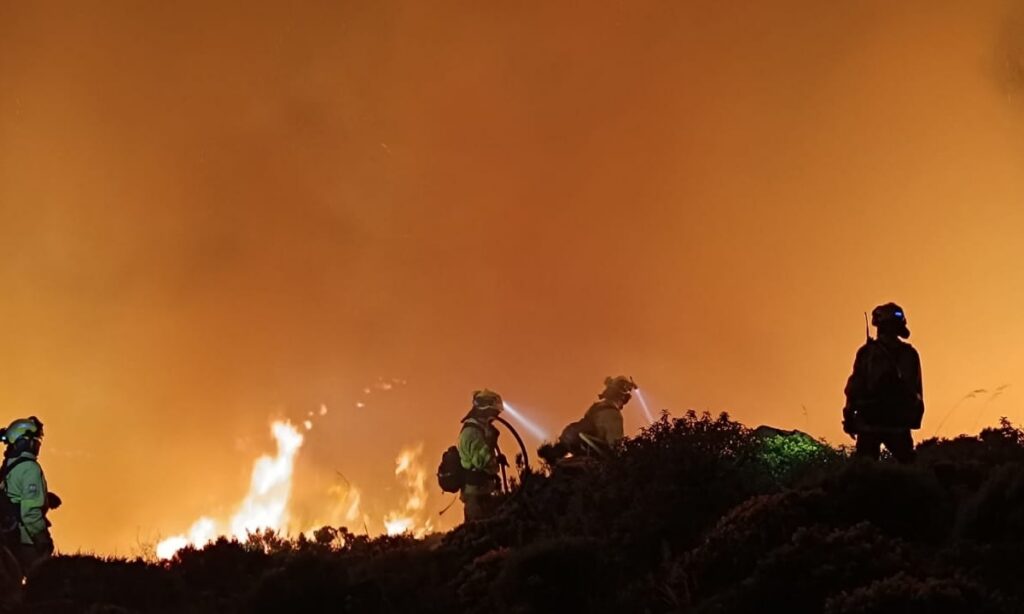
Firefighters from EMA INFOCA battle Tarifa fires in 2025. Credit: INFOCA
Wildfires have already scorched nearly 13,000 hectares across Spain in the opening three months of 2026. This total more than doubles the less that 6,000 hectares affected during the same period last year. Ministry data confirms 2026 ranks as the fifth-worst start in the past decade for land burned by forest fires. Only 2016, 2025, 2018 and 2024 posted comparable or higher early-year losses. Even so, the first-quarter figure sits 29.6 per cent below the ten-year average.
Northwest regions of Spain blaze with earliest damage
This year there have already been 1,568 wildfires in total, with 864 classed as small fires under one hectare. No major fires exceeding 500 hectares appeared in the provisional figures. Northwest Spain accounted for 60 per cent of all incidents and a striking 89 per cent of forest area lost.
Mediterranean zones followed with 12 per cent of events and 44 per cent of woodland damage. Inland communities and the Canary Islands registered far smaller shares. Floral breakdown shows 998 hectares of woodland, 7,836 hectares of scrub and open land, plus 4,113 hectares of pasture and meadow have been destroyed so far.
2025 record fire season hints at growing danger
Full-year 2025 delivered 354,746 hectares burned all over Spain, triple the decade average and the highest total in ten years. That extreme summer, driven by intense heatwaves, left deep scars across the country. Many say similar patterns could repeat if current weather trends continue getting drier and warmer.
January 2026 brought unusually heavy rainfall that provoked rapid and prolific undergrowth. Such lush early growth will now dry out quickly under forecast heat, creating abundant fuel for fires a little later in the year.
Super El Niño patterns suggest heightened risk ahead
Climate models point to a strong El Niño developing through until the end of summer 2026. This change usually brings prolonged heat domes, hot African airflows and reduced rainfall, especially across Andalucia and inland areas. Combined with ongoing rural land abandonment and overgrown landscapes, these conditions raise the chance of widespread blazes. European forecasts are already flagging very high fire danger for the Mediterranean region in similar past years.
Action now can limit future losses
Households in high-risk zones can clear vegetation within 30 metres of buildings and fit fire-resistant materials to roofs and vents. Local authorities, such as INFOCA, are expanding planned burning programmes this year while residents can check daily risk maps from AEMET. Early preparation in spring offers the best defence before peak season arrives. With summer just weeks away, careful and determined steps today could curb the scale of potential destruction in the months ahead.
Sign up for personalised news
Subscribe to our Euro Weekly News alerts to get the latest stories into your inbox!
By signing up, you will create a Euro Weekly News account if you don't already have one. Review our Privacy Policy for more information about our privacy practices.




Adam Woodward
Adam is a writer who has lived in Spain for over 25 years. With a background in English teaching and a passion for music, food, and the arts, he brings a rich personal perspective to his work at Euro Weekly News. As a father of three with deep roots in Spanish life, Adam writes engaging stories that explore culture, lifestyle, and the everyday experiences that shape communities across Spain.
Comments