Last chance to visit? The 5 iconic destinations at risk of changing forever
By Dora Urbancsek • Published: 26 Apr 2026 • 18:44 • 3 minutes read
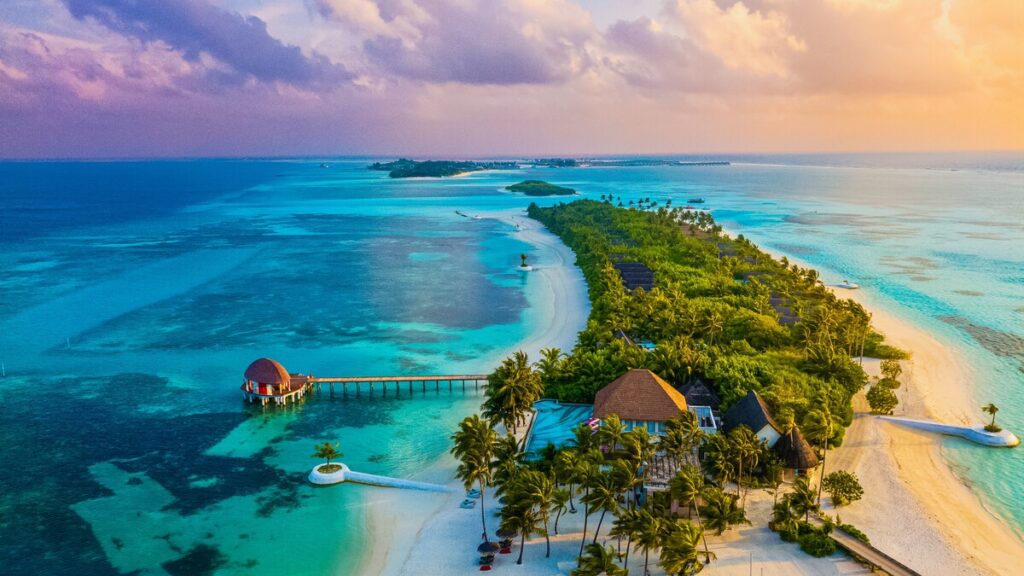
The Maldives, one of the world’s most popular travel destinations, faces long-term risks from rising sea levels Credit: Shutterstock/SennaRelax
“Last-chance tourism” is increasingly discussed as travellers look to visit destinations that may change significantly over time, including places like Maldives and Venice. In Venice, the MOSE flood barrier system is now activated regularly to protect the city during high water events, reflecting how frequently flooding has become part of daily life in certain periods of the year.
Meanwhile, the Maldives remains one of the most exposed countries to rising sea levels, with around 80% of its land sitting less than one metre above sea level, making long-term adaptation a key challenge. At the same time, travel patterns are beginning to shift. Some travellers are showing increased interest in cooler destinations during peak summer months, while others are prioritising trips that have been on their list for years.
Which destinations are under pressure?
Some of the most recognisable travel destinations in the world are also among the most vulnerable. The Maldives receives around 1.8 million visitors a year, with the UK consistently among its largest European markets. Spain also contributes a steady flow of travellers, with over 50,000 Spanish visitors recorded in recent years, highlighting how widely these destinations appeal across Europe. Large parts of the country sit barely above sea level, which is why it is often cited in long-term projections linked to rising oceans.
The Bahamas attracts millions of visitors annually, including a strong flow of international tourists and cruise passengers, while facing increasing pressure from stronger storms, hurricane damage, and coastal erosion.
In Europe, Venice sees roughly 20 to 25 million visitors per year, making it one of the most visited cities on the continent. It has also become a symbol of rising water levels, with flooding events becoming more frequent over time, alongside growing efforts to limit visitor numbers and manage overtourism.
Further south, destinations like Santorini and Mallorca are dealing with a different kind of pressure. Record visitor numbers are straining infrastructure, pushing up housing costs, and leading to new restrictions on short-term rentals and tourism activity.
Cities such as Dubai are also facing increasingly extreme heat, with summer temperatures rising to levels that affect both daily life and visitor experience.
Across the Atlantic, Miami is frequently included in long-term risk projections due to its exposure to sea level rise, flooding, and the impact of stronger storms on coastal development. They are exactly the kind of places expats travel to repeatedly, return to over the years, or consider for longer stays.
Not disappearing, but changing
It is important to keep this grounded. These destinations are not expected to vanish overnight. Many are investing heavily in protection. Venice has installed flood barrier systems. Coastal cities are upgrading drainage and defences. Island nations are working on adaptation strategies.
But even with these efforts, change is already visible. Flooding happens more often. Coastlines shift. Weather patterns become less predictable. For travellers, this does not mean these places are no longer accessible. It means the experience may gradually evolve.
Why this matters especially for expats
Expats tend to think differently about travel. It is not just about holidays, but about where to spend time, where to return, and sometimes where to live. That is where long-term change becomes relevant. A destination that feels stable today may look different in a few decades. Not necessarily gone, but altered in ways that affect daily life, infrastructure, or accessibility. For someone deciding where to invest time or money, that matters.
Travel decisions are shifting
There is a noticeable change in how people approach travel planning. Places that have been postponed for years are being prioritised earlier.
It is not about sudden disappearance, but about uncertainty. More frequent weather disruption, pressure on infrastructure, and new restrictions on tourism in some destinations are all shaping how people think about when to go. For many, “later” no longer feels quite as fixed as it once did.
A different way of looking at familiar places
Nothing changes overnight. But over time, even the most familiar destinations can move in a different direction. For those who travel often, return to the same places, or consider living in them, that is becoming part of the decision-making process. Not everything needs to change immediately. But the assumption that places will always remain the same is starting to fade.
Sign up for personalised news
Subscribe to our Euro Weekly News alerts to get the latest stories into your inbox!
By signing up, you will create a Euro Weekly News account if you don't already have one. Review our Privacy Policy for more information about our privacy practices.



Dora Urbancsek
Dora Urbancsek is an SEO writer with over eight years of experience producing high-quality, search-optimised journalism and digital content. Based in Spain for more than five years, she covers a wide range of topics concerning Spain and Europe, including current affairs, community stories, culture, and lifestyle. Dora is known for accurate, well-researched reporting that keeps readers informed and engaged.
Comments