24-hour supermarkets could expand in Spain as retail habits change
By Molly Grace • Published: 30 Apr 2026 • 13:22 • 3 minutes read
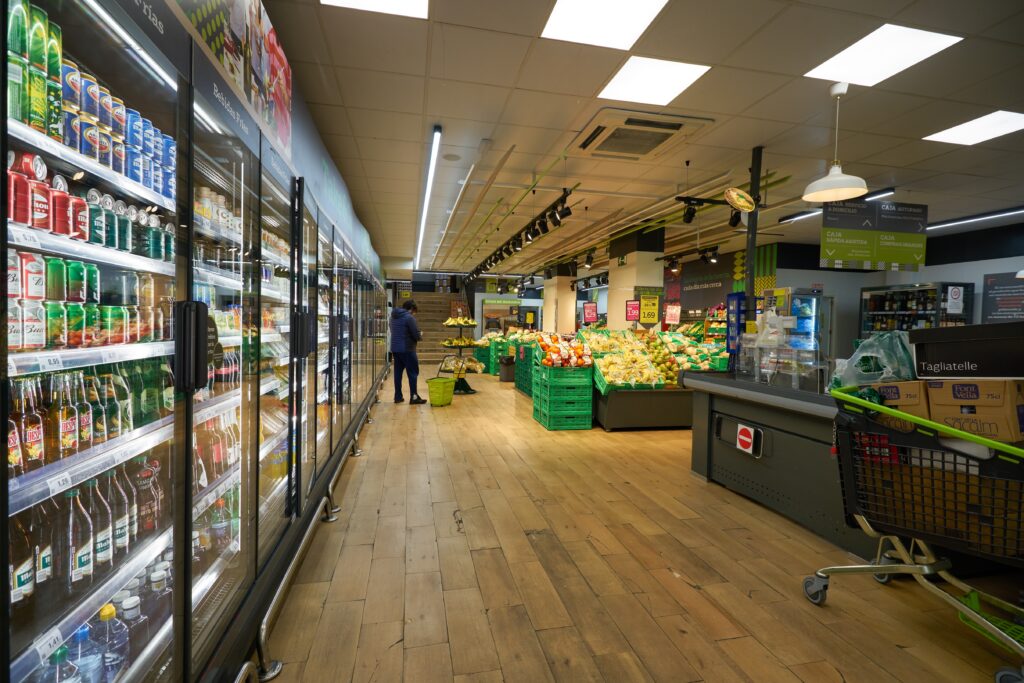
Retailers outside the supermarket sector have already begun adapting to this shift. Photo credit: Sorbis/Shutterstock
Spain’s supermarket sector may be approaching a subtle but meaningful transition. Around-the-clock grocery shopping remains uncommon, yet shifting consumer expectations and changing urban rhythms are beginning to challenge long-standing retail norms. While the country has traditionally favoured structured opening hours, the idea of 24-hour supermarkets is gradually entering the conversation, driven by evolving lifestyles, competitive pressures and developments beyond its borders.
At present, major chains such as Carrefour largely follow conventional schedules, opening in the morning and closing late in the evening. In cities like Madrid, only a limited number of smaller convenience outlets operate through the night, often in central districts or transport hubs. Full-scale supermarkets and hypermarkets rarely extend beyond established trading hours, reflecting both operational realities and long-established expectations within the Spanish market.
Regulation Continues to Shape Retail Boundaries
Spain’s regulatory framework plays a central role in defining when shops can open. Authority over trading hours is devolved to autonomous communities, resulting in a patchwork of rules that vary by region. In many areas, restrictions on Sunday and public holiday trading remain firmly in place, reinforcing a system that prioritises worker protections and social balance.
For large supermarkets, moving to a continuous operating model involves navigating complex labour agreements, increased staffing requirements and higher security costs. These factors create significant barriers to widespread adoption. Smaller convenience stores can operate with leaner teams and simpler logistics, whereas hypermarkets face a far more intricate set of challenges when considering overnight operations.
Urban Lifestyles Are Driving New Expectations
Despite these constraints, consumer behaviour in Spain is evolving. Urban centres are experiencing growing demand for flexibility, shaped by later working hours, expanding nightlife economies and a steady influx of international visitors. The traditional pattern of daytime shopping is no longer universal, particularly among younger demographics and those working non-standard hours.
Retailers outside the supermarket sector have already begun adapting to this shift. Petrol station shops and independent convenience stores increasingly offer extended or continuous service, capturing demand that falls outside typical schedules. Their presence highlights a gradual but noticeable change in how and when people expect to shop, especially in densely populated areas where convenience often outweighs routine.
International Developments Are Being Closely Watched
Spanish retailers are not operating in isolation. Across the global market, supermarkets are experimenting with extended opening hours to meet demand for greater accessibility. Notably, Carrefour is already expanding a 24-hour model in Argentina, where a growing number of stores, including larger formats, now operate continuously as part of a broader strategy to capture off-peak demand.
While Spain has not yet embraced large-scale 24-hour retail, such developments are being closely monitored. If continuous opening proves commercially sustainable in markets like Argentina, it could encourage cautious experimentation within Spain. Rather than replicating foreign approaches directly, retailers would be expected to adapt them to local conditions, balancing opportunity with regulatory and cultural considerations.
A Measured Approach to Expansion
Any shift towards 24-hour supermarkets in Spain is expected to be gradual. Initial steps would likely involve expanding existing late-night or continuous service formats in urban locations where demand is strongest. These pilot schemes could serve as testing grounds, allowing retailers to assess profitability, staffing requirements and customer response before committing to broader changes.
Larger supermarkets may follow if early trials demonstrate clear advantages, though such moves would depend heavily on regional permissions and operational feasibility. The process is unlikely to be rapid, reflecting Spain’s historically cautious approach to retail transformation and its emphasis on maintaining equilibrium between commercial activity and social norms.
Conclusion
Spain is not yet poised for a nationwide move towards 24-hour supermarkets, but the direction of travel suggests a gradual shift is underway. Changing lifestyles, increased competition and international developments, including Carrefour’s expansion of continuous trading in Argentina, are contributing to a reassessment of traditional retail patterns. While significant barriers remain, the concept of shopping at any hour is gaining relevance, indicating that the future of Spanish retail may become increasingly flexible.
Sign up for personalised news
Subscribe to our Euro Weekly News alerts to get the latest stories into your inbox!
By signing up, you will create a Euro Weekly News account if you don't already have one. Review our Privacy Policy for more information about our privacy practices.





Molly Grace
Molly is a British journalist and author who has lived in Spain for over 25 years. With a background in animal welfare, equestrian science, and veterinary nursing, she brings curiosity, humour, and a sharp investigative eye to her work. At Euro Weekly News, Molly explores the intersections of nature, culture, and community - drawing on her deep local knowledge and passion for stories that reflect life in Spain from the ground up.
Comments