In Palma, a quiet but significant shift is underway as carriage drivers begin testing electric alternatives to the city’s iconic horse-drawn rides. Long considered a staple of the old town experience, these traditional carriages are now at the centre of a wider debate around animal welfare, sustainability and the future of tourism.
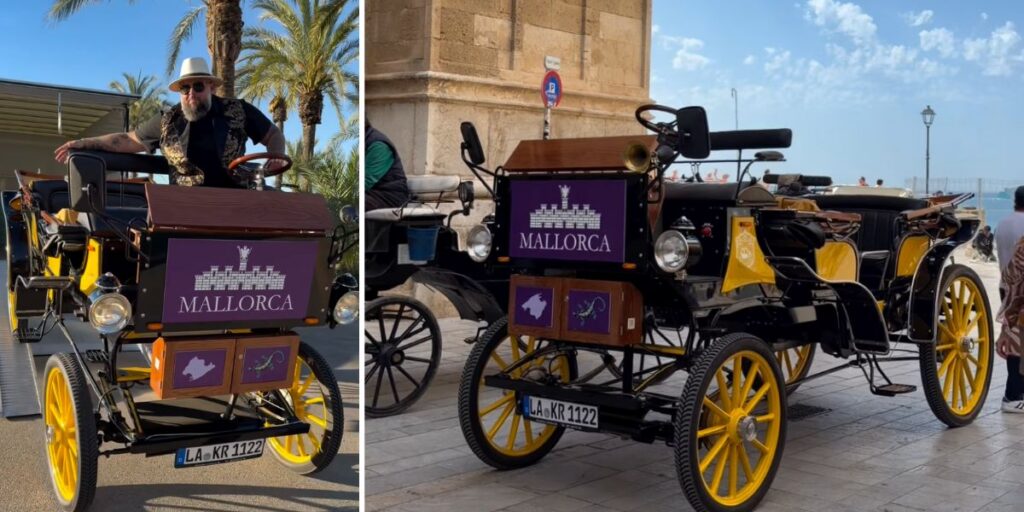
The new electric models, recently introduced near Palma Cathedral, have been designed to closely resemble their horse-drawn counterparts. With elegant wooden frames, upholstered seating and a smooth, near-silent motor, they aim to retain the romantic charm visitors expect… without the ethical concerns tied to using animals in high temperatures and busy urban environments.
Early reactions suggest tourists are open to the change. Many have welcomed the quieter, more comfortable ride, while others appreciate the move as a more responsible way to explore the city.
A costly transition for drivers
Despite growing support, the financial reality presents a major hurdle. Each electric carriage costs in the region of €90,000, placing it well beyond the reach of many local operators. Without subsidies or structured financial support, drivers face a difficult choice between adapting or risking being left behind.
Previous proposals to help fund the transition have stalled amid political changes, leaving uncertainty around whether authorities will step in to support the shift. For now, most drivers continue to rely on their horses, even as the industry begins to evolve around them.
Tradition versus modern expectations
Horse-drawn carriages have long been woven into Palma’s identity, offering visitors a nostalgic glimpse of the city’s past. For many drivers, they are not just a business but a way of life passed down through generations. Letting go of that heritage is not a simple decision.
However, public opinion is shifting. Animal welfare concerns have become increasingly prominent, and pressure from advocacy groups has added urgency to the conversation. As destinations worldwide reconsider similar practices, Palma is now being pushed to find its own balance.
For the moment, both systems coexist – the rhythmic clip-clop of hooves alongside the quiet hum of electric engines. But as trials continue, it’s clear the city is moving toward a future where tradition may need to evolve to survive.


Lottie Verrier
Lottie Verrier is a journalist and digital media specialist based in Mallorca. After a decade in London media, including a role as Deputy Editor for the MailOnline’s eCommerce division, she now combines her editorial expertise with a passion for the island to create engaging content that celebrates the best of life in Spain. Instagram @lottieinmallorca
Comments