Why medical terminology matters: Understanding Trigger Finger and Stroke signs
By Dr Marcus Stephan • Published: 12 May 2026 • 9:00 • 4 minutes read
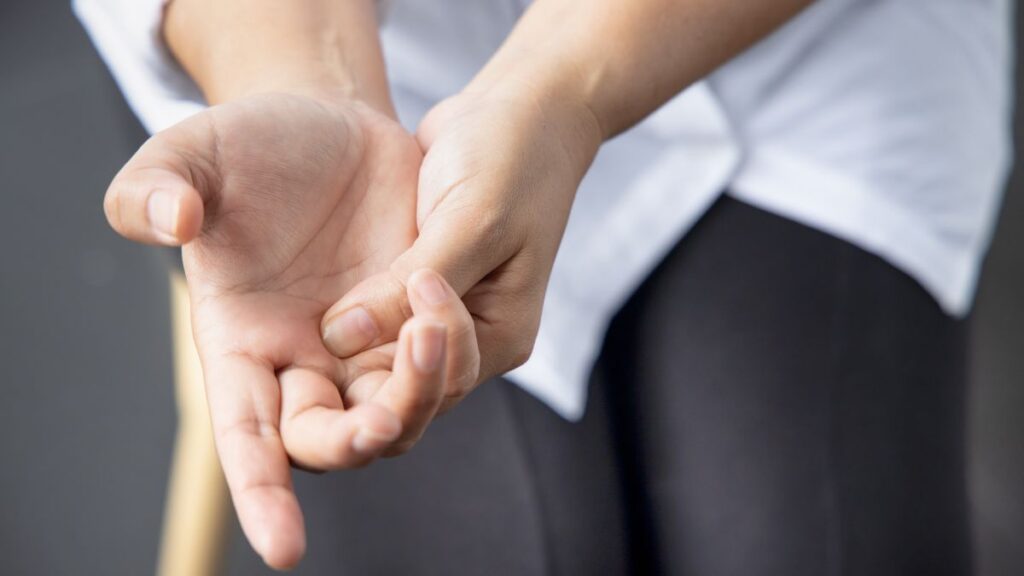
Recognising the early signs of trigger finger can help you choose the right treatment, from splints to simple exercises. Credit: 9nong/Shutterstock
We often assign everyday names to medical conditions, much as we replace the Latin names of plants with more familiar terms such as “Mother-in-law’s tongue” when maybe we should say Dracaena trifasciata to avoid any embarrassment. While this makes language more accessible, it can sometimes create confusion, particularly for non-native speakers! With that in mind, I would like to discuss two conditions that are commonly known by their colloquial names.
What is Trigger Finger? (Stenosing Tenosynovitis)
Trigger finger, medically referred to as stenosing tenosynovitis, is a condition affecting the tendons of the fingers or thumb, leading to pain and restricted movement. It occurs when the flexor tendon – responsible for bending the finger – becomes irritated and inflamed, causing it to thicken. This swelling prevents the tendon from gliding smoothly through its protective sheath, resulting in a catching or locking sensation when the finger is moved. Straightening the affected finger can be particularly painful.
Common causes: Is your job putting your hands at risk?
There are several potential causes of this condition. Repetitive strain is one of the most common, particularly activities that place prolonged stress on the tendons, such as frequent or long-distance driving or the regular use of hand tools in manual work. Certain medical conditions may also contribute to tendon irritation. Trigger finger is more commonly observed in individuals over the age of 40–50 and appears to affect women more frequently than men.
How to spot the symptoms early
Aside from the finger getting “stuck,” look for these signs:
-
A small, visible, or palpable lump near the base of the finger.
-
A painful “popping” sensation when the finger finally releases and begins to move again.
-
Increased stiffness in the morning after the hand has been curled during sleep.
Effective treatment options: From splints to surgery
Treatment depends largely on the severity of the condition. In many cases, wearing a splint overnight can be beneficial. During sleep, the fingers naturally relax and tend to curl, which can cause the affected finger to become stuck by morning. Lightweight Velcro finger splints, which are widely available online, are often effective and comfortable to wear. I often recommend trying an anti-inflammatory gel, which can be applied directly to the inflamed area, as this is usually easy to identify.
If splinting is ineffective or the condition worsens, further treatment options are available. A corticosteroid injection near the affected area can reduce inflammation and may significantly improve symptoms, although its effects are often temporary rather than long-term. In more persistent cases, a minor surgical procedure may be required. This involves releasing the tendon sheath – essentially opening it slightly – to allow the tendon to move freely. Surgical treatment is typically followed by a period of rest and specific hand exercises to prevent stiffness, and it generally has a high success rate.
The hidden danger of “stroke” (CVA)
The second condition I would like to mention is stroke, a term that may be misunderstood by non-native English speakers, as it can also refer to a gentle touch or gesture. Medically, a stroke is known as a cerebrovascular accident (CVA). There are two main types: ischemic (caused by a blockage) and haemorrhagic (caused by bleeding). Both forms are potentially life-threatening and require immediate medical attention.
The term “stroke” is thought to derive from the ancient Greek concept of “apoplexy,” meaning to be struck down, reflecting the sudden onset of symptoms such as loss of consciousness or paralysis.
Emergency response: The FAST method and CVA signs
A CVA often results in paralysis, which may be localised or more widespread depending on the area of the brain affected. Modern treatments are particularly effective for ischemic strokes, where clot-dissolving medications (“clot busters”) can restore blood flow. However, these treatments must be administered as quickly as possible – ideally within 60 minutes of symptom onset. In both types of stroke, the interruption of oxygenated blood supply to the brain poses a serious and immediate risk.
Stroke can affect anyone, so it is essential to recognise the warning signs in oneself or others. A simple and widely used tool is the acronym FAST:
-
Face: Is there weakness on one side? Can the person smile? Is there drooping of the mouth or eye?
-
Arms: Can the person raise both arms and keep them raised?
-
Speech: Is speech slurred or unclear? Can the person understand what is being said?
-
Time: If any of these signs are present, call emergency services immediately (112).
Why every minute counts in stroke recovery
When contacting emergency services, it is helpful to state that you suspect a cerebrovascular accident (CVA). Paramedics and medical professionals are trained to provide the specialised care required for stroke patients. Time is critical, so if there is any doubt, it is always best to seek help without delay.
Symptoms of a stroke may appear suddenly or develop gradually. Additional warning signs include difficulty speaking or forming sentences, sudden blurred vision or loss of sight, confusion or memory problems, dizziness or unexplained falls, and a sudden, severe headache. In any of these situations, it is important to act promptly – either by calling for professional assistance or going directly to a hospital and reporting a suspected CVA.
The information provided in this column is for educational and informational purposes only, and does not constitute medical advice. It is not a substitute for a professional medical consultation, diagnosis, or treatment. Always seek the advice of your own physician or other qualified health provider with any questions you may have regarding a medical condition.
Dr Marcus Stephan
Follow Euro Weekly News on Google News
Get breaking news from Spain, travel updates, and expat stories directly on your Google News feed.
Follow on Google NewsSign up for personalised news
Subscribe to our Euro Weekly News alerts to get the latest stories into your inbox!
By signing up, you will create a Euro Weekly News account if you don't already have one. Review our Privacy Policy for more information about our privacy practices.





Dr Marcus Stephan
With a career spanning more than 35 years in both the UK and internationally, Dr Marcus' passion lies in empowering individuals through knowledge, enabling them to care for themselves and others. He simplifies the science behind medicine by removing unnecessary jargon, explains common health conditions, and shares updates on the latest advances and developments in medicine.
Comments