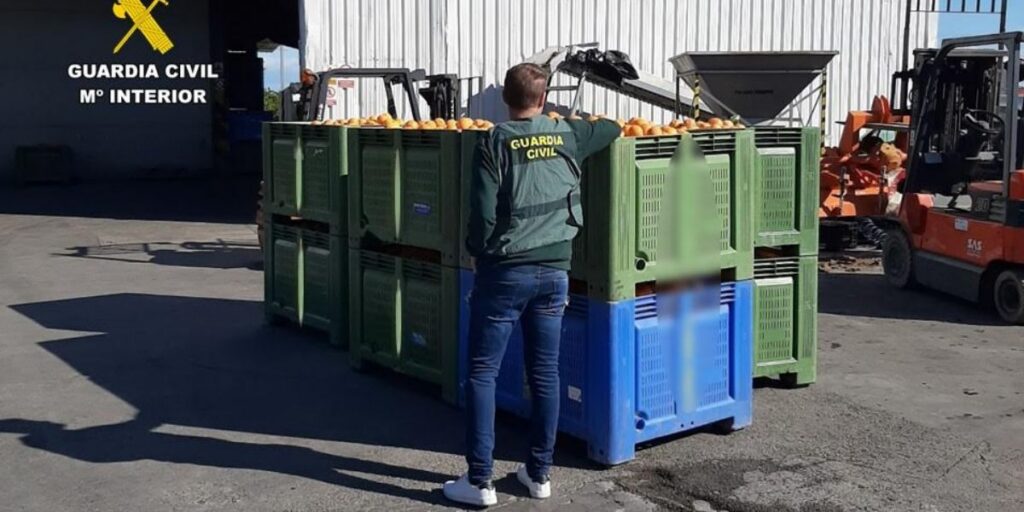
Thousands of illegal oranges seized in Calpe citrus scandal

Illegal oranges in Calpe

A very juicy scandal Credit: Guardia Civil

Five people are under investigation after Spanish police uncovered an alleged scheme that used fake paperwork to bring more than 33 tonnes of oranges of unknown origin into the market in Alicante province. The operation, led by the Guardia Civil’s rural crime unit in Calpe, has shone a spotlight on the importance of traceability in Spain’s agricultural sector.

How the orange operation was uncovered

The investigation began last November during routine inspections at citrus collection centres across the Marina Alta. Officers from the Guardia Civil’s ROCA team, which specialises in tackling rural crime, noticed irregularities in agricultural traceability documents known as DATA forms. These documents are required to prove where agricultural products come from before they can be legally sold.

What initially appeared to be paperwork discrepancies soon developed into a much larger investigation. Officers examined thousands of commercial records and eventually identified around 70 documents that were allegedly falsified.

More than 33 tonnes of oranges involved

According to investigators, the suspect documents were used to introduce more than 33,000 kilograms of oranges into the supply chain. The fruit is believed to have been of unknown or illicit origin and had an estimated value of more than €9,000.

Police allege that those involved completed the paperwork themselves, using the personal details of third parties or even inventing agricultural plots that did not exist. The aim, investigators say, was to give the fruit the appearance of being legally sourced and therefore suitable for sale to warehouses and distributors.

The operation, named “Traza 9.0”, concluded in April and has resulted in five individuals aged between 49 and 74 being investigated for alleged document falsification and handling of illicit goods. The case has now been passed to the judicial authorities in Dénia.

Why traceability matters

Spain’s agricultural sector relies heavily on traceability systems to protect both consumers and legitimate farmers. Documents such as DATA forms help authorities verify where produce was grown and ensure stolen or illegally obtained crops do not enter the marketplace.

The Guardia Civil says many of these cases can originate from thefts at agricultural holdings that are never officially reported. As a result, officers are urging farmers and landowners to report any suspected thefts and to ensure all traceability documentation is completed correctly.

For local growers already facing rising costs and tough market conditions, the case serves as a reminder that not every orange is as innocent as it looks. In this investigation, it appears some fruit came with a rather suspicious paper trail.

Google News

Follow Euro Weekly News on Google News

Get breaking news from Spain, travel updates, and expat stories directly on your Google News feed.

Follow on Google News
Written by

Lottie Verrier

Lottie Verrier is a journalist and digital media specialist based in Mallorca. After a decade in London media, including a role as Deputy Editor for the MailOnline’s eCommerce division, she now combines her editorial expertise with a passion for the island to create engaging content that celebrates the best of life in Spain. Instagram @lottieinmallorca

Comments


    Leave a comment

    Your email address will not be published. Required fields are marked *